


Your supplier quotes you a white t-shirt in two versions. One is standard cotton, the other is organic. They look the same. They feel the same. The price per unit is not the same, and you're left asking what you'd actually be paying for, and whether your customers would ever notice.
Shadi Adada, co-founder and creative director of FittDesign, has spent the last 10 years helping thousands of activewear, sportswear and streetwear brands launch their collections, speccing every kind of cotton from short staple to long staple to pima in the tech pack. Here's what organic cotton really changes, what it doesn't, and when the premium makes sense.
In one line: organic describes how the cotton was grown. It says nothing about how the shirt feels. Pay for it when your customer values the story, and pay for a longer staple when they value the hand feel. The full episode is at the bottom of this post.
1. What organic actually means
Organic has nothing to do with the yarn itself. It's about how the cotton plant was grown. Under the USDA organic rules that means no synthetic fertilizers, no prohibited pesticides and no genetically modified seed (source).
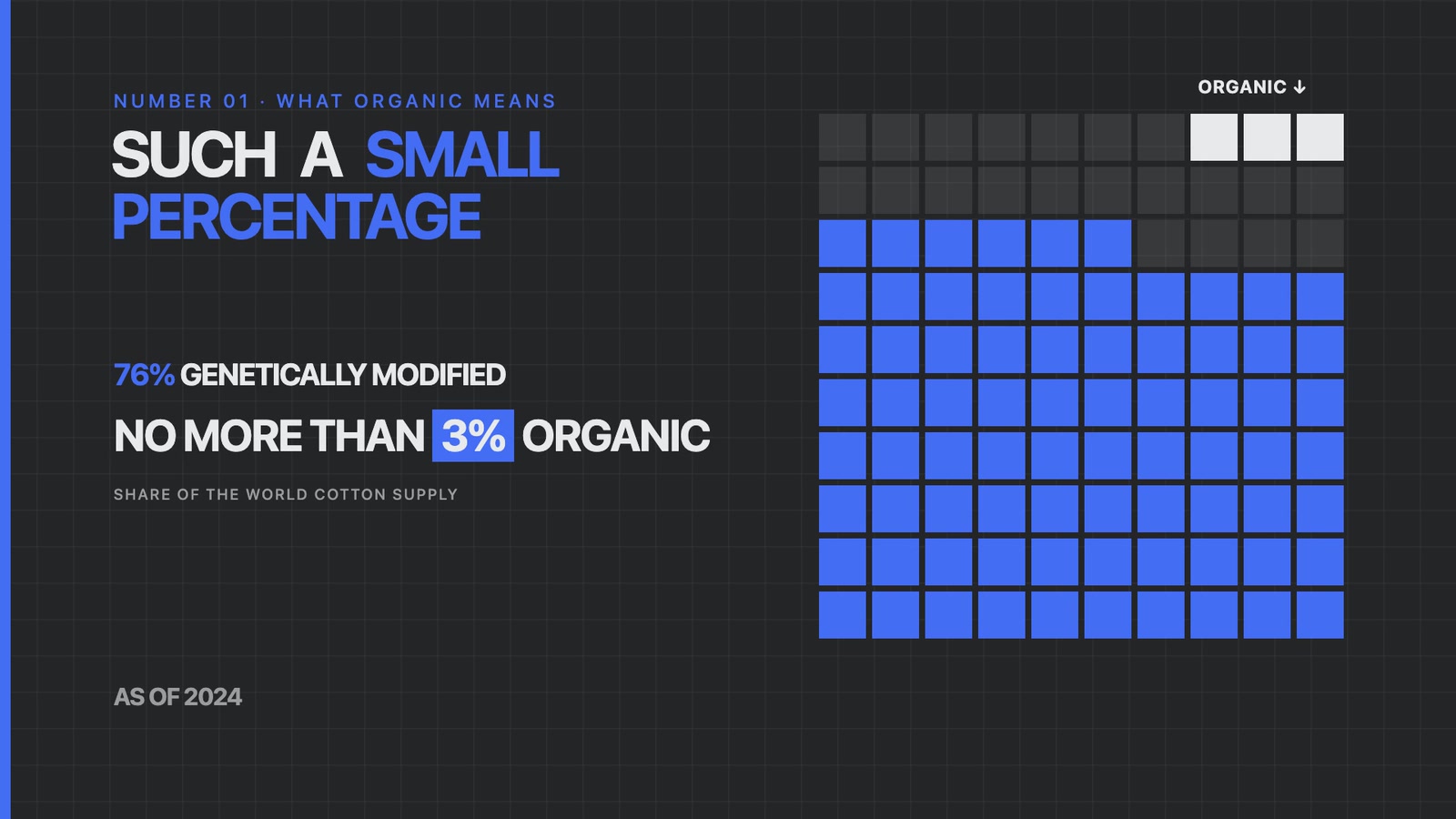
Regular cotton today is mostly GM. Shadi puts it at around 76% of the world's cotton plantings. Organic is a tiny slice of supply: certified organic cotton came to about 2.9% of global production in the 2023/24 season (source).
2. Organic won't make it feel softer
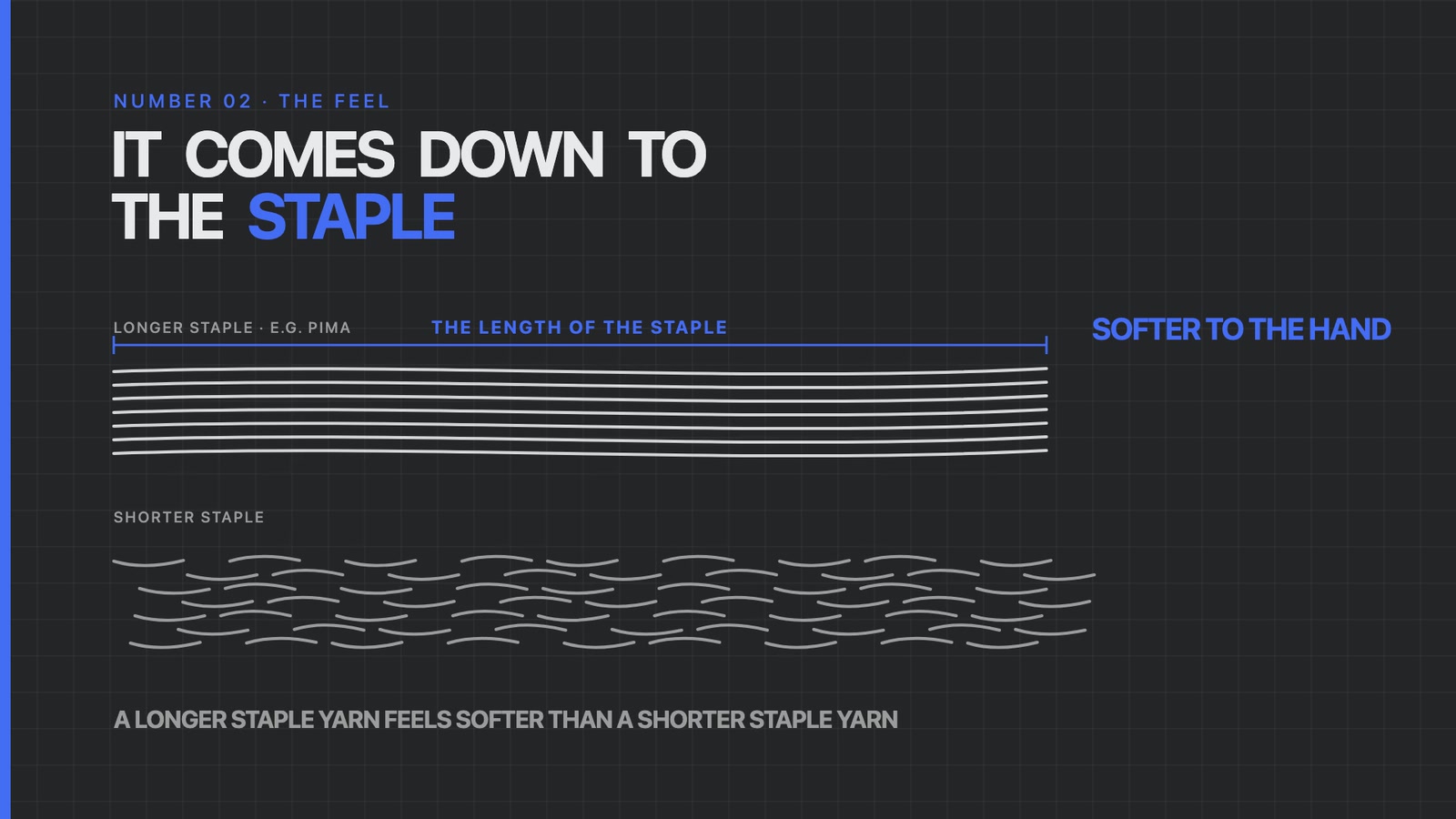
Once the fiber is picked, spun and knitted into a finished garment, being organic adds nothing to the hand feel, the drape or the performance. Feel comes down to the staple, meaning the length of the fiber. A longer staple yarn like pima feels softer than a shorter staple yarn, organic or not.
After the staple, look at how the yarn is spun (combed or carded) and how the fabric is built (single jersey, double jersey, the type of knit). Those are the specs that decide quality. The quickest way to see it for yourself: blind test a regular staple cotton next to a pima.
3. Where the 91% water claim came from
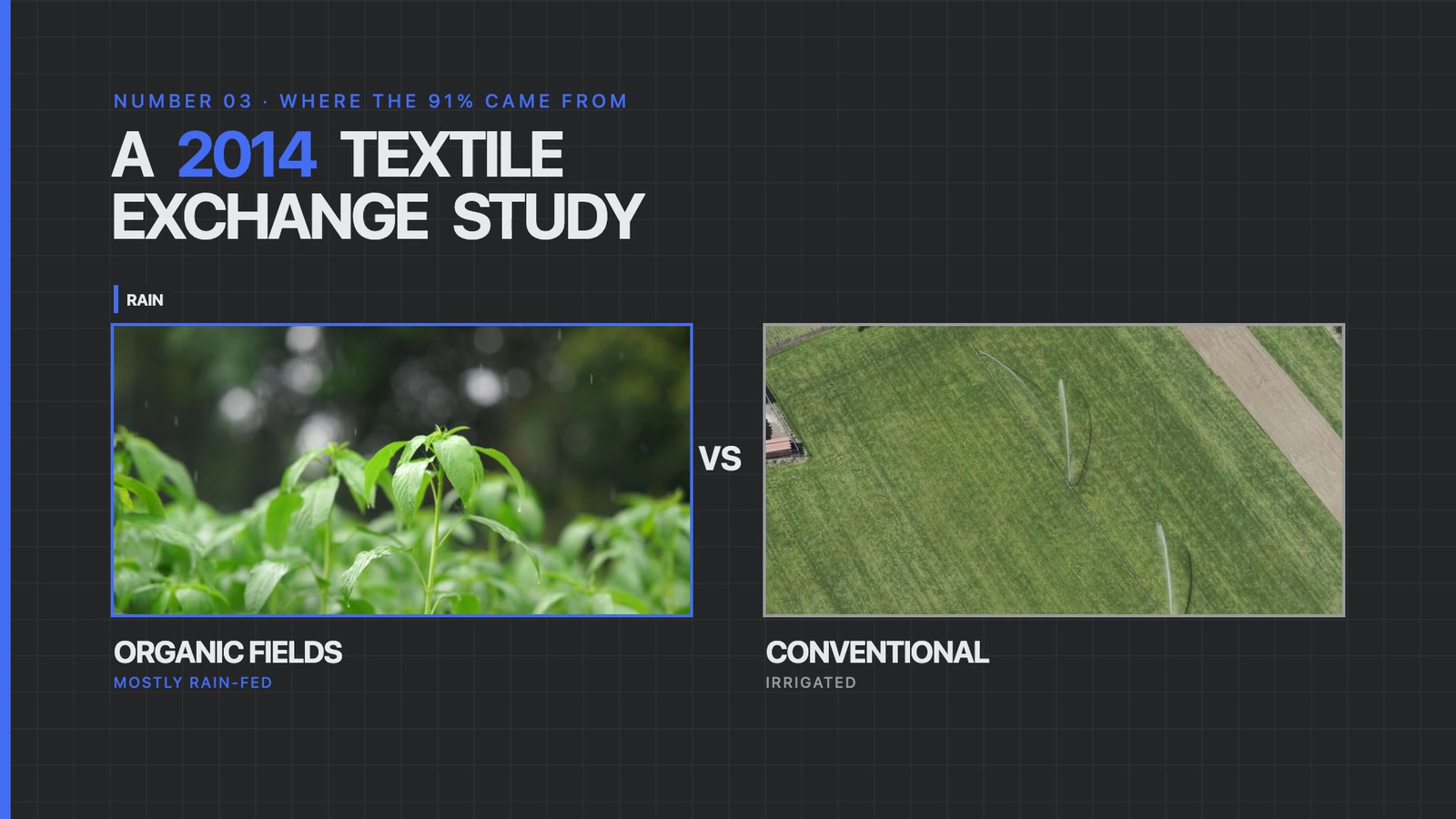
You've probably heard that organic cotton uses 91% less water. That number comes from a 2014 Textile Exchange study that compared mostly rain-fed organic fields with irrigated conventional ones. Of course the rain-fed fields drew less irrigation water. The saving came from the rain. Growing it organic had nothing to do with it.
Textile Exchange has since said the figure shouldn't be used as a general comparison between organic and conventional cotton (source). If a supplier leads with it, ask how the cotton was watered.
4. The honest trade-off: yield
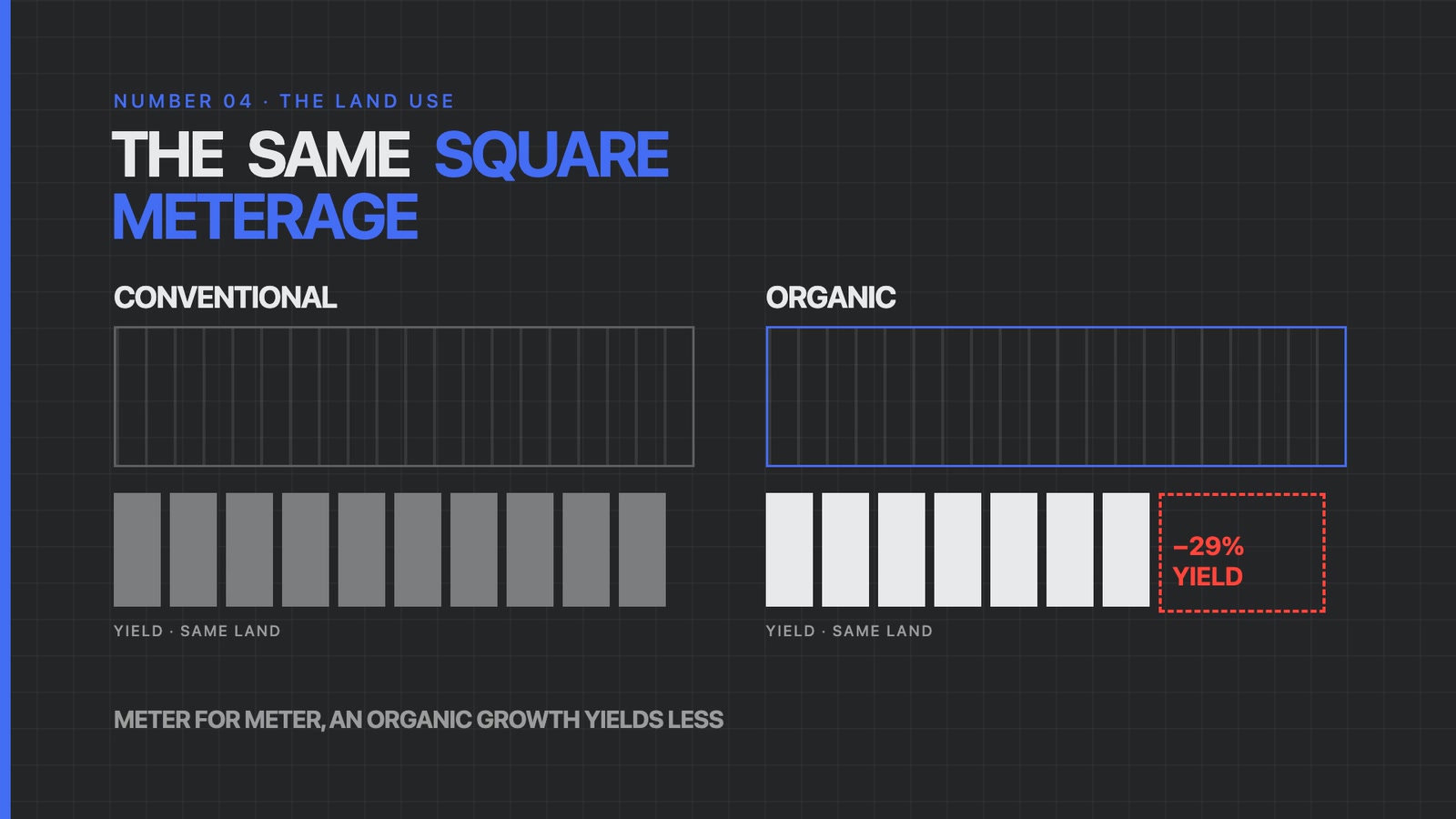
On the same square meterage of land, conventional cotton yields more. Meter for meter, an organic crop can come in around 29% lower. That's what a long-running field trial in India measured in its first crop cycle (source).
Lower yield means less fiber from the same field, and that's a big part of why organic costs more. The widely shared figure that cotton uses 16% of the world's insecticides is also old. More recent data from the International Cotton Advisory Committee puts cotton at about 6.8% of insecticide sales on about 2.5% of cropland (source).
Speccing organic cotton for your next drop?
The fiber content, the certification you need and the staple length all have to be written into the tech pack before a factory can quote it properly.
5. Organic fiber, conventional processing
Organic only covers the growing. You can buy organic fiber and still spin and dye it with conventional chemicals, which is one step forward and two steps back.
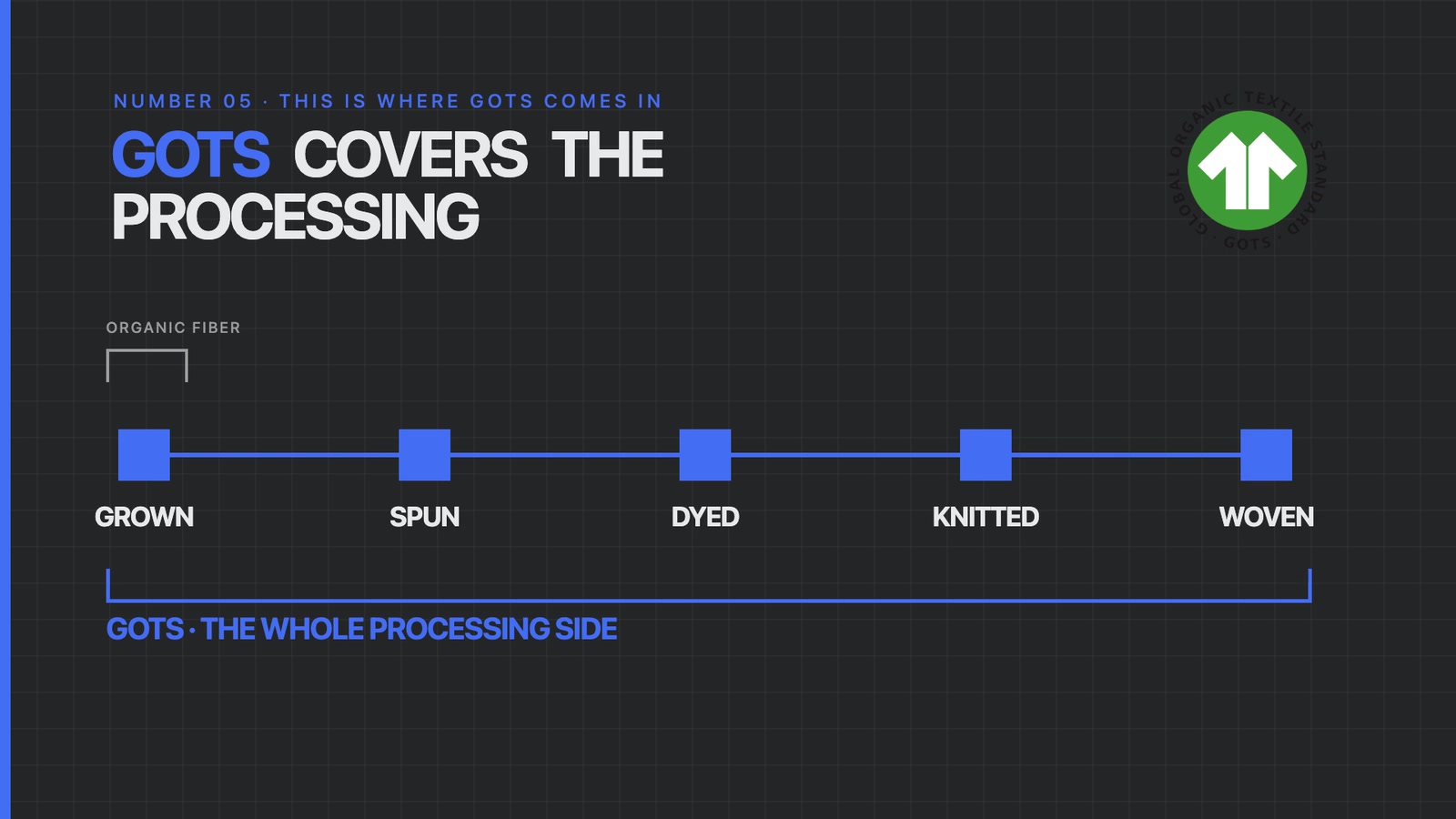
This is where GOTS (the Global Organic Textile Standard) comes in. It covers the processing side too: spinning, dyeing, knitting and weaving, with limits on the chemicals used. A GOTS "organic" label means at least 95% certified organic fiber. A "made with organic" label means at least 70% (source). If you want truly organic, look for GOTS rather than the word organic on its own.
6. Ask for the certificate
Suppliers know they can charge a premium for organic, and some have faked it. In 2020 GOTS found that around 20,000 tonnes of supposedly organic cotton fiber in India had been sold on forged certificates (source).
Your supplier is probably honest. Ask anyway: before bulk production, request an official GOTS certificate that covers your batch.
7. What the premium costs
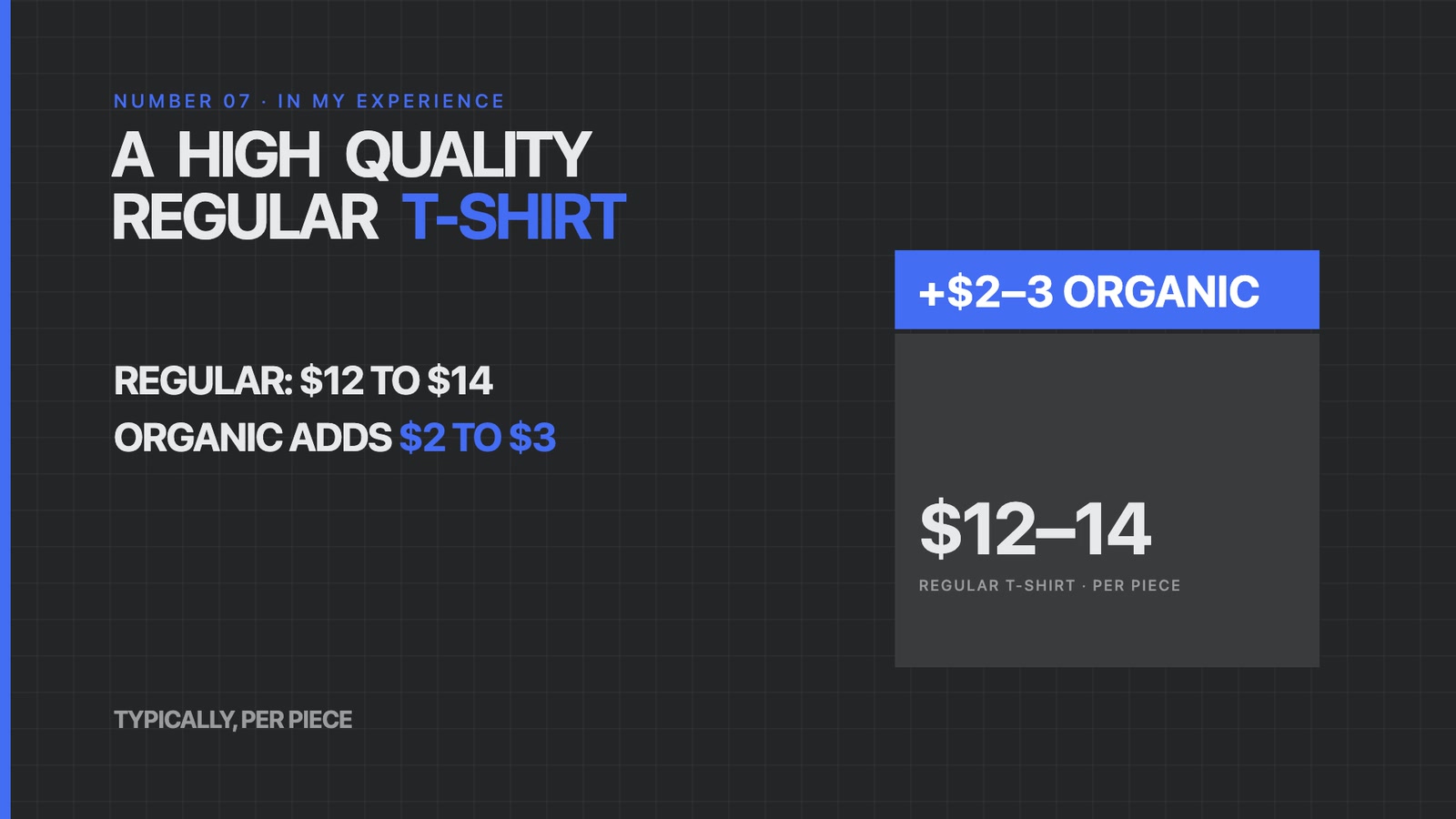
Lower yield, rain-fed growing and more expensive natural processing chemicals all add up. In Shadi's experience the premium can be as low as 5 to 10% in India, where organic cotton is common, and 40 to 50% in parts of East Asia, where it isn't.
For a high quality regular t-shirt that costs around $12 to $14 a piece, organic typically adds $2 to $3.
So is organic cotton worth it?
Yes, if your customer values the organic story. Then the price is justified and they'll pay it. Ask for the GOTS certificate.
No, if it isn't a core part of your positioning. A longer staple yarn that feels nicer in the hand will give your customer more value than a certification they won't think about.
Either way, don't sell it on the 91% water claim.
If you're weighing other natural fibers, read Modal vs Cotton vs Tencel: the best natural legging, or for the synthetic side, Is polyester actually bad for you?
Watch Shadi break down organic cotton

About FittDesign
FittDesign is a full-service design and production company for sportswear and activewear brands. We take you from the first sketch to a factory-ready tech pack, sampling and production, so the product that arrives is the one you pictured.
Building an organic cotton line?
We spec the fiber, the staple and the certification, then sample it with GOTS or OEKO-TEX certified materials so you can feel the difference before bulk.
Get a quote → Takes 2 minutes. No obligation.


