

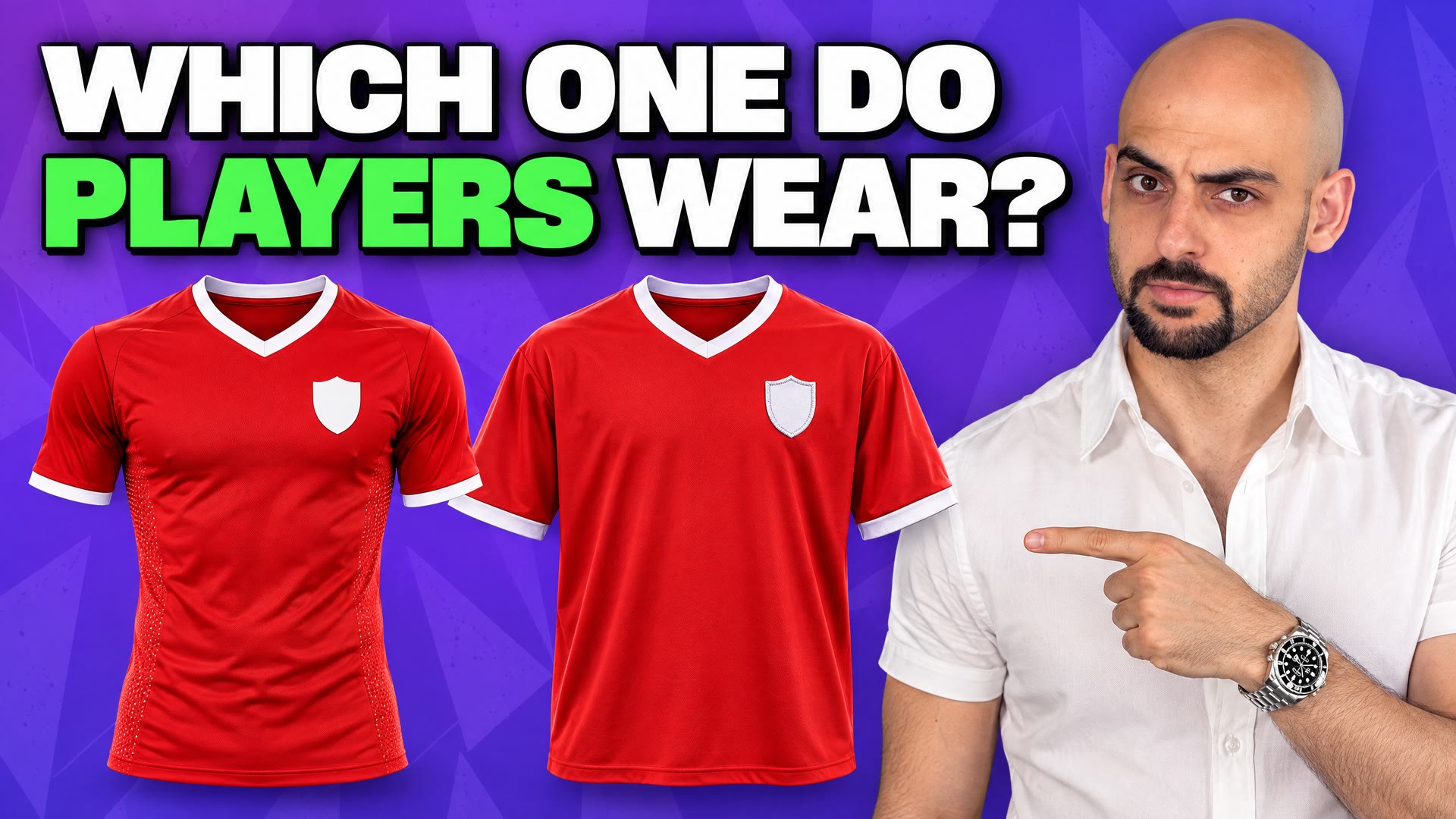
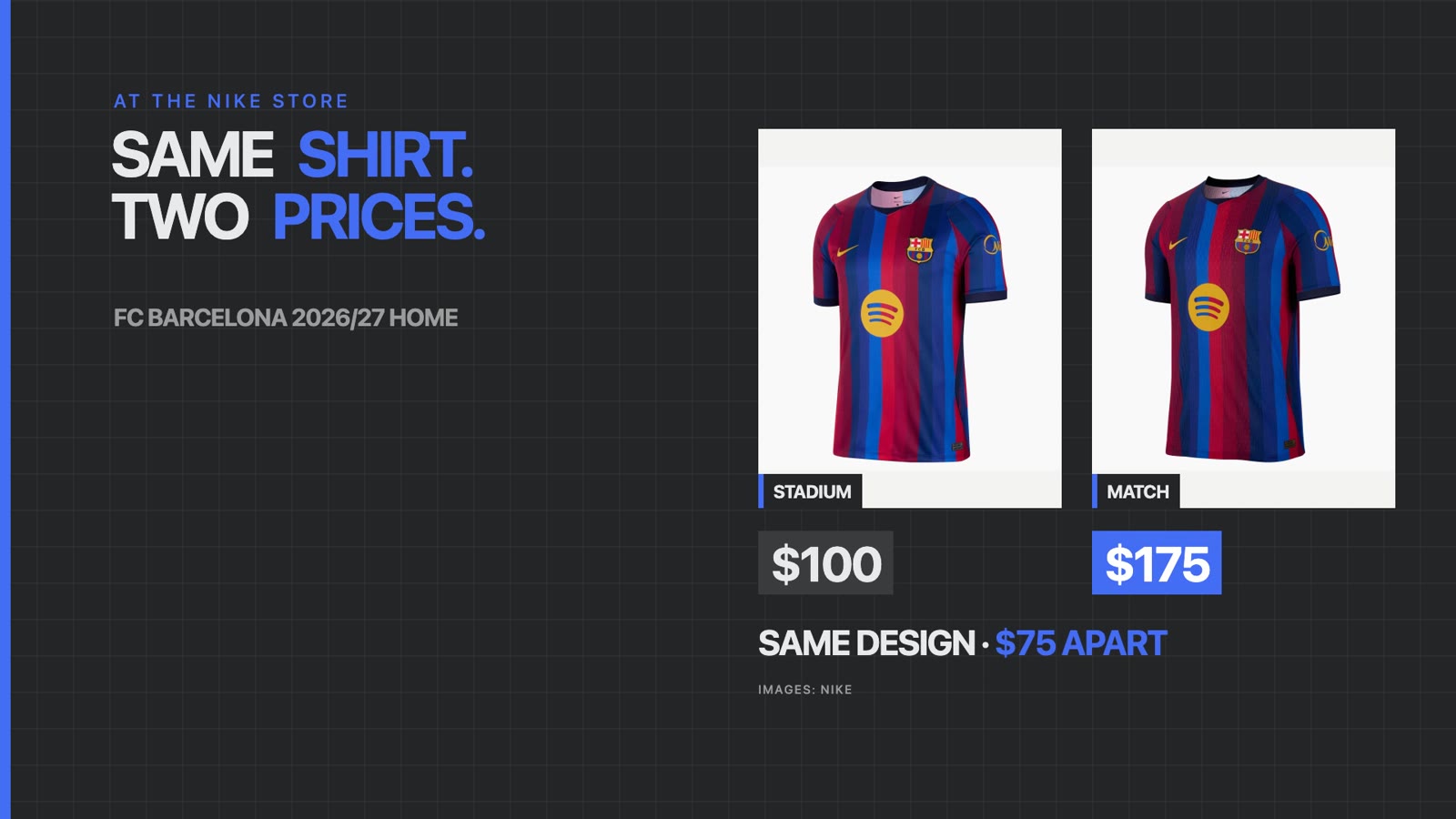
You're in the Nike store looking at your club's new shirt. Same crest, same colors, same sponsor, same player on the back. One reads $100. The other reads $175. If they look identical in the product photos, what is the extra $75 actually buying you?
Shadi Adada, co-founder and creative director of FittDesign, has spent the last 10 years working with thousands of brands in the sportswear space, especially on teamwear. In this episode of FittDesign TV he breaks down authentic vs replica jerseys the way a sportswear designer sees them: fabric, fit, badging and price.
The short answer: an authentic match shirt is a lighter, slimmer, more engineered garment built for an athletic player, and a replica is a tougher, more standard version built for fans. For most fans the replica is the smarter buy, and if you're building your own kits, the difference starts in the tech pack.
Prefer to watch? The full episode is embedded at the bottom of this post, along with the complete script.
1. Every Brand Has a Different Name for the Same Split
Every big sportswear brand sells two versions of the same shirt, and each one names them differently.
- Nike: the authentic is the Match shirt, the replica is the Stadium shirt.
- Adidas and Puma: simply Authentic and Replica.
Even the fabric gets its own name. Nike calls the Match fabric Aero-FIT and the Stadium fabric Dri-FIT, and Adidas and Puma take a similar approach. Shadi's point is that these are marketing terms. The real differences only show up when you peel back what those names actually mean.
2. The Fabric Is the Primary Driver
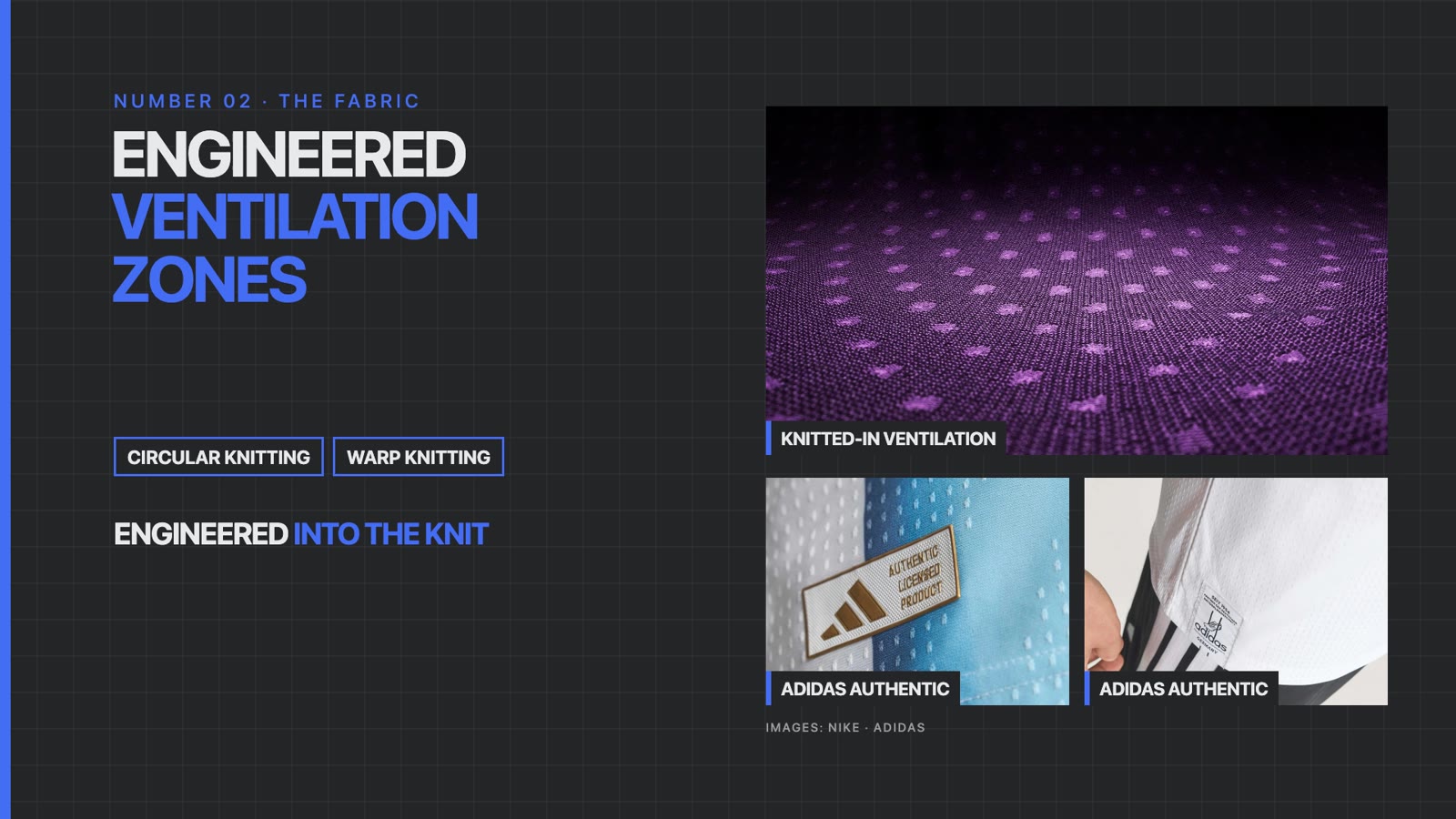
The easiest way to tell the two apart is the weight of the fabric. In Shadi's experience, authentic shirts are lighter than the replica versions, and they carry engineered knit ventilation holes, usually made with circular knitting or warp knitting so the ventilation zones are built into the knit itself.
Replica shirts use a denser fabric that tends to be heavier.
A 2010 comparison of Barcelona's authentic and replica shirts found 155 grams for the authentic and 175 grams for the replica. Twenty grams sounds like nothing, but over 90 minutes of non-stop running it's the edge a player is paying for.
3. The Fit: Slim vs Standard
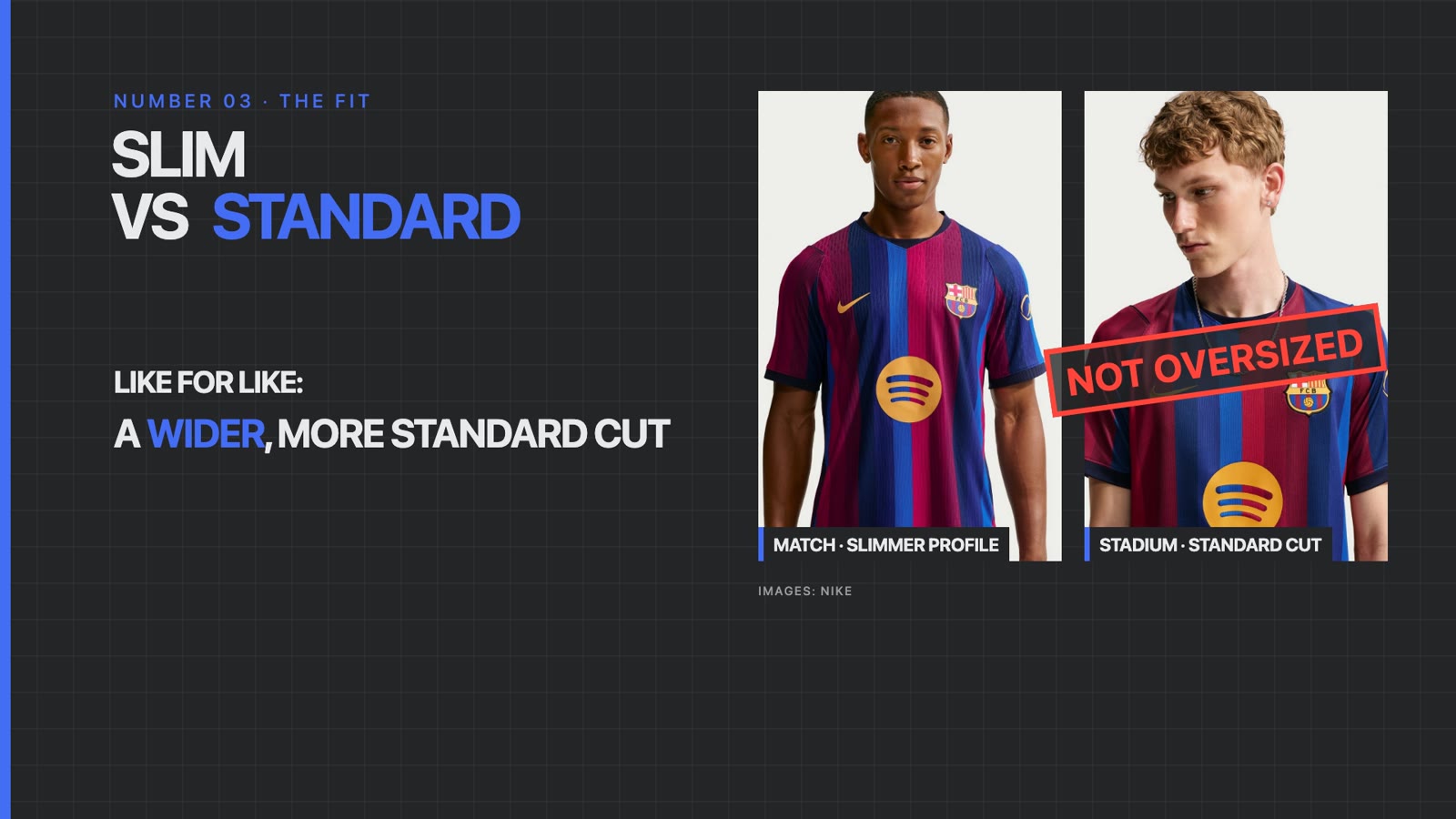
An authentic shirt is cut slim, a little tighter through the chest, the sleeves and the waist. It's built for professional players, who tend to have more athletic builds and carry a lower percentage of body fat.
That doesn't make a replica oversized. On a like-for-like basis, the replica simply has a wider, more standard cut, so it works for the much wider variety of body types in the stands.
Designing a kit for your own club or brand?
Fabric weight, ventilation, fit and every heat transfer need to be settled in the spec before the first sample is made.
4. Badges, Trims and Embroidery
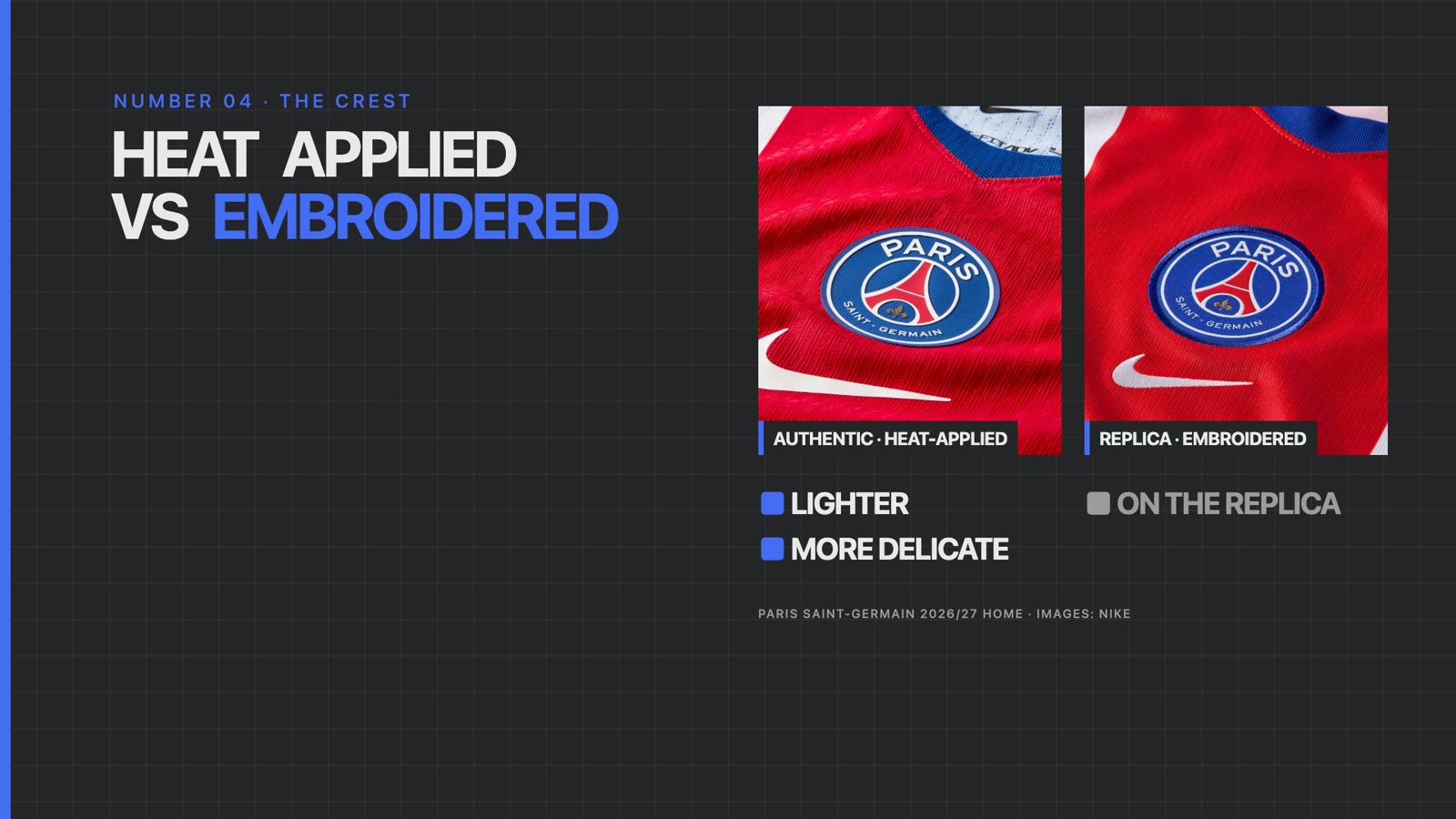
This is where Shadi sees the starkest contrast. At the trade shows he attends every year, the high-end trim and heat transfer suppliers are one of the clearest identifiers of a match-ready shirt. On an authentic, the branding, the badges, the player names and the sponsors are usually high quality heat transfer prints.
There's a practical reason for that. A club needs different prints for different parts of the season, a Champions League version or a local derby version, and heat transfers can be applied immediately. They're also lighter and more delicate than embroidery.
- Heat transfers can be very sophisticated: standard TPU film, felted material, holographic, flock and velvet prints.
- Replicas tend to use embroidered crests, heat pressed or stitched on. They're heavier duty, which makes them a great option for kids and shirts that get washed often.
5. Is the Price Difference Justified?
A Nike Match shirt costs $175 against $100 for the Stadium shirt. An Adidas Argentina Authentic is about $150 against $100 for the replica. Whether that $50 or $75 is justified comes down to your habits.
- Pick the authentic if you need the absolute best, the lightest weight material and those engineered ventilation zones for a hotter climate, and you'll take care of the garment.
- Pick the replica if you're a younger player, your shirt gets washed every day or two, and you want something durable that you won't worry about replacing.
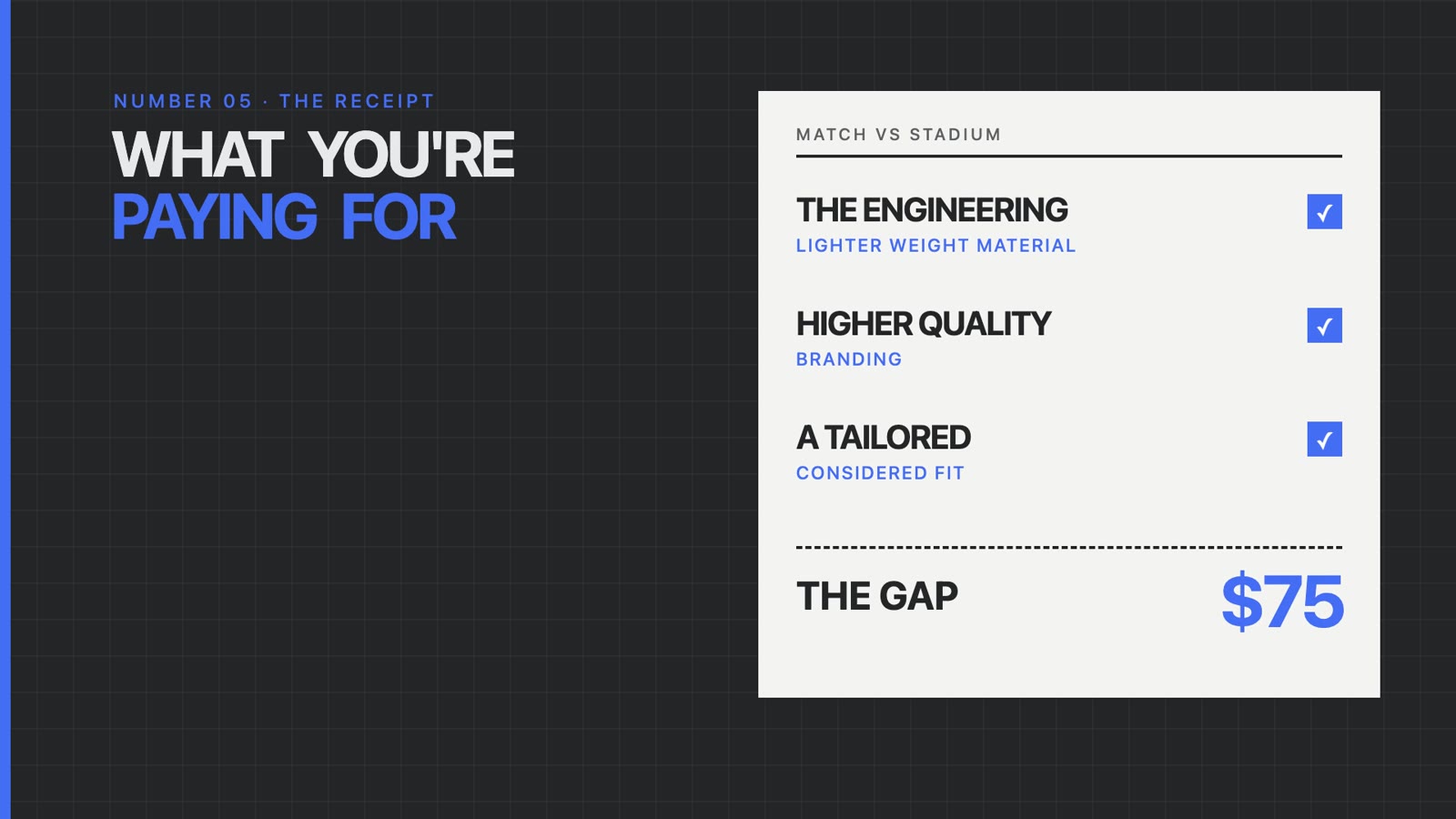
What you're paying for on the authentic is the engineering behind the lighter material, the higher quality branding, and a more tailored fit designed around an athletic player.
6. What Players Actually Wear
Even the Match shirt in the store isn't quite what's on the pitch. It's the template. Each player's shirt is customized for the season, the club, the championship and the specific match, sometimes with the date of the game printed on it for special events. That makes every player's shirt almost one of one, and the player version can carry even more technology than the one you buy.
The Verdict: Most Fans Should Buy the Replica
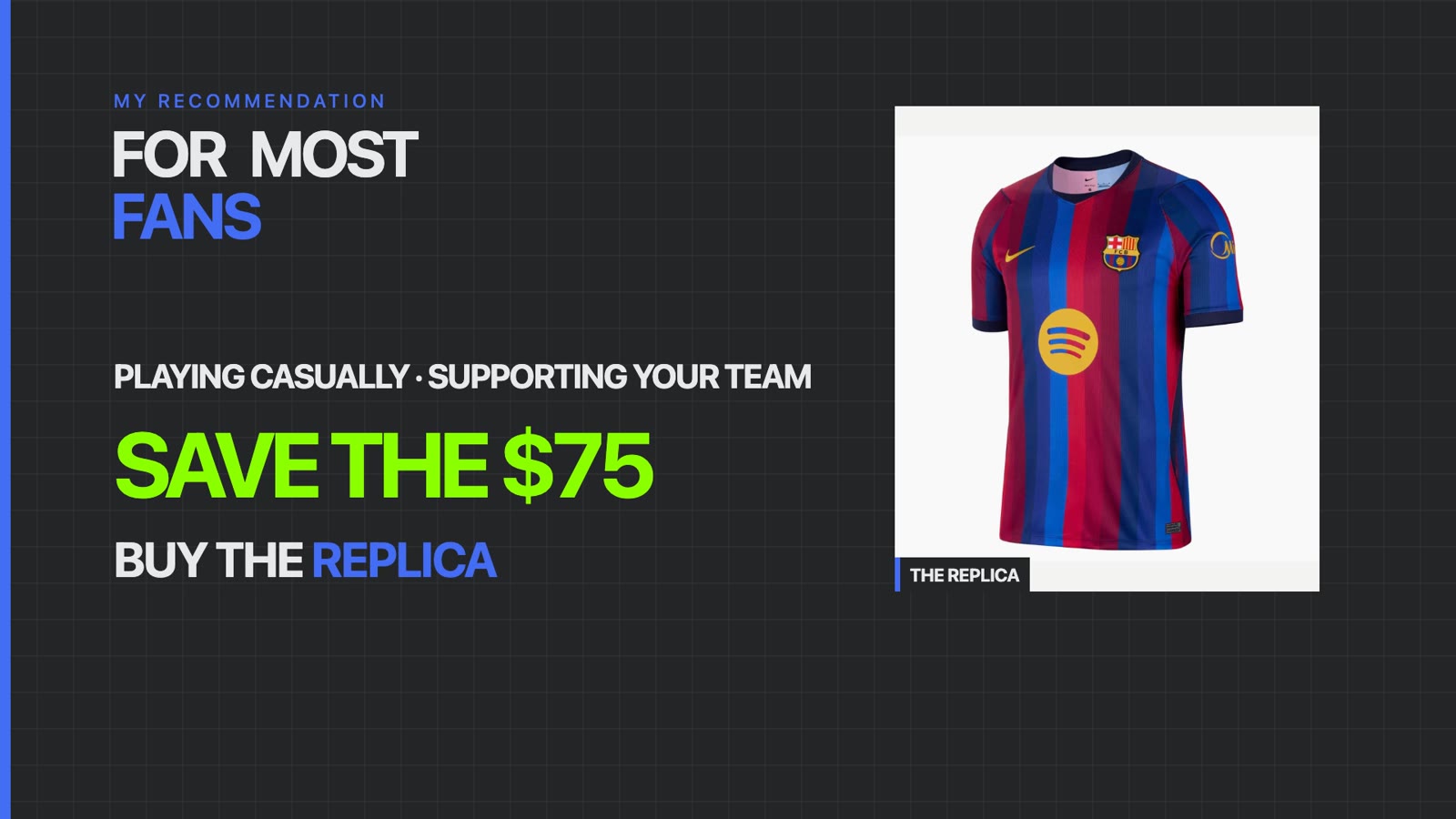
Ask yourself whether you want the authentic because you want the best and you're happy to pay for it, or because you actually need the performance. For most fans who play casually or wear the shirt to support their team, Shadi's recommendation is simple: save the $75 and buy the replica. The same goes for younger players, kids, and anyone whose parents are doing the washing.
🎬 Watch the full episode. Shadi walks through every difference with the real shirts, prices and footage: https://www.youtube.com/watch?v=FfoHuBVo8gQ

Full Episode Script
This is the script of the episode as Shadi delivered it, lightly edited for reading.
Intro
So you're at the Nike store and you're looking at two of your favorite club shirts side by side. One of them reads $100 and the other reads $175. It's the same kit. It's the same sponsor. It's the same team. It's the same player. What is the difference there?
Well, one of them is an authentic match shirt and the other one is what we consider a replica, but they both come from Nike. How can that be? Well, that's exactly what we're going to be discussing in today's episode. What are the main differences between an authentic match shirt and a replica shirt? Is a match shirt or an authentic shirt truly worth the $75 premium that you typically see? And what are you getting for that additional $75?
We're going to be looking at this through the lens of a sportswear designer. My name is Shadi Adada, and over the last 10 years, I've worked with thousands of brands in the sportswear space, especially on teamwear. So I've learned a thing or two about what truly makes authentic shirts, and why maybe it's not worth the price that they're demanding. So without further ado, let's get right into the episode.
1. Every brand, a different name
Number one is that we need to establish that every brand has a different name for their authentic and their replica shirts. Whereas with Nike, they might call the authentic their match shirt. With their replica shirt, they call it their stadium shirt. With Puma and Adidas, it's a little bit more standard and straightforward. It's authentic and replica.
And ultimately, even the fabric that they pick for each of the two different types of shirts will have a different name. Whereas with Nike, they might call it Aero-FIT. And with their stadium version, they might call it the Dri-FIT. And with Puma and Adidas, it's also a similar approach there.
The number one thing that we have to understand is that these are marketing terms. It's when we peel back the layers of what these terms actually mean where we see the stark differences.
2. The fabric
Number two, the primary driver of the difference is going to be in the fabric. And the easiest way to tell the difference between an authentic shirt and a replica shirt comes in the weight of the fabric. In my experience, your authentic shirts tend to be lighter than the replica versions, and they tend to have engineered knit ventilation holes in the garment, which are typically applied using circular knitting or warp knitting to achieve these engineered knit zones. You also tend to see with replica shirts that the fabric tends to be more dense and tends to be heavier.
A 2010 study comparing the authentic and the replica version shirts of Barcelona found that you have 155 grams for your authentic shirt and 175 grams for the replica shirt. Now, 20 grams may not seem like a huge difference, but when you're running non-stop for 90 minutes, really that difference is all of the difference in the world. And that's what you're paying for. It's that added touch and that added engineering that gives you an edge, and in a game of inches or centimeters, really that edge is what matters.
3. The fit
Number three comes down to the fit. In my experience, an authentic fit tends to be more slim fit, and it might be a little bit tighter on the body: the chest, the sleeves, the waist. And there's an obvious reason for this. It's catering itself towards professional players. Professional players tend to have more built bodies, they tend to carry a lower percentage of body fat, and as a result the authentic shirts tend to have a much more slimmed down profile than the replica versions.
This isn't to say that a replica version will be an oversized fit, but on a like-for-like basis, definitely you're going to find a wider cut and a more standard cut to account for the wider variety of fan body types that are going to be wearing the replica version.
4. Badges, trims and embroidery
Number four comes down to the badging, the trims and the embroidery that is on the garment. And this is where you see a huge stark contrast. When I attend my trade shows every single year and I'm looking at different suppliers, one of the big things that I see is high-end suppliers for trims and heat transfer prints for soccer. This is one of the biggest identifiers of a high quality, match-ready version: the branding, the badges, the player names, any of these sponsors tend to be a very high quality heat transfer print.
And the reason for this comes down to the fact that you're going to have different prints for different parts of the season. You might have a Champions League version of the product, you might have a local derby version of the product, so being able to immediately apply heat transfer prints is par for the course. At the same time, heat transfer prints tend to be lighter, and they are a bit more delicate than their embroidered counterparts, which tend to make their way onto a replica version.
The heat transfer prints are very sophisticated. They can be a mix of standard TPU film. They can be a mix of felted material. There's really a lot of variety when it comes to the badges, the trims and the decorations that we tend to see on the market. Take a look at your favorite club's actual match shirt, go down to a Nike store or an Adidas store, and you can really see that a lot of time and effort is put into the intricate details, whether it's a holographic print, a flock print or a velvet print. There's really a lot of texture variety in there.
Typically on the replica versions, they tend to be embroidered crests that are heat pressed or stitched on due to their heavier duty nature. So they're a great option if they're going to be used by children, if they're going to be washed often, or if you just simply don't need the lightest and the most streamlined version of the product.
5. Is the price justified?
So number five: is the price difference justified? Whereas with a Nike match shirt you're paying $175 versus $100 for the replica shirt, with an Adidas shirt you're paying around $150 for the match version of the Argentina jersey versus $100. Whether that $50 or $75 is justified or not comes down to your habits.
If you're someone who needs the absolute best, you need the lightest weight material, you're playing in a hotter climate where you're sweating, you need those engineered ventilation zones, and you're someone who is old enough and responsible enough to take care of the garment, then a match version may be the way to go.
If you're maybe a younger player, maybe someone who is washing their shirts on a daily basis or every other day, you want something that's a bit more durable, and if it does get ruined you don't want to have to worry about it too much in terms of replacing it, then a replica version may be the way to go. It comes down to your budget and your spending ability.
But when it comes to the main differences, you're paying for the engineering that goes into creating the lighter weight material, you're paying for the higher quality branding that goes onto the garment, and you're paying for a more tailored and more considered fit that is specifically geared towards an athletic player on the football or soccer field.
6. What players actually wear
Number six comes down to this: even with a match version of the shirt, is this what players actually wear? Well, actually, not quite. The match version of the shirt may serve as the basis or the template for what players actually wear, but each match shirt, as I've discussed in a previous point, is actually customized for the season that the player is playing in, the club, the championship, the match that the player is playing in, and sometimes it'll have the dates of the match if there's a special event going on.
So actually, for each player, for each game, a very personalized, almost one of one shirt is created specifically for that match. And although the match version that you might buy in the store is your baseline version of it, the player version can sometimes even have more technology packed in, depending on the specific scenario.
So when it comes down to which one you're going to pick, ask yourself this: do I value a match version of the shirt simply because I want to have the best and I'm willing to pay that price premium, or do I actually need the added performance?
My recommendation
My recommendation for most fans that are playing casually, or are simply wearing the shirt to support their favorite team: save yourself the $75 and buy the replica version. If you're a younger player, or maybe a kid and your parents are the ones buying the shirt for you or washing your shirt, then again, the replica version will be the way to go.
Work with us 1-on-1
If you're personally looking to get into the teamwear space, and you're looking to create high quality, elevated, authentic match shirts for your clubs or your players to wear, then you can check the link in the description, www.fittdesign.com/full-service-production, to apply to work with us one-on-one, and we'll show you how to take your idea and get custom-made, match-ready, player version kits in under 30 days or less.
And guys, I say this from the very bottom of my heart, thank you so much for tuning in to this episode of FittDesign TV. Until next week's episode, stay awesome.
About FittDesign
FittDesign is a full-service design and production studio for sportswear, activewear and streetwear brands. Over the last 10 years the team has worked with thousands of brands, taking collections from an idea to factory-ready tech packs, samples and bulk production.
Ready to build match-ready kits for your club or brand?
Tell us what you're making and we'll show you how to get custom kits made. Apply to work with us one-on-one.
Get a quote → Takes 2 minutes. No obligation.


