

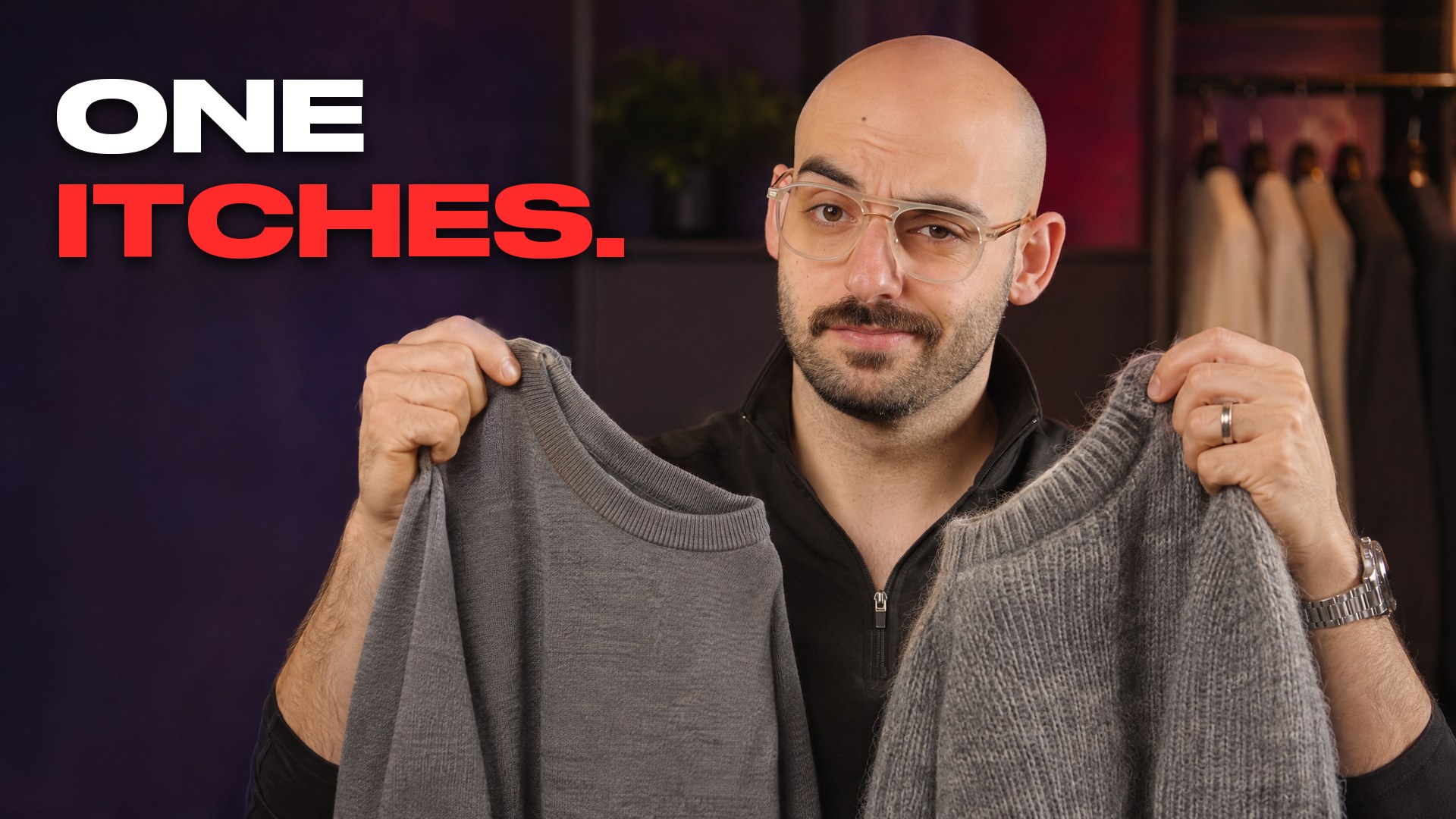
Two sweaters, both labeled 100% wool. One of them is so soft and supple you'd sleep in it. The other one keeps you itching and feels much more coarse. It's the same word on the label and two completely different sweaters, and the difference comes down to the type of wool and one number.
Shadi Adada, co-founder and creative director of FittDesign, has seen a huge trend over the last five years toward thermal base layers made with Merino wool. The question founders keep running into is which version of wool to use: the off-the-shelf wool or Merino, and whether all Merino wools are created equal. Here's how the two compare, and where each one belongs in a collection.
The short answer: Merino is a much finer fiber than regular wool, so it bends against your skin where regular wool pricks it, while regular wool's thicker fiber is tougher and lasts longer. Merino belongs next to the skin and regular wool on the outside, and the fineness you want belongs in the tech pack, not just the word Merino.
Prefer to watch? The full episode is embedded at the bottom of this post, along with the complete script.
1. Same Word, Different Sheep
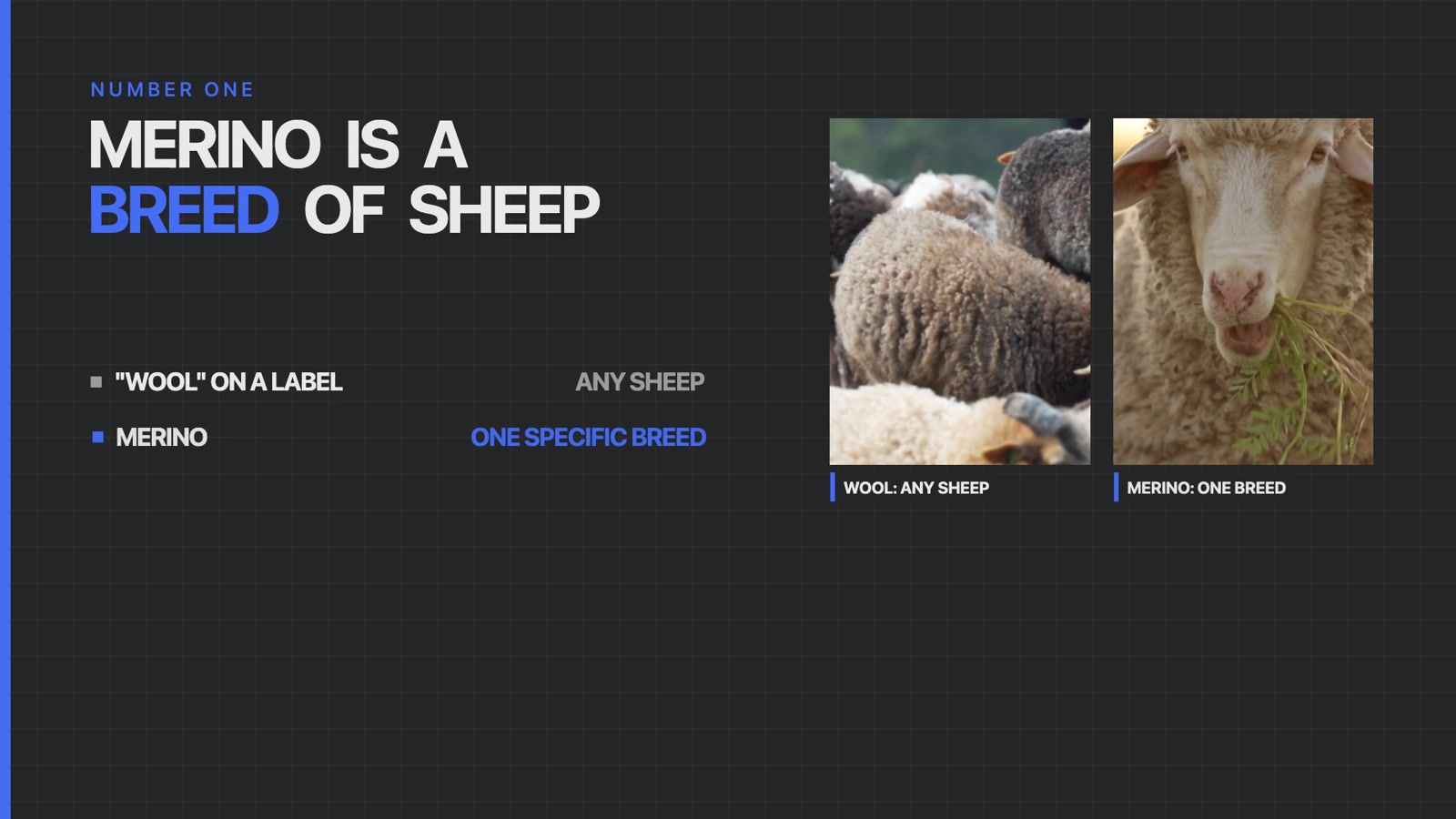
Both wool and Merino wool come from sheep. The difference is that "wool" on a label just means wool in general, from sheep, while Merino wool comes from one very specific breed of sheep, called Merino.
So two sweaters can both say 100% wool and still be made from very different fibers. The label tells you the wool came from a sheep. It doesn't tell you which one.
2. The Micron Decides the Itch
Wool is a fiber, and the way a fiber gets measured is by its diameter. Shadi describes fibers as really long strings, almost like your hair. Cut across one, and that section cut is what dictates how coarse or how thick the fiber is. For the most part, the thicker it is, the more coarse it feels, and the thinner it is, the softer it feels.
Here's how the numbers compare, as Shadi gives them in the episode:
- Merino wool: roughly 15 to 24 microns in diameter
- Superfine Merino: as thin as 17.5 microns, all the way down to 15 microns
- Regular wool: typically around 30 microns, almost double the thickness of Merino
- A human hair: around 60 to 80 microns
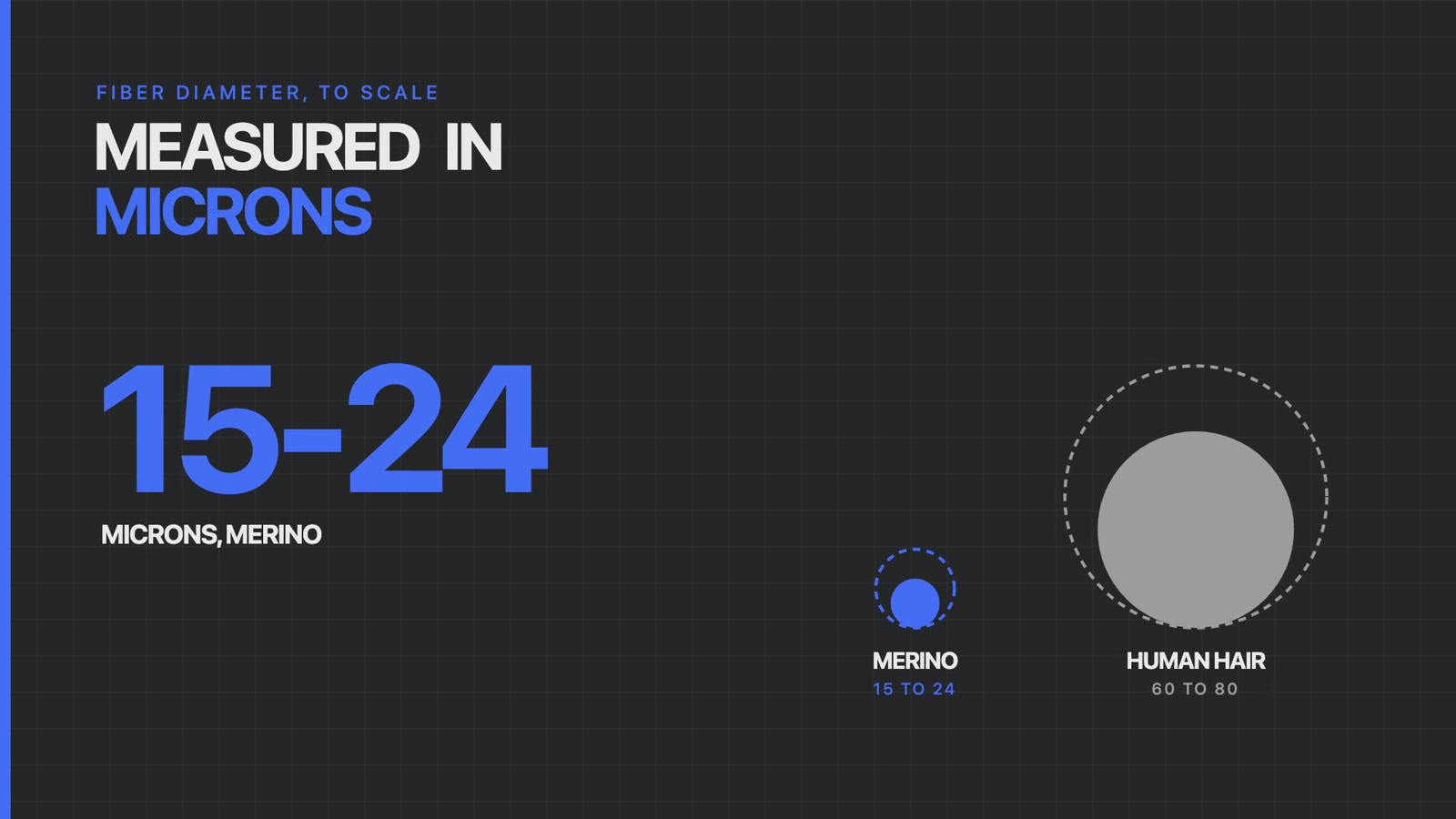
That diameter is what causes the itch. A thicker fiber is much less likely to bend softly, so it ends up pricking the surface of your skin, and that's what makes it feel itchy. A thinner fiber bends much more readily and conforms to the shape of your body, which is why you don't feel it when you wear it.
Rule of thumb: if the mill tells you a yarn is over 20 microns, you're looking at a coarser wool, and it's very unlikely to be Merino.
3. Where Regular Wool Wins
That doesn't make regular wool the loser. Its thicker fiber is tougher and more durable, so it can take a lot of wear and tear. Merino is a lot softer, and although it feels amazing, put it through repetitive friction and it's way more likely to wear away over time, to pill and to fuzz up.
That's why so much outerwear, like tweed jackets and pants, uses regular wool with a thicker diameter of around 30 microns. You're mostly not wearing those pieces on bare skin anyway, and you do want the longevity and durability that comes with a coarser wool. If pilling is already a worry in your line, FittDesign covers it in more detail in fabric pilling: causes, treatment and prevention.
Choosing a wool for your next collection?
Which wool goes on which piece, and how fine the Merino has to be, are worth settling with your manufacturer before the first sample is made.
4. Moisture, Sweat and Smell
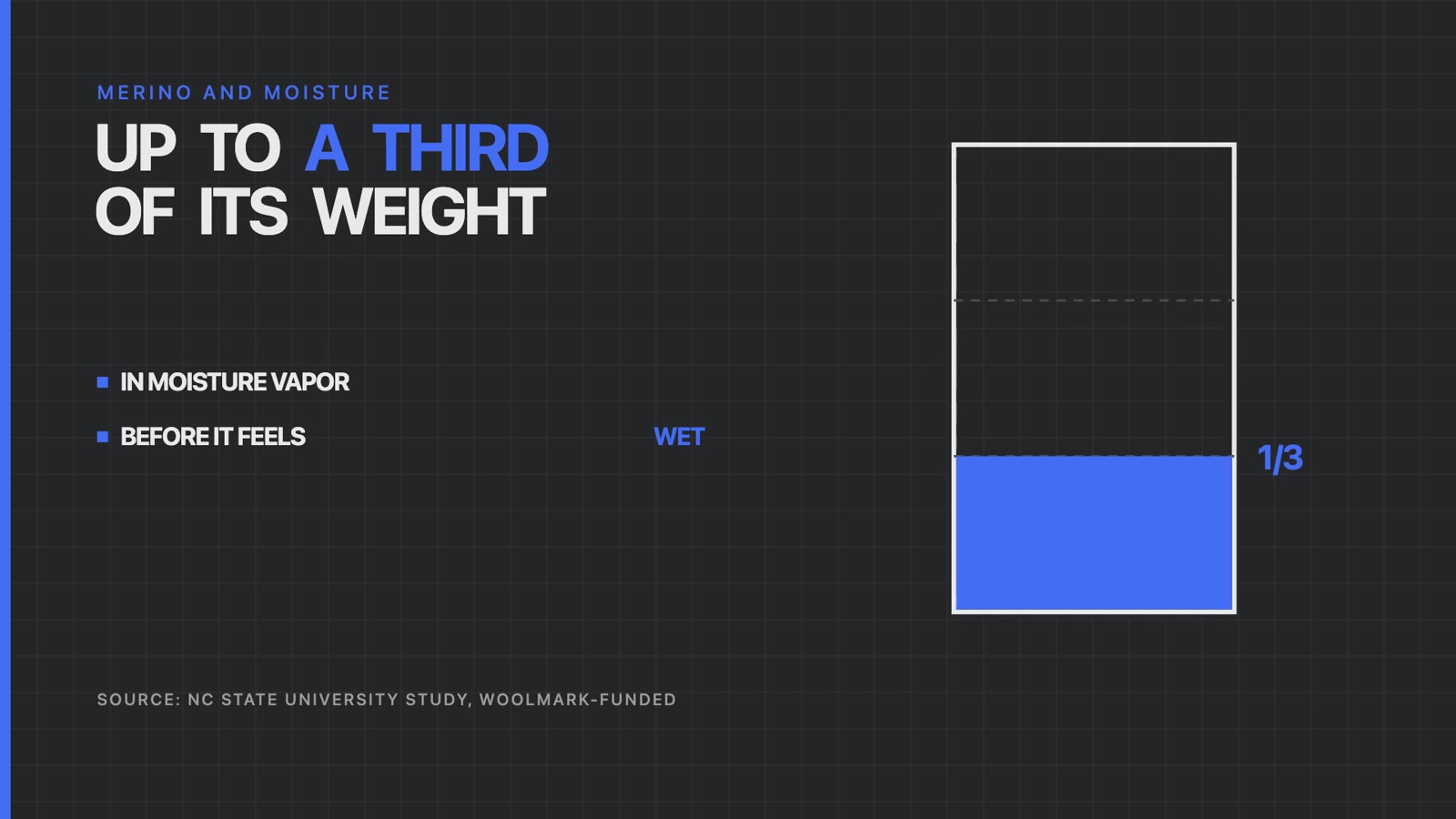
Because it's so fine, Merino can hold up to a third of its weight in moisture before it actually feels wet. That's why Shadi calls it excellent when it's raining or drizzling outside. You won't feel the moisture through the surface of the Merino until a substantial amount of it has built up.
He's upfront that this comes from an industry-funded study, but it lines up with what you'll see for yourself. Wear a Merino wool sweater out in a drizzle and the water tends to bead off the surface of the fabric.
5. The Wash, and What Superwash Means
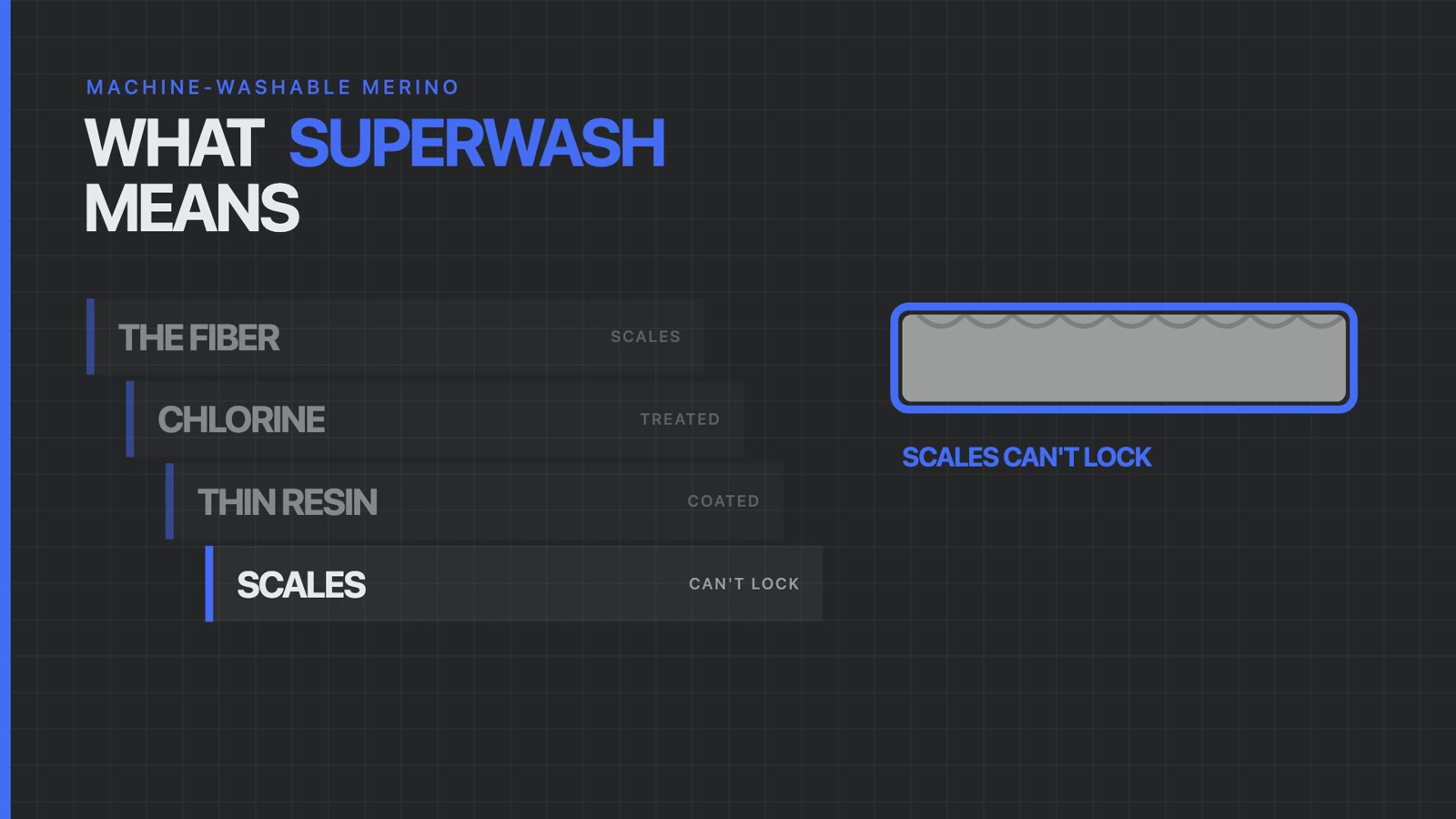
Merino wool, and wool in general, is very difficult to wash, and you definitely don't want to machine wash it. Under a microscope, every wool fiber has tiny scales on it. When the fibers get washed and lumped together, those scales hook onto each other, sort of like Velcro, so they rub and catch and the wool loses its shape over time. That's the typical shrunk sweater that comes out looking clumped up.
Machine washable Merino is usually a superwash. The fibers are treated with chlorine and then coated with a thin resin, so the scales can't lock up against each other.
Spec tip: superwash is a wash treatment, so it fades away through wear and tear over time. It's something to ask your manufacturer about before you count on it.
The Verdict: Merino Inside, Regular Wool Outside
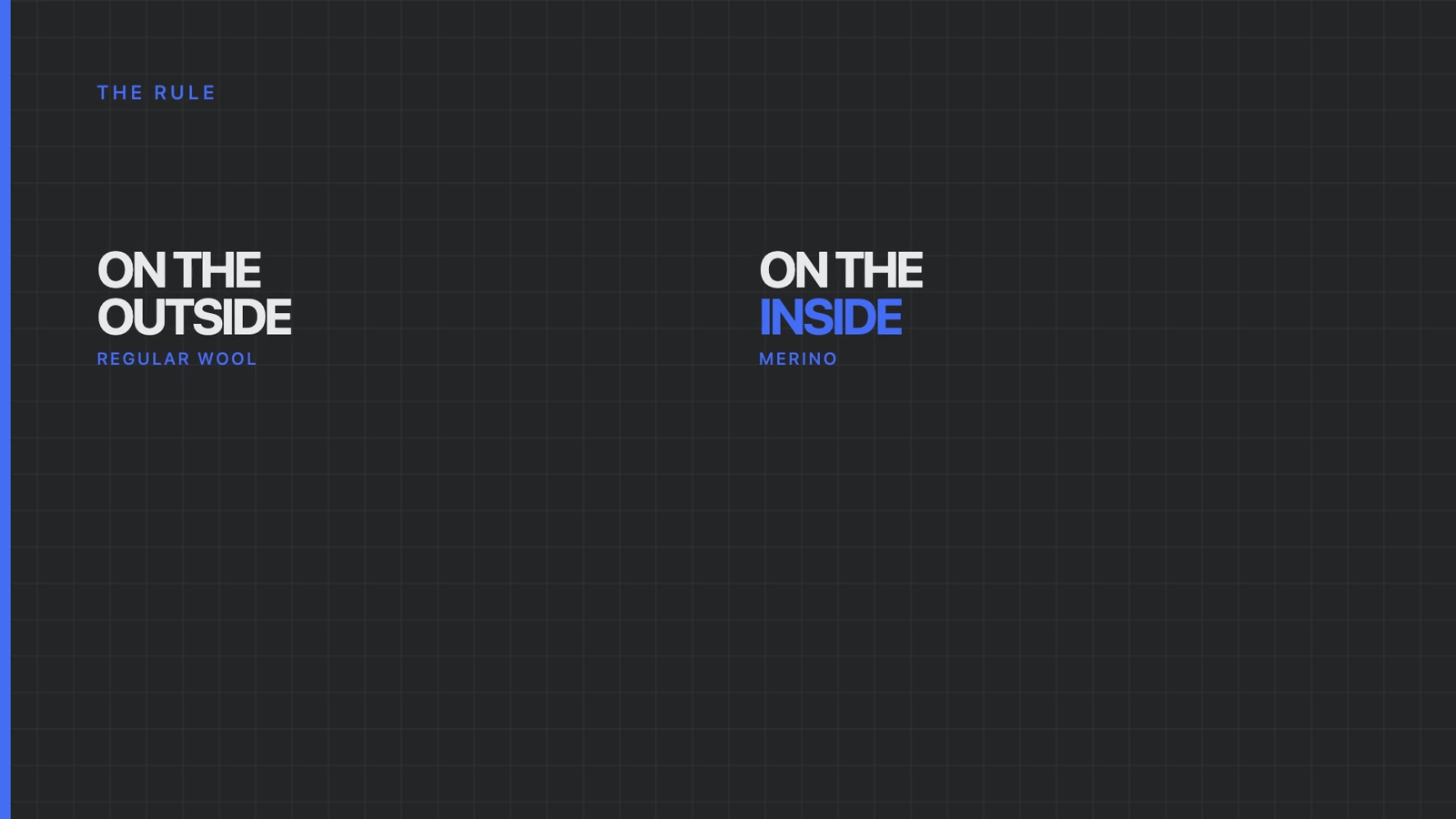
Shadi's rule is that anything on the outside is regular wool and anything on the inside is Merino.
- Pick Merino if it's a base layer fitted up against the body, like thermal long sleeves, or you're using wool as an alternative to cotton, or to nylon and polyester in leggings.
- Pick regular wool if it's an outer layer, like sweaters, jackets, coats or thick pants.
If you're building a brand around the quality of your wool, Shadi recommends going one step further than asking for Merino. Ask the manufacturer or the mill what the fineness of the yarn is. If the answer is anything over 20 microns, you're getting a coarser wool, and that's very unlikely to be Merino.
If you're weighing other natural fibers for leggings as well, Shadi compares them in Modal vs Cotton vs Tencel: the best natural legging.
🎬 Watch the full episode. Shadi walks through the micron numbers, the itch and the superwash treatment with animations of each one. Watch on YouTube

Full Episode Script
This is the script of the episode as Shadi delivered it, lightly edited for reading.
Two sweaters, both 100% wool
So let's say that you have two sweaters. One of them you would sleep in. It's so soft, so supple, super easy to sleep in. The other one keeps you itching and just feels much more coarse. On the label, they both say 100% wool. What's the difference there?
Well, they are the same word, but we have completely different sweaters, and this comes down to the type of wool. You've obviously heard of Merino wool as being the finer, silkier, softer wool. So if you've ever wondered what the difference is between regular wool and Merino wool, and whether you're a designer looking to incorporate Merino or regular wool into your next collection, whether it's in sportswear, streetwear or any sort of casual activewear, well, this is going to be the episode for you.
My name is Shadi Adada, and over the last five years I've seen a huge trend towards thermal base layers that are constructed using Merino wool. It's typically seen as a great alternative to some of the natural fibers like cotton, and it provides great thermal properties, which make it a great choice. But the challenge is which version of the wool to use. Do you just go with the off-the-shelf wool, or do you go with Merino wool? And are all Merino wools created equal? Well, that's exactly what we're going to be discussing in today's episode.
1. Same word, different sheep
Number one, we have to understand that both wool and Merino wool come from sheep, but Merino wool specifically comes from a very specific breed of sheep that creates the Merino wool. So the distinction there is that wool is just wool in general that comes from sheep, and Merino wool comes from the specific breed of sheep called Merino. So this is where we get the distinction between them.
2. The micron decides the itch
Now, what is the difference specifically? Well, what we have to understand is that wool is a fiber, and the way that we measure a fiber is the diameter of the fiber itself. If you think of fibers as these really long strings, almost like your hair, the section cut is what dictates the coarseness or the thickness of that fiber. The thicker it is, the more coarse it's going to be. The thinner it is, the more soft it's going to be, for the most part.
So when we take the section cut of Merino wool, we typically tend to see that Merino wool is between, let's just say, 15 to 24 microns in its diameter, versus the human hair, which is around 60 to 80 microns. So you can kind of see there where the distinction is. Whereas with a regular wool, you typically tend to have it be at around 30 microns. So when you're comparing Merino to regular wool, regular wool is almost double the thickness in diameter of Merino wool. And superfine Merino wool can be as thin as 17.5 microns, all the way down to 15 microns.
So the thing that causes itchiness when we wear wool versus Merino wool is the thickness, or the diameter, of the fiber itself. When it's a thicker fiber, it's much less likely to bend softly, and it ends up pricking the surface of your skin, which is what makes it feel itchy. A softer and thinner diameter bends much more readily and conforms to the shape of your body, which is why you don't feel it when you wear it.
3. Where regular wool wins
Number three. So, is this all doom and gloom for regular wool? Well, actually, not quite, because where regular wool wins is that the thicker fiber is ultimately going to be tougher. It's going to be more durable, so it has the ability to take wear and tear. Whereas Merino wool is going to be a lot softer, and although it feels amazing, if you subject it to repetitive friction, it's way more likely than regular wool to wear away over time, to begin to pill, to begin to fuzz up.
So this is why you tend to see a lot of outerwear, like tweed jackets and pants, use regular wool with a thicker diameter, around 30 microns, rather than Merino wool. You're not going to be wearing them on the bare skin anyway, for the most part, and you do want that longevity and that durability that comes with coarser wool.
4. Moisture, sweat and smell
Number four is how wool retains and deals with moisture, sweat and smell. Well, Merino, because of its super fineness, can hold up to a third of its weight in moisture before it actually feels wet, which is why Merino is excellent when it's raining outside and it's drizzling. You will not feel the moisture through the surface of the Merino until you get a substantial amount of moisture on it.
Now, this is an industry-funded study that's able to show this, but it does definitely line up with what you might see. Wear a Merino wool sweater, go out when it's drizzling, and you'll tend to see the water just bead off the surface of the fabric.
5. The wash, and what superwash means
Number five comes down to washing it. You've probably seen this before: Merino wool, and wool in general, is very difficult to wash, and you definitely don't want to machine wash it. So why is this? Because every wool fiber has these tiny scales that you'd be able to see if you looked at it underneath a microscope. And it's those scales that, when washed and lumped together, end up sort of like Velcro, hooking onto each other. That's what makes them rub and catch, and makes the Merino wool and the regular wool lose their shape over time. That's your typical shrunk sweater that just looks clumped up. All those little scales are hooking against each other and causing the fiber to lose its shape and its integrity.
So when it comes to a machine washable Merino wool, it's usually a superwash, which means that the fibers themselves get treated with chlorine, and then they're coated with a thin resin so that those scales can't lock up against each other. But one thing to understand is that this is specifically a wash treatment, so it does fade away through wear and tear over time. So this is something to ask your manufacturer about.
The verdict
So what is the verdict? Well, when it comes to comparing Merino wool to regular wool, if you're dealing with anything to do with a base layer that's fitted up against the body, such as thermal long sleeves, or maybe you're using wool as an alternative to cotton, or to nylon and polyester in leggings, then you definitely want to use Merino wool. If you're using anything in outer layers, such as sweaters, jackets, coats or thick pants, then you want to go for wool. So anything on the outside, regular wool, and anything on the inside, definitely Merino wool.
And if you're building a brand and you want to focus on the quality of your wool, don't just ask for Merino. Go one step further and ask your manufacturer or the mill what the fineness of the yarn is. If they give you anything over 20 microns, then you know that you're going for a coarser wool, which is very unlikely to be a Merino wool.
Work with us 1-on-1
So if you guys have enjoyed this episode, and you're looking to incorporate Merino wool into your next activewear collection and you don't know where to start, you can check out the link in the description to apply to work with us one-on-one. Within five minutes, a real human will get back to you with a personalized production roadmap on how we can help you take your idea and get a real physical sample in your hands in 30 days or less.
And guys, I say this from the very bottom of my heart, thank you so much for tuning in to this episode of FittDesign TV. Until next week's episode, stay awesome.
About FittDesign
FittDesign is a sportswear design agency. The team helps brands design, develop and produce quality activewear, sportswear and streetwear, from the first sketch and tech pack through sampling and bulk production.
Ready to bring Merino into your next collection?
Tell us what you're making and a real human will get back to you within five minutes with a personalized production roadmap. From your idea to a real physical sample in your hands in 30 days or less.
Get a quote → Takes 2 minutes. No obligation.