

Modal vs Cotton vs Tencel: The Best Natural Legging?
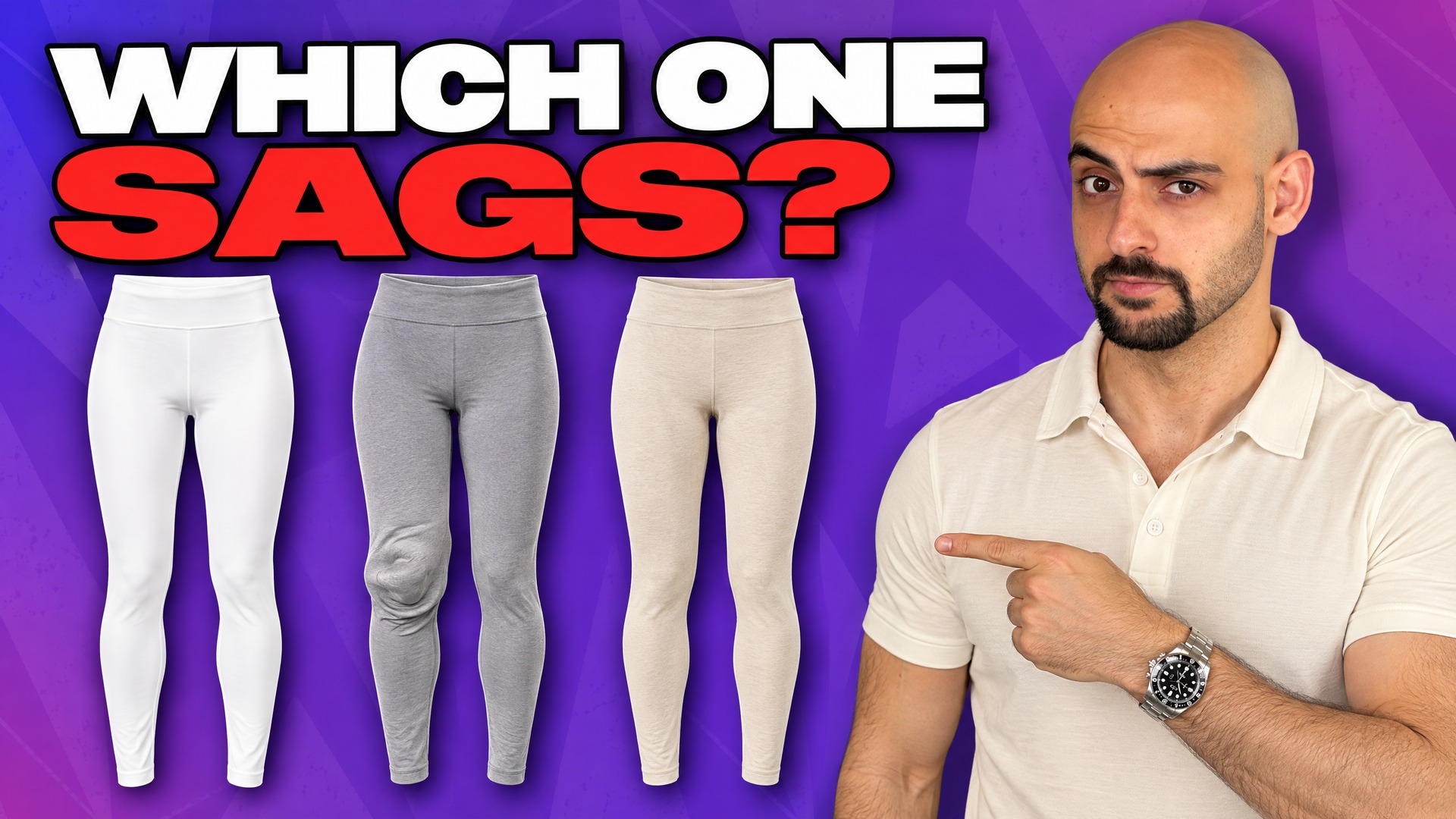
A founder wants a legging with no plastic in it. Cotton, maybe merino, maybe something "natural" like Tencel or modal, because they've heard about forever chemicals in synthetic activewear and they want a cleaner brand story. It's a good instinct, and it's one of the most common requests we get.
The catch is what happens the moment the legging is stretched. Shadi Adada, co-founder and creative director of FittDesign, has spent the last ten years helping thousands of brands take activewear from an idea to market, and over the last four years he has watched demand for natural fiber activewear explode. Here is how he walks founders through the choice, and what to settle before anything goes into a tech pack.
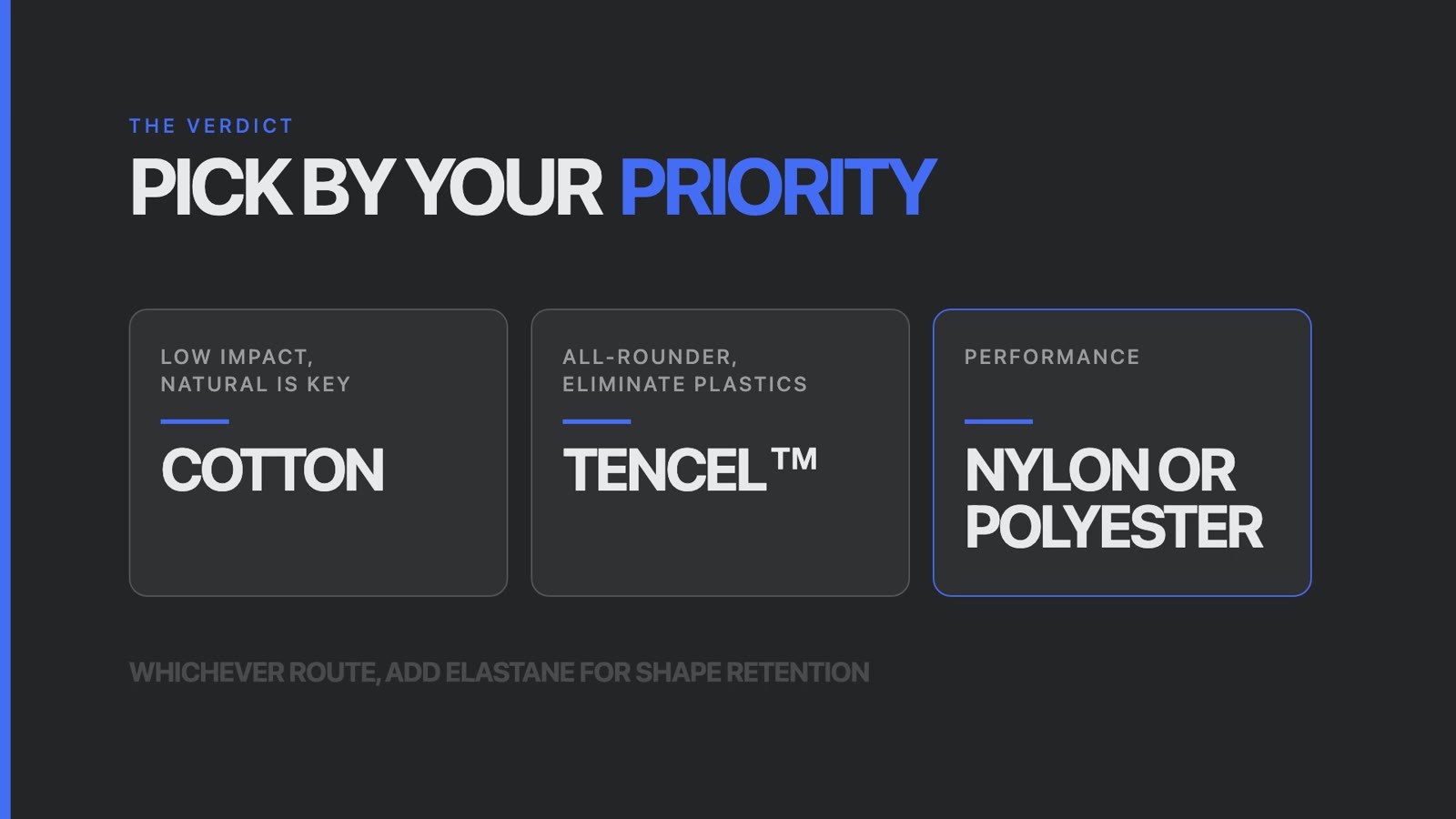
In one line: no fiber does everything. Pick cotton for low impact, Tencel as the all-rounder when the goal is to cut plastics, and nylon or polyester when performance comes first, and whichever you choose, you will still need some elastane for shape retention.
Prefer to watch? The full episode is embedded at the bottom of this post.
1. The real job of a legging is shape retention
A legging is a fitted garment worn in active situations: the gym, yoga, running, or simply something comfortable that makes you feel put together. Whatever the use, it has one job. It has to stretch, and then snap back into shape.
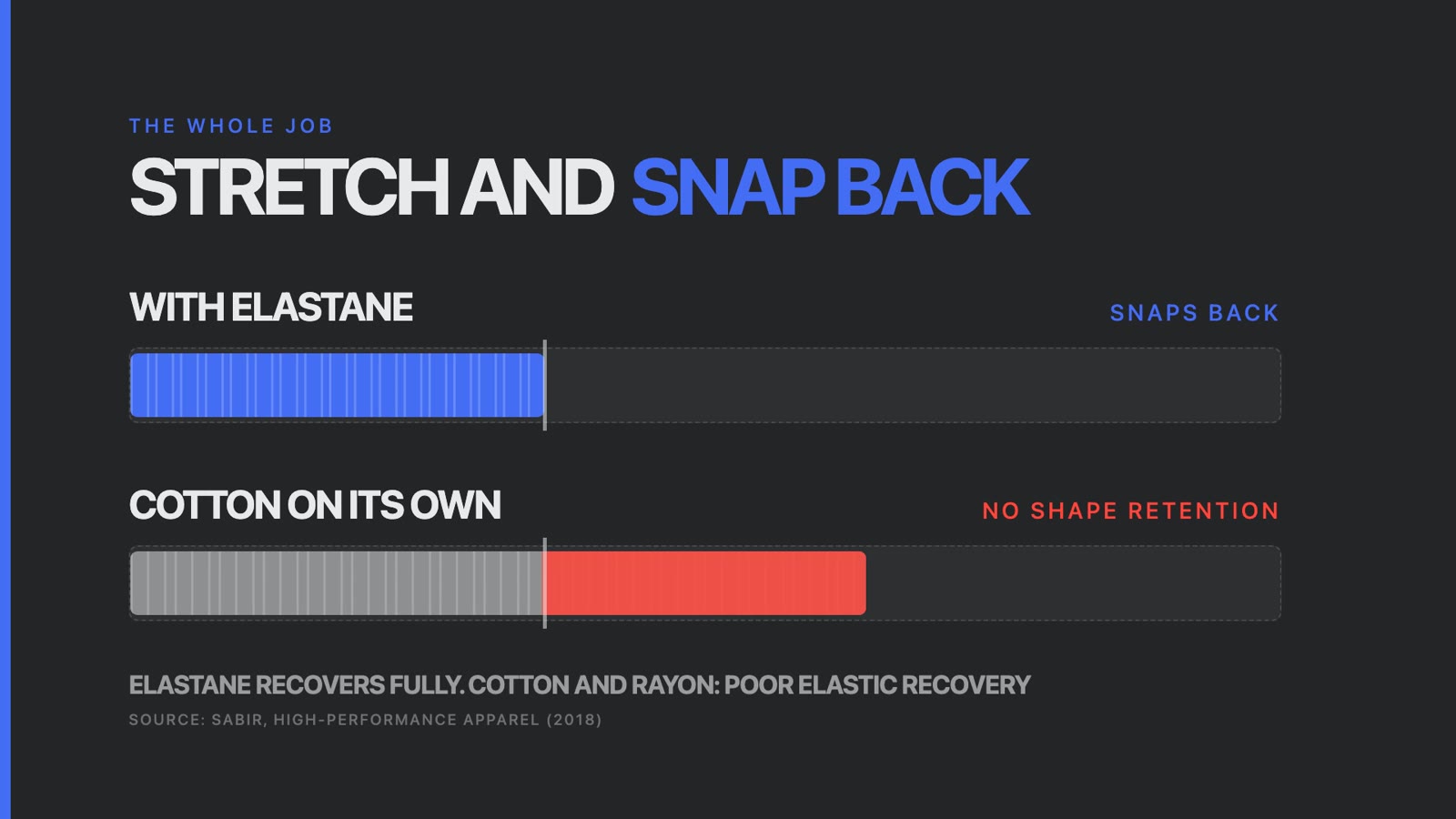
That is where most natural fibers struggle. Cotton on its own loses its shape the second it is stretched. In Shadi's fittings a cotton legging goes at the knees first, then the back rise, and after a couple of wears it simply looks tired. Textile references say the same thing: fibers with poor elastic recovery, like cotton and rayon, produce fabrics that stretch out of shape, while elastane recovers fully (source).
2. Cotton is an emotional decision
Choosing cotton for a legging is mostly an emotional decision rather than a practical one. You are telling yourself that to satisfy the need for a natural fiber, you will give up a lot of performance.
That can be the right call. If hand feel and the psychological comfort of an all-cotton legging matter most to your customer, it is possible. But even an all-cotton legging needs a percentage of elastane added to make it work, so the real question becomes how much, and how transparent you want to be with your customers about the spandex in the finished garment.

3. Modal, lyocell and Tencel are made from wood pulp
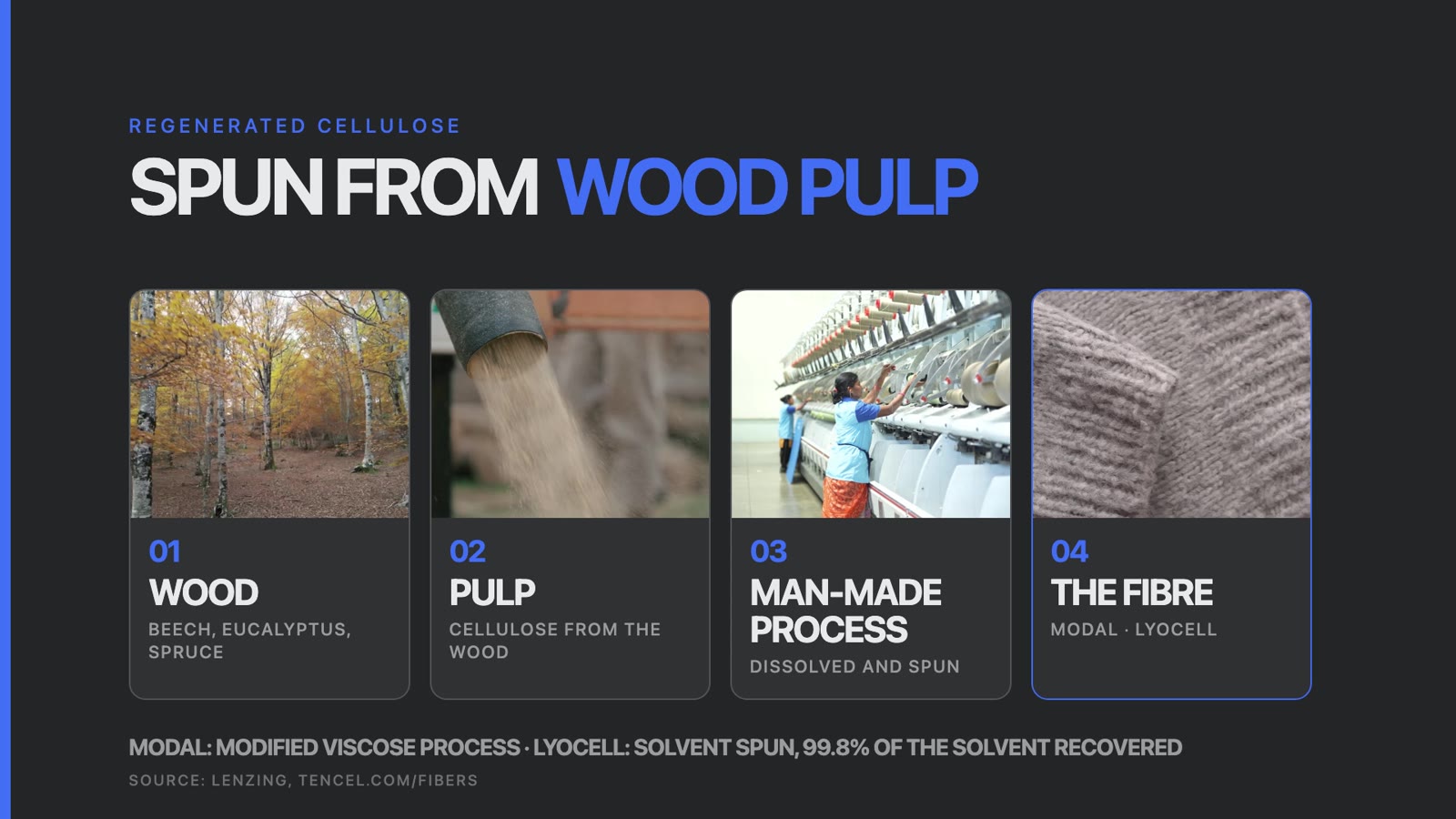
If cotton is not the answer, the next option is the regenerated cellulosic fibers: modal and lyocell. They start as wood pulp and go through man-made processes to become a fiber, which is why Shadi calls them semi-synthetic. Tencel is the name most people know them by. Strictly, TENCEL is Lenzing's brand name, and it covers both its lyocell and its modal fibers (Lenzing).
The appeal is the balance: a natural hand feel with some of the moisture wicking, stretch and durability you get from polyester and nylon. The trade-off is that it is still not fully natural or plastic-free, because man-made processing is part of how it is made. It is, in Shadi's words, a lot better than polyester or nylon on that front.
4. Where Tencel shines, and where it pills
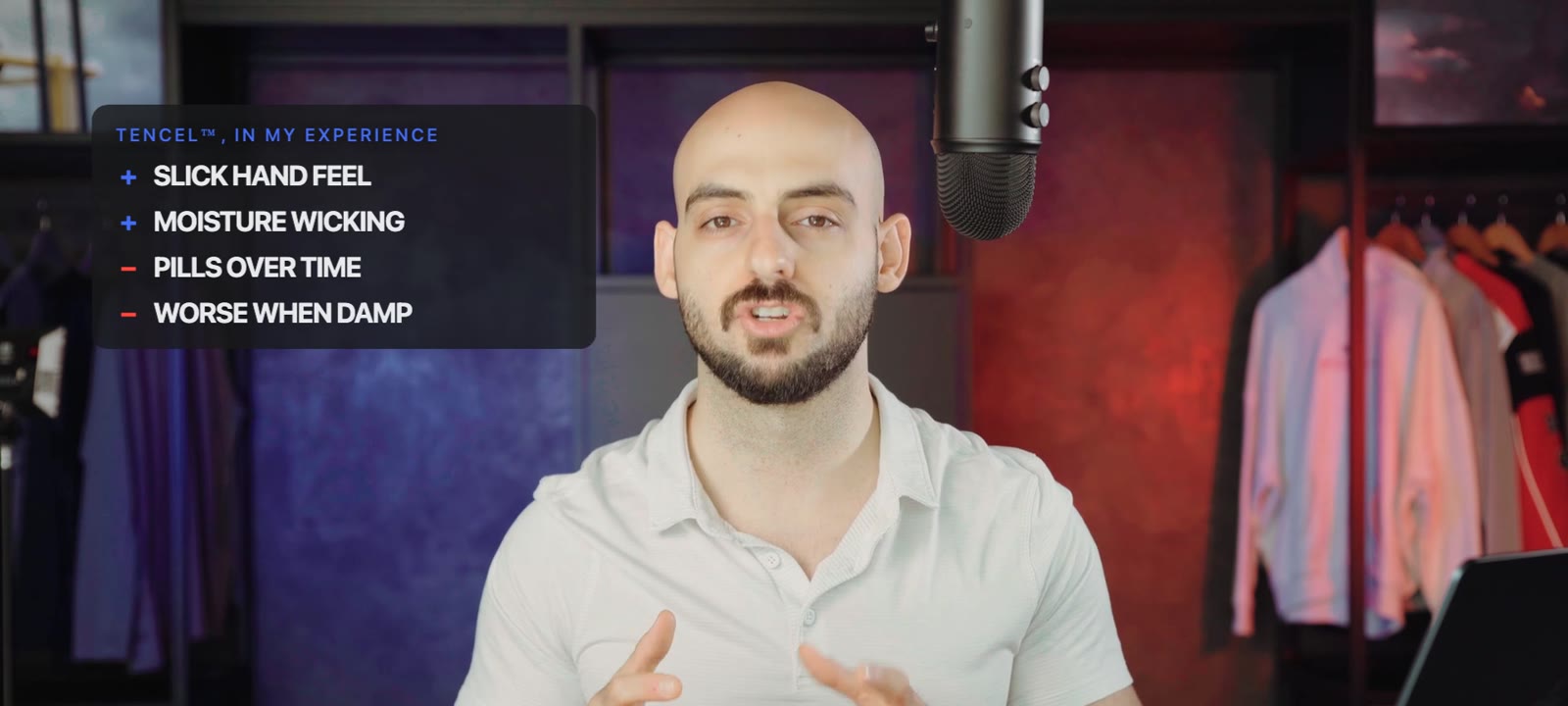
Compared with nylon and polyester, a Tencel legging gives you less compression, less rigidity and less structure. In Shadi's experience it has a lovely slick hand feel and good moisture wicking, but it does tend to pill over time, especially in damp conditions. (We cover what causes pilling in more detail in 7 leggings questions answered.)
The reason is friction. Moisture builds up on the surface, and training puts that damp surface under constant rubbing, which causes more pilling than a nylon or polyester legging would take.
Not sure which fiber your legging should be built on?
The fiber, the elastane percentage and the fabric weight all have to be settled with the mill before the first sample is cut.
5. You are choosing wear and tear, and elastane
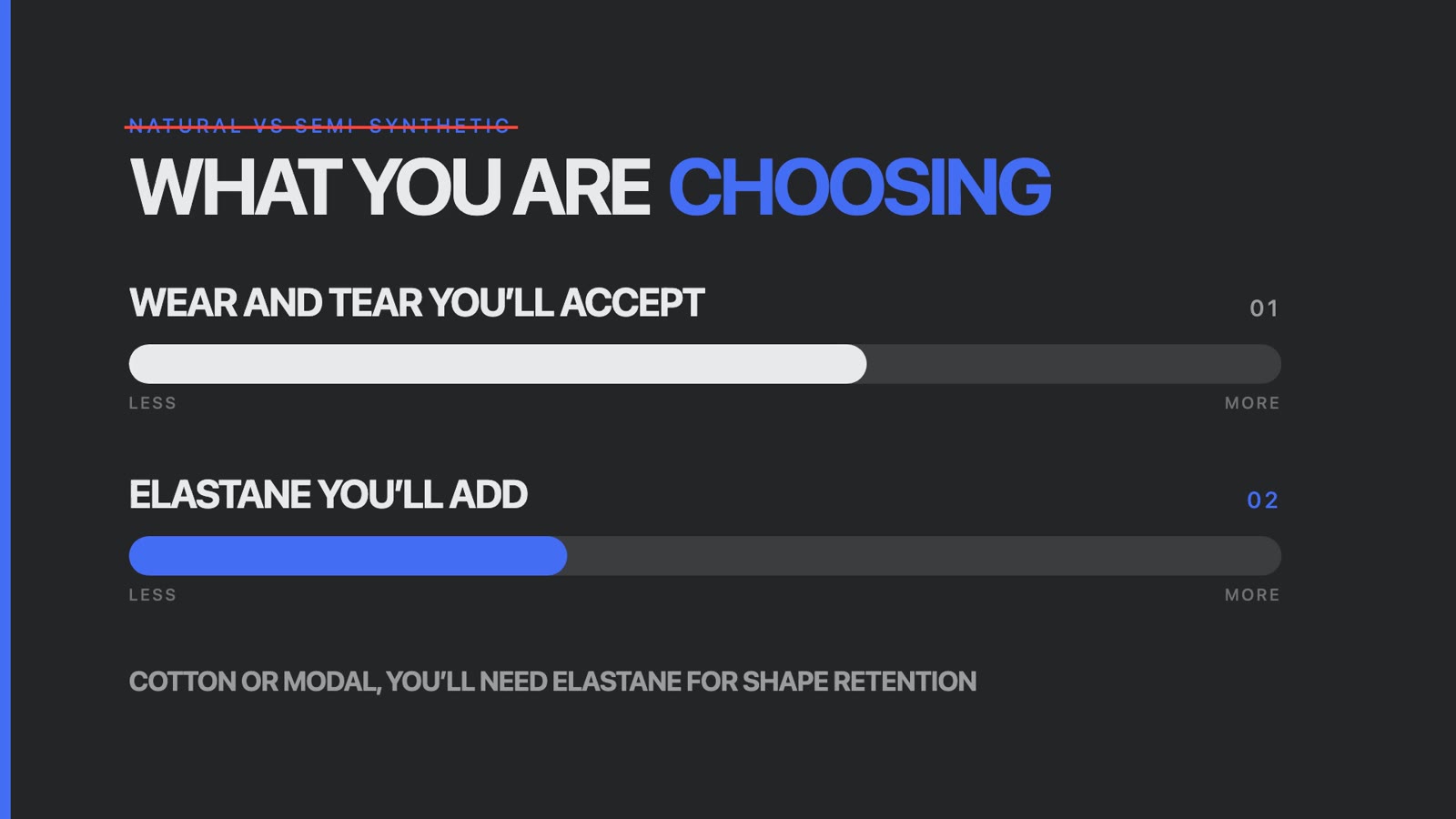
There is no perfect fiber that does everything. So you are not really choosing between natural and semi-synthetic. You are choosing how much wear and tear you are willing to accept, and how much elastane you are prepared to add, because whether you go with cotton or modal, you will need elastane for shape retention.
Low impact, or a cut that is not as close to the skin: cotton can be an option.
A bit more performance: Tencel is a real contender, with limits.
Purely performance focused: nylon and polyester, or a bio-based alternative, with a healthy amount of spandex.
6. Were nylon and polyester ever the villains?
If performance is the priority, Shadi's view is that nylon and polyester may never have been the real villains. Much of the problem sits in manufacturing practices, and there are mills that spin yarn more responsibly today. The harder part is often the psychological barrier your customer has to get past.
On performance, polyester leads on moisture wicking and durability. Nylon is close behind on wicking, resists odor better than polyester, and has a naturally slicker, softer hand feel. If cutting plastic is still the goal, our guide to designing a no-plastic sportswear collection goes further.
The verdict: pick by your priority
Ask what your priority actually is.
Low impact, and a natural fiber is key: go for cotton.
An all-rounder where the goal is to eliminate plastics: Tencel may be the one for you.
Performance first: nylon or polyester.
Whichever route you take, plan for elastane, and be open with your customers about how much is in the garment.
🎬 Watch the full episode. Shadi walks through all five points, with the animations above, in under ten minutes: watch on YouTube.
About FittDesign
FittDesign is a full-service design and production company for sportswear and activewear brands. We take you from the first sketch to a factory-ready tech pack, sampling and production, so the product that arrives is the one you pictured.
Ready to build your natural activewear line?
Fiber, elastane, weight and fit decide whether a legging holds its shape past the tenth wear. We spec all of it and sample it with the factory, with product in your hands in under 30 days.
Get a quote → Takes 2 minutes. No obligation.


