

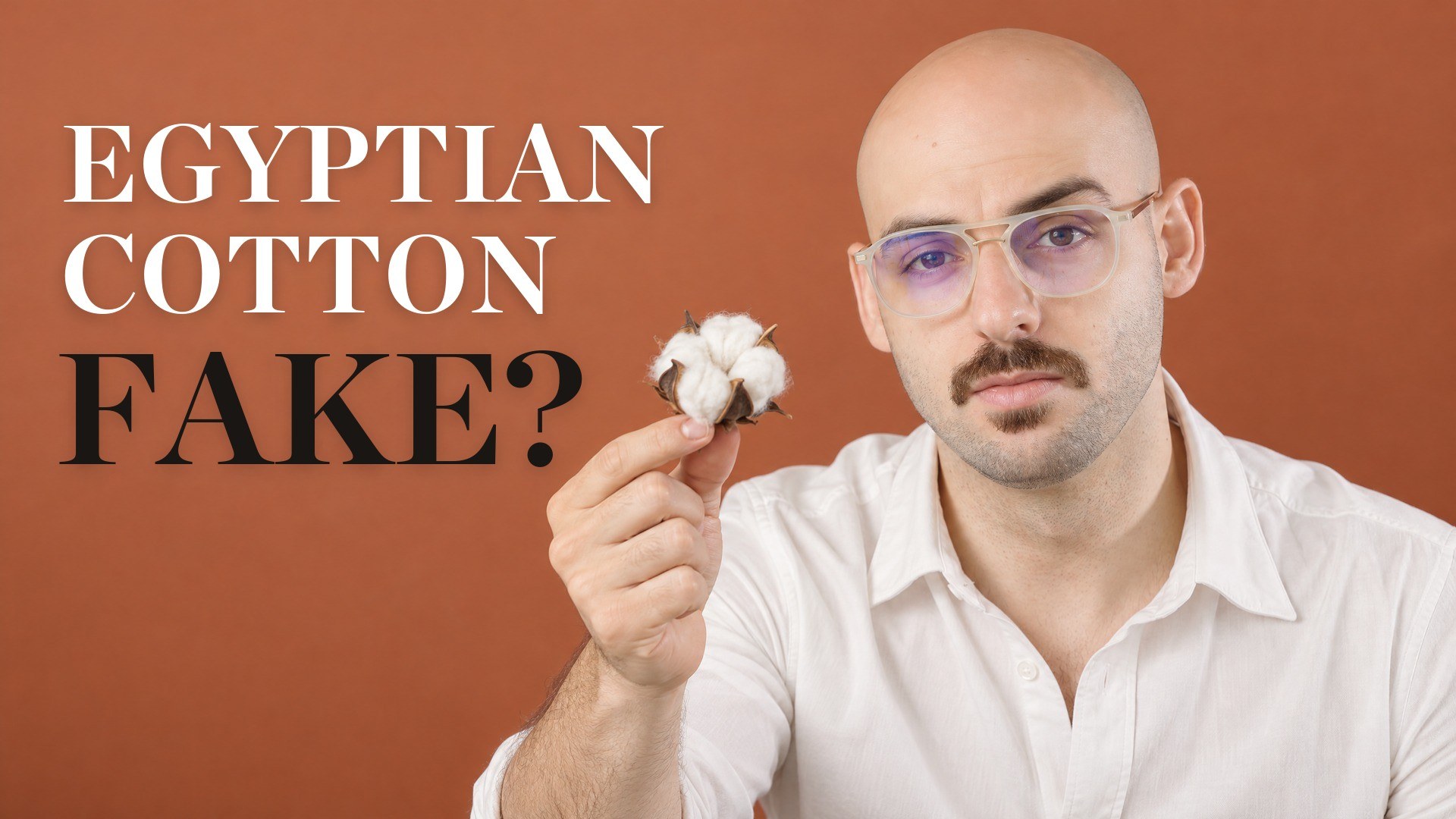
You're picking the fabric for your next premium cotton t-shirt, and the supplier hands you three options: Pima, Supima and Egyptian cotton. To the naked eye you can't tell them apart, but the quotes come back at three different prices, and every one of them sounds like the best cotton money can buy.
Shadi Adada, co-founder and creative director of FittDesign, has spent the last 10 years helping thousands of brands design, develop and produce quality apparel, and fabric is where a lot of that money quietly goes. This is his breakdown of what each name really means and what you're actually paying for.
The short answer: Pima is a plant, Supima is a brand name for certified American-grown Pima, and Egyptian is a country that grows both extra long staple and regular cotton. If you want a guarantee, Supima is the safest bet, and whichever you choose, it should be written into your tech pack so the factory can't quietly swap it.
Prefer to watch? The full episode is embedded at the bottom of this post, along with the complete script.
1. Staple Length Is the Whole Story
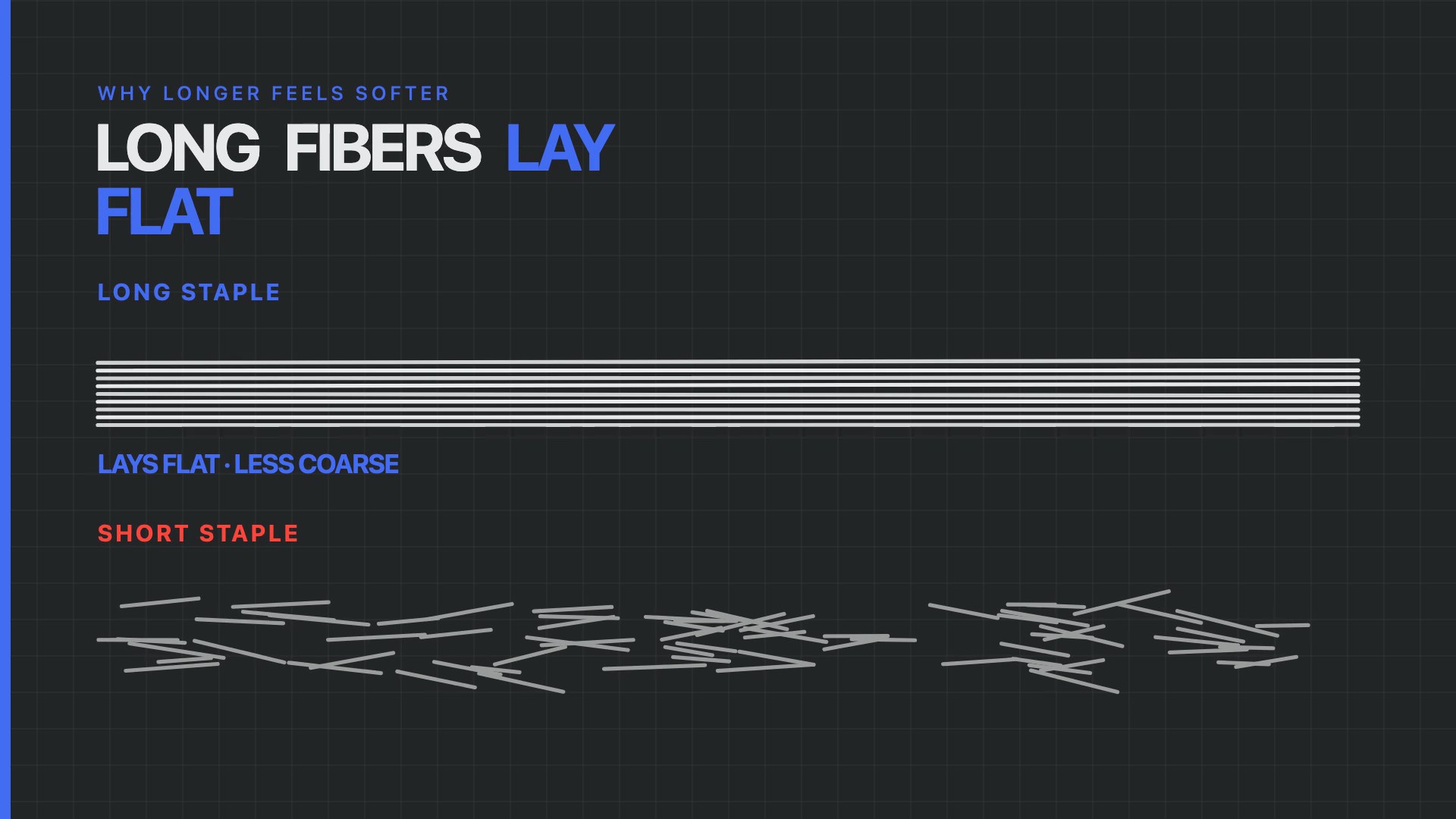
Break a cotton fabric down and you get threads, then yarns, then fibers. The fiber is the base component, and with cotton, how soft and premium a fabric feels comes down to how long each fiber is. That length is called the staple length.
Extra long staple cotton, or ELS, is the fiber that gives you that very premium soft touch. Pima is an ELS cotton, and its staple runs at least one and three eighths of an inch.
Longer fibers resist sticking out of the yarn, so the surface of the fabric lays flatter and feels less coarse. With a shorter staple, more fiber ends poke out of the surface, and that's what makes regular cotton feel rougher.
Rule of thumb: a longer staple means fewer loose fiber ends, which means a softer, flatter surface and less pilling.
2. Pima Is a Plant
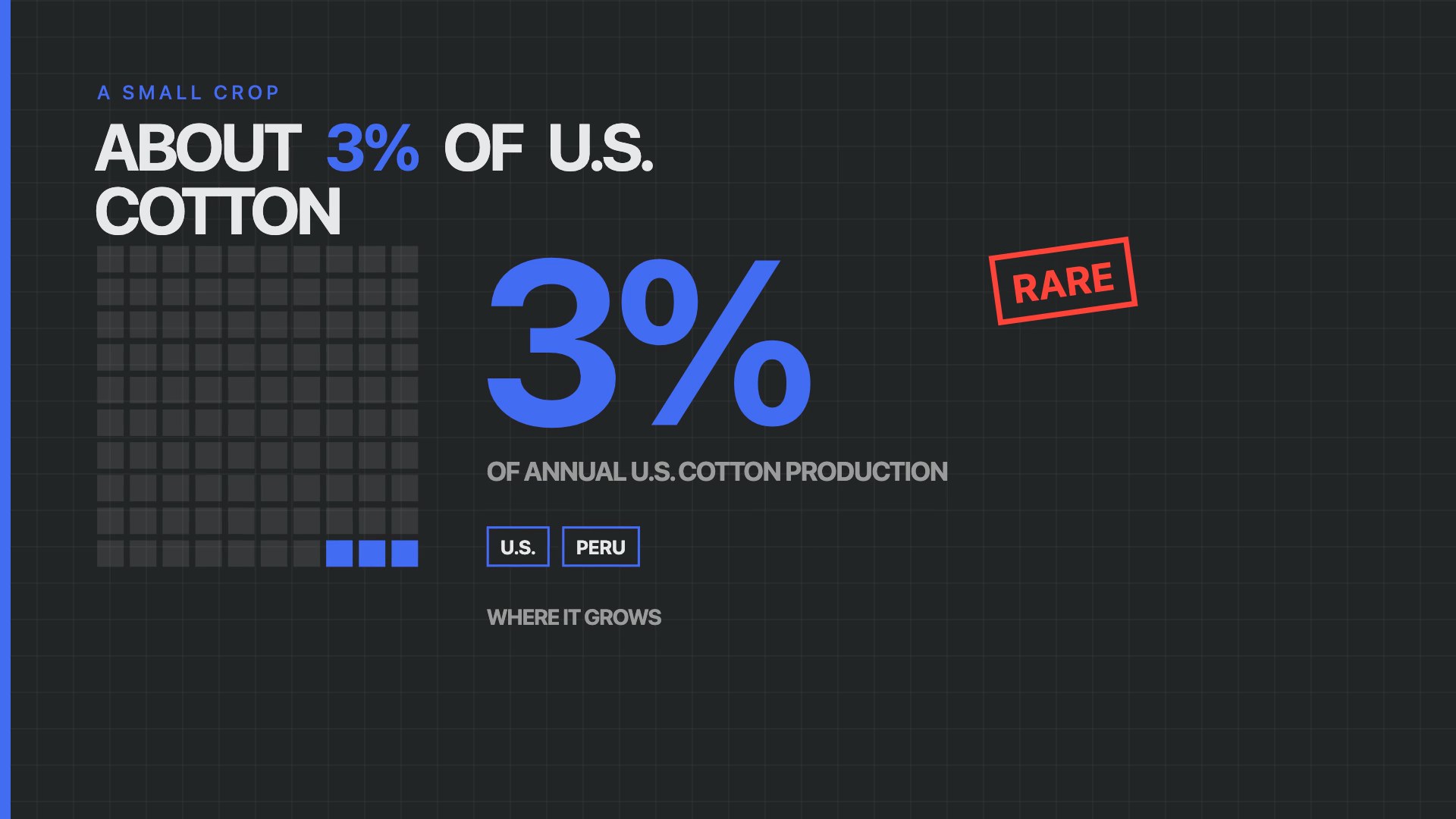
Pima is a specific type of cotton plant. It was bred from Egyptian cotton by the USDA in Arizona around 1910, and it's a small crop, around 3% of total annual U.S. cotton production. That's why it's rare and not in large supply. Today it's grown in the U.S., Peru, Australia and other regions with a similar climate.
So Pima on a label tells you the variety of the plant, and usually that means the longer staple. What it doesn't tell you is the quality. In Shadi's words, unless it's validated by a third party, it's a moot point.
3. Supima Is a Brand Name
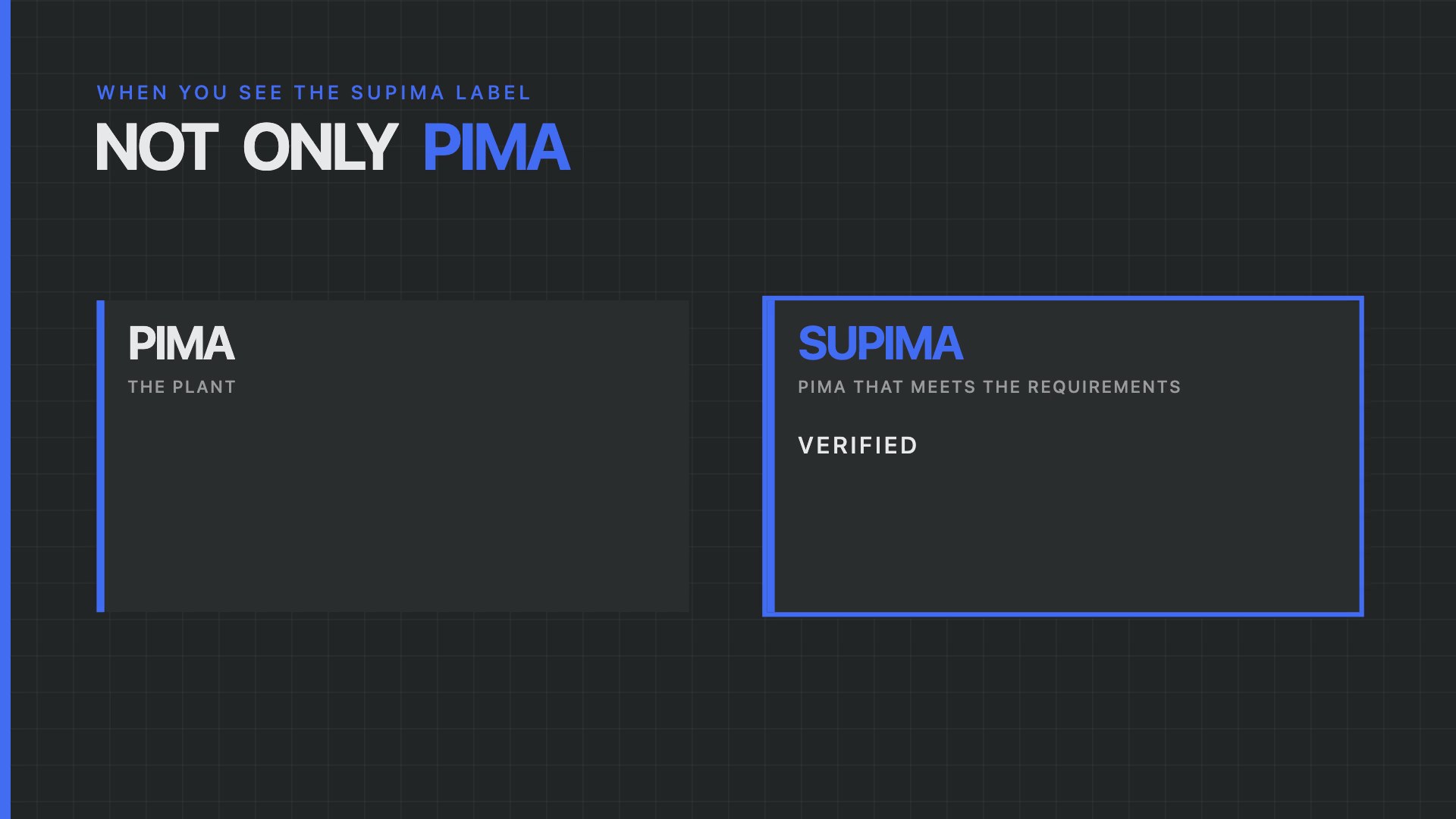
Supima works almost like an organization. It's a brand name for brands and mills that agree to use 100% American-grown Pima, with an entity overseeing the production and certifying that the fiber is exactly what it says it is.
When a customer sees the Supima label, they understand it's Pima that meets the requirements of what qualifies as Pima cotton. If you're creating a mass market product focused on quality and you want immediate trust with the customer, Shadi recommends the Supima label because it's universally understood as verified Pima.
Choosing the fabric for your first premium tee?
The cotton name, the weight and the knit all need to be settled in the tech pack before the first sample, so what comes back is what you paid for.
4. Egyptian Is a Country
Egypt is well known for growing extra long staple cotton, especially the famous Giza varieties. Egypt also grows regular cotton, the same kind grown worldwide, so cotton from Egypt isn't all created equal. Seeing Egyptian cotton on a tank top doesn't necessarily mean you're getting ELS.
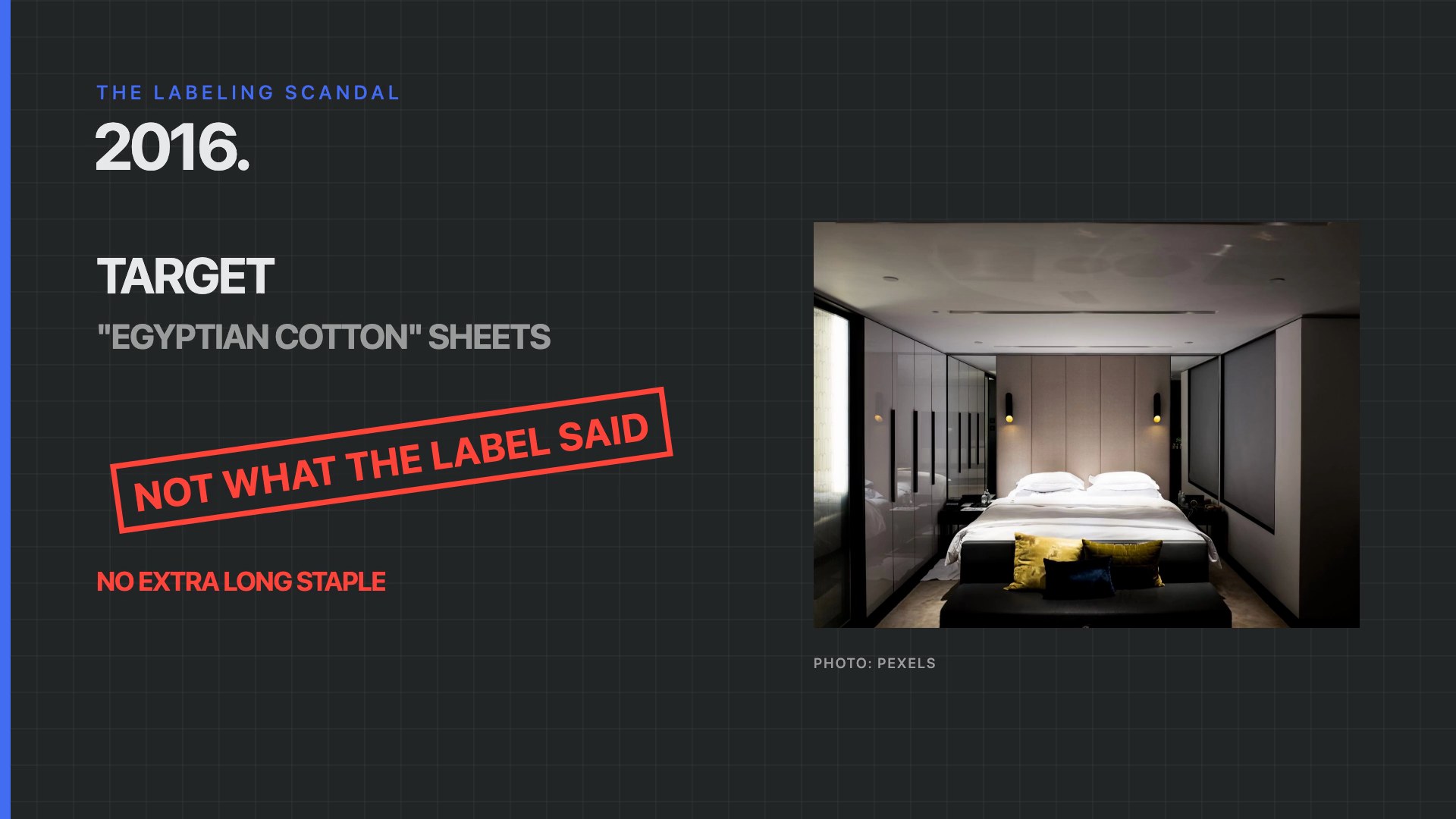
In 2016, Target found that the Egyptian cotton sheets coming from its supplier weren't what the label said. Since then, the Cotton Egypt Association DNA-tests the cotton that uses its logo, to make sure it meets the requirement for true premium Egyptian cotton. With no logo, there's very little guarantee you're getting ELS Egyptian cotton.
5. What You Can Actually Feel
True Pima, true Supima and true Egyptian cotton all qualify as ELS. For the price, you get a much more premium hand feel and a slight sheen. Really high quality cotton looks less matte than regular cotton because the fibers lay flat, almost like a mirror.
- It pills a lot less over a couple of washes, because the yarns are more compact.
- The yarns can be knit much tighter, which gives a more lustrous hand feel overall.
- Shorter staple cotton won't hold up anywhere near as well over the long run.
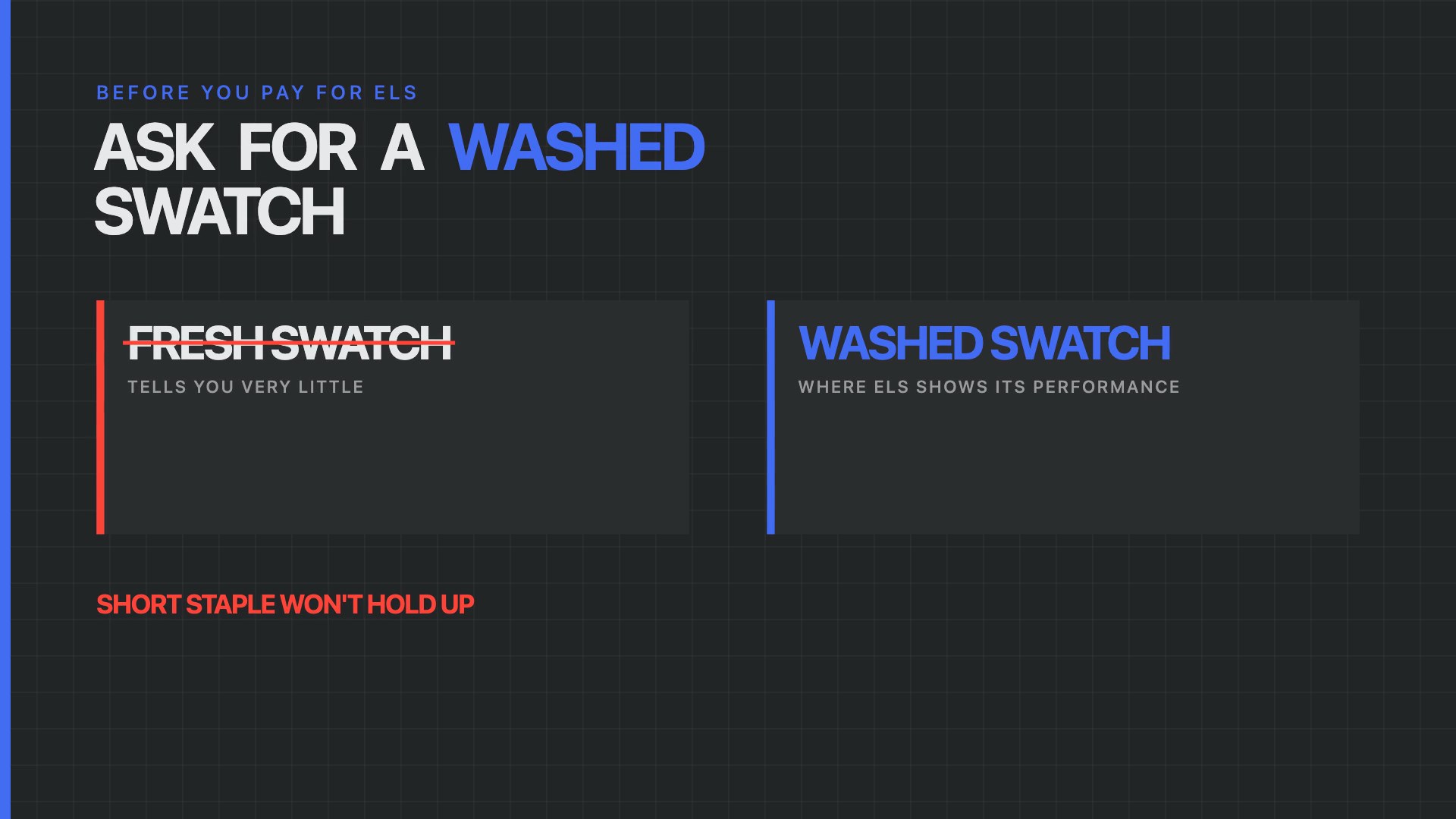
That's why Shadi always asks for a washed swatch, not just a fresh one. Washing is where you really see the performance of high quality ELS cotton.
The Verdict: Which One to Pay For
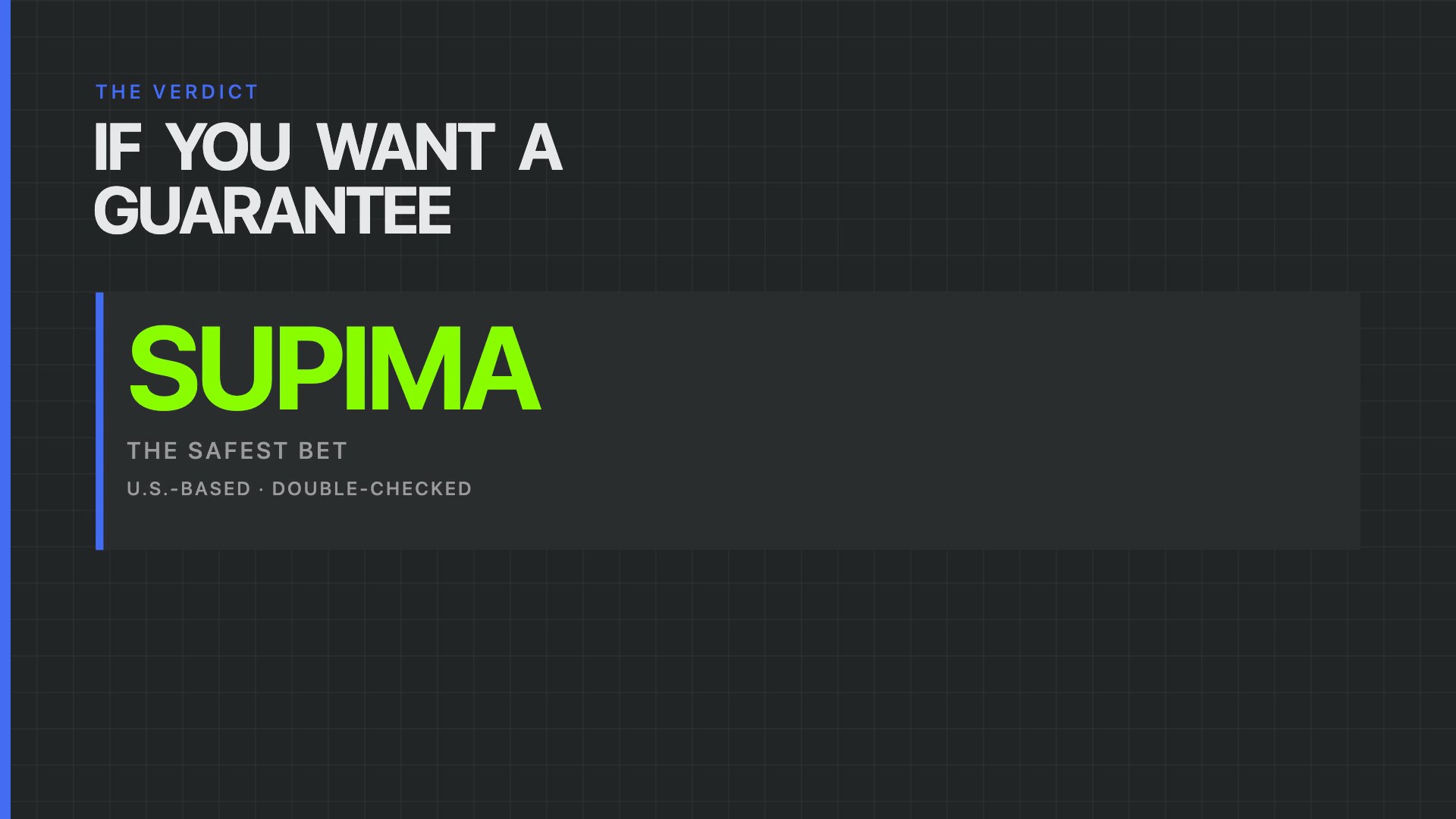
- Supima if you want an international guarantee. It's U.S.-based and double-checked, which makes it the safest bet.
- Pima if you trust the supplier and their certification and want to save a little money.
- Egyptian only if it carries the Cotton Egypt logo, so you know it's certified and is what it says it is.
The trade-off is cost. ELS cotton can run 1.5x to 2x the price of traditional cotton, depending on the supplier, the quantity and the thickness, so it's worth keeping in mind when you set your retail price.
If you're designing the tee itself, Shadi's breakdown of how oversized t-shirts are actually designed covers the fit and the fabric weight.
🎬 Watch the full episode. Shadi walks through all three cottons with the animations and footage from the studio. Watch on YouTube

Full Episode Script
This is the script of the episode as Shadi delivered it, lightly edited for reading.
Intro
So let's just say that you're picking the fabric for your next premium cotton t-shirt. You're building the essential line of your brand and you're trying to build the best possible cotton t-shirt.
You're presented with three premium cotton options that seem very similar, but on the pricing side they're different. You're presented with Pima cotton, number one, Supima cotton, number two, and Egyptian cotton, number three. To the naked eye you can't tell the difference, but when you're presented with the quotation, the story is a little bit different.
Where is the advantage of one over the other? What's the difference between them? And what are you really paying for? On the surface they may seem similar, but one is a country, one is a region, and one is an actual validation and quality attestation. What this means is exactly what we're going to be getting into in this episode.
My name is Shadi Adada, and over the last 10 years I've helped thousands of brands design, develop and produce quality performance apparel, so I know a thing or two about the different ranges of cotton. If you've ever wondered what the king of the hill is when it comes to cotton, and what you should avoid as a marketing scam, this is going to be the episode for you.
1. Staple length is the whole story
Number one, we have to understand where cotton gets its softness, and this comes down to the staple length. When you break a cotton fabric down into its components, you take the fabric, and then you have the threads, then the yarns, and then the fibers.
The fibers are the base component of the fabric, and with cotton, what dictates whether something is soft or premium to the feel is the staple length, which is how long the fiber is. What we consider an extra long staple, the fiber that creates that very premium soft touch, is called ELS, extra long staple. Pima cotton tends to be at least one and three eighths of an inch in its staple length, and that's what dictates whether something can be considered an ELS fiber.
The reason it ends up being soft is that the longer the fibers are, the more resistant they are to sticking out. That means the surface of the fabric lays more flat and ends up way less coarse and rugged than a shorter staple length, where the fibers have a larger tendency to poke out of the surface.
2. Pima is a plant
Number two, we have to understand that Pima in and of itself is a specific plant. Pima originates from Egyptian cotton. It was bred from Egyptian cotton by the USDA in the Arizona region around 1910, and it's a small crop compared to the larger amount of cotton harvested. It accounts for around 3% of total annual U.S. cotton production, which is why it's very rare and not in large supply.
It's usually grown in the U.S., and it's grown in Peru, in Australia and in other regions of the world that are climatically similar to where it was originally bred.
So Pima on the label tells you that the plant is of that variety, but it doesn't necessarily tell you what the quality is. It gives you an indication of the type of plant, and usually that means the longer staple length, but unless it's validated by a third party, it's a moot point.
3. Supima is a brand name
Number three comes Supima. Once you've established that the Pima cotton plant is what creates Pima yarns, then you have Supima, which is almost like an organization that commits to a specific type of Pima. It's basically a brand name. It's brands and mills that agree to use 100% American-grown Pima, so there's an entity overseeing the production and the certification of these fibers and certifying that they're exactly what they say they are.
So as a consumer, when you see the Supima label, you understand that it's Pima that meets the requirements and qualifications of what qualifies as Pima cotton.
If you're creating a mass market product and your focus is on quality, and you want to give immediate trust and bridge the gap between you and the customer, the Supima label is something that's universally understood as verified Pima cotton.
4. Egyptian is a country
Number four is Egyptian cotton, good old Egyptian cotton. Egypt is well known for growing extra long staple cottons, specifically from the Giza plant, and it's very famous. But at the same time, Egypt grows the regular cotton we see worldwide, so cotton from Egypt isn't all created equal. Seeing Egyptian cotton on a tank top, for example, doesn't necessarily mean you're getting the extra long staple.
In 2016, Target found that its Egyptian cotton sheets coming from its supplier weren't actually Egyptian cotton. They didn't have any of those extra long staples that create that softer, better hand feel.
Since then, the Cotton Egypt Association DNA-tests all of the cotton that uses its logo, to make sure it meets the requirement of what's considered true premium Egyptian cotton. So if there's no official logo, similar to Supima, there's very little guarantee that it's actual ELS Egyptian cotton.
5. What you can actually feel
Number five is what ELS yarn, extra long staple cotton, actually feels like. We've already determined that true Pima, true Supima and true Egyptian cotton all qualify as ELS. So what are you getting for that price?
You're getting a much more premium hand feel and a slight sheen on the fabric. You'll see that really high quality cotton tends to look way less matte than regular cotton, because the fibers lay flat, almost like a mirror, and that's what gives the softer feel.
Over a couple of washes it's going to pill a lot less, because the yarns are much more compact. In general, with Supima, Pima or Egyptian cotton you can knit the yarns much tighter, which gives you a much more lustrous hand feel overall.
This is why you should ask for a washed swatch, not just a fresh one, because washing is really where you see the performance of high quality ELS cotton. Shorter staple length cotton won't hold up anywhere near as well as ELS cotton over the long run.
The verdict
So what's the verdict here? Ultimately, if you want an international guarantee, Supima is going to be the safest bet, because it's U.S.-based and it's double-checked to make sure it meets the requirements of Pima cotton.
If you just need Pima cotton in general and you want to save a little bit of money, and you trust the supplier and their certification, that's a great option.
If you're going for Egyptian cotton, make sure it has the Cotton Egypt logo, so you know it's certified and it is what it says it is.
The trade-off here is that, honestly, ELS costs more than traditional cotton. It can sometimes be 1.5x or 2x, depending on the supplier, the quantity and the thickness, so keep that in mind.
Work with us 1-on-1
If you've been considering creating your own products with premium cotton, check out the link in the description to apply to work with us one-on-one. We can help you take your idea and turn it into a physical product in under 30 days, and within five minutes of your inquiry a real human will get back to you with a personalized production roadmap on how we can help you turn that idea into a reality.
Guys, I say this from the very bottom of my heart, thank you so much for tuning in to this episode of FittDesign TV. Until next week's episode, stay awesome.
About FittDesign
FittDesign takes clothing brands from an idea to a physical product: design, factory-ready tech packs, sampling and production. A real person gets back to every inquiry within five minutes with a personalized production roadmap.
Ready to build your premium basics line?
Tell us about the product you have in mind and we'll map out the fabric, the tech pack and the route to your first sample.
Get a quote → Takes 2 minutes. No obligation.