

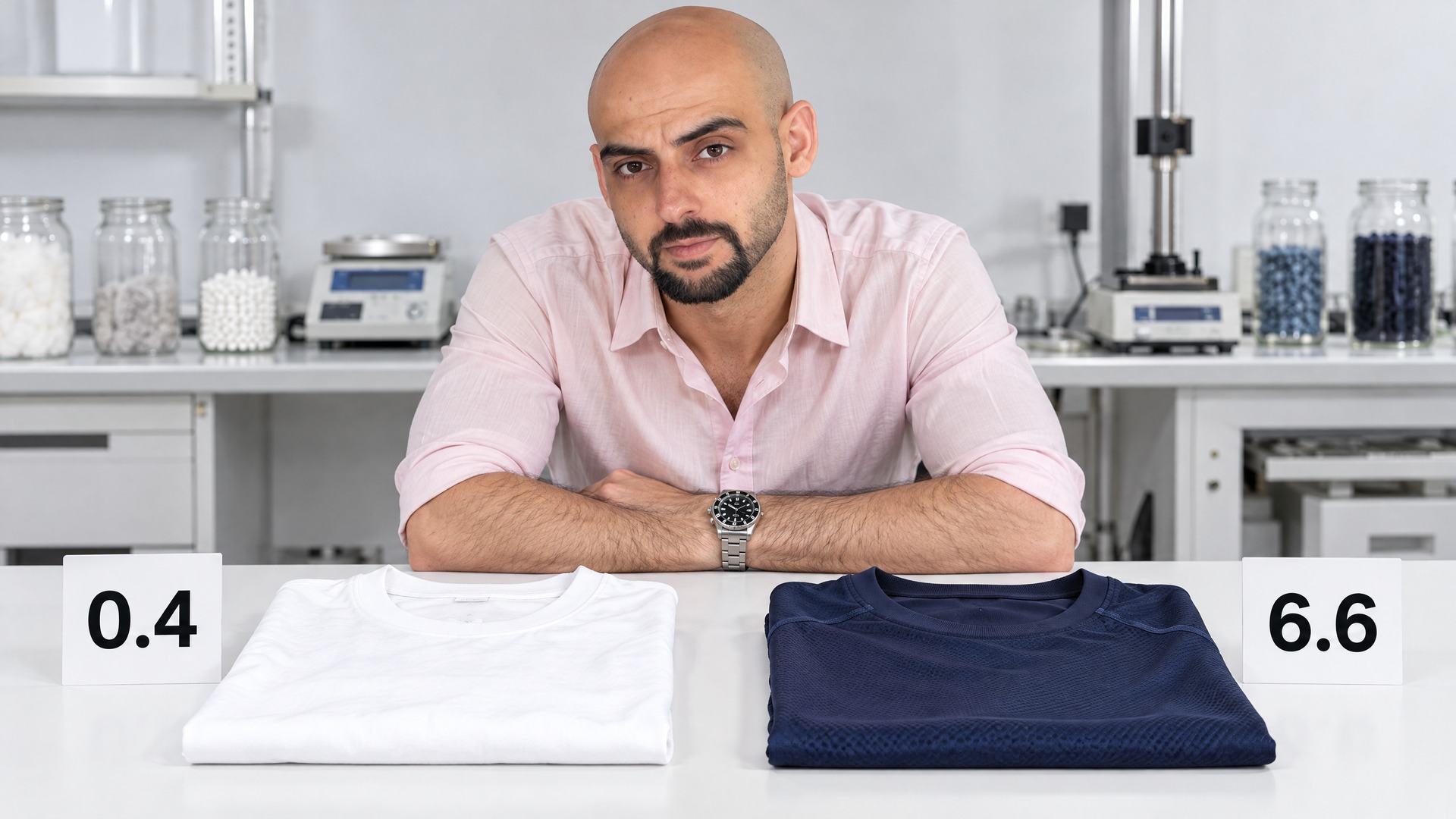
Your gym top comes out of the wash smelling fine. You put it on, and twenty minutes into a session the smell you were trying to get rid of is back. Same top, same detergent, same machine. So what's going on?
Shadi Adada is the co-founder and creative director of FittDesign, and over the last 10 years his team has helped hundreds of brands take an idea to a real, market-ready sportswear product. In his experience, some fibers simply hold on to odor, and no amount of wash cycles or detergent takes it all back out. When it comes to smell, polyester is the biggest offender.
The short answer: Odor-causing bacteria grow far more readily on polyester than on cotton, and the body oils they feed on stay locked in polyester fibers even after a wash, building up cycle after cycle. If you're the brand, the fix gets decided before production, with the right finish or blend written into your tech pack.
Prefer to watch? The full episode is embedded at the bottom of this post, along with the complete script.
1. The Bacteria Picks a Side
The bacteria behind gym clothes odor aren't one-size-fits-all. They pick and choose which fibers they grow on.
A 2014 study by Callewaert and colleagues, published in Applied and Environmental Microbiology, had people train in cotton shirts and in polyester shirts, then cultured what was growing on the inside of each one. Micrococci turned up in almost every synthetic shirt, and almost solely on the synthetic ones.
That matters because sweat isn't the thing you smell. Micrococci break down the compounds in sweat, and that's what creates the smell. They barely live in cotton, and they thrive in polyester.

2. A Panel Could Smell the Difference
This isn't only a microbiology finding. In the same research, people smelled the shirts after use. On a like-for-like basis, the odor from the polyester shirts was rated stronger and more unpleasant than the cotton ones, and it wasn't close.
Same use, same wear and tear, two fabrics, and the polyester one smelled significantly worse.
3. The Wash Doesn't Fix It
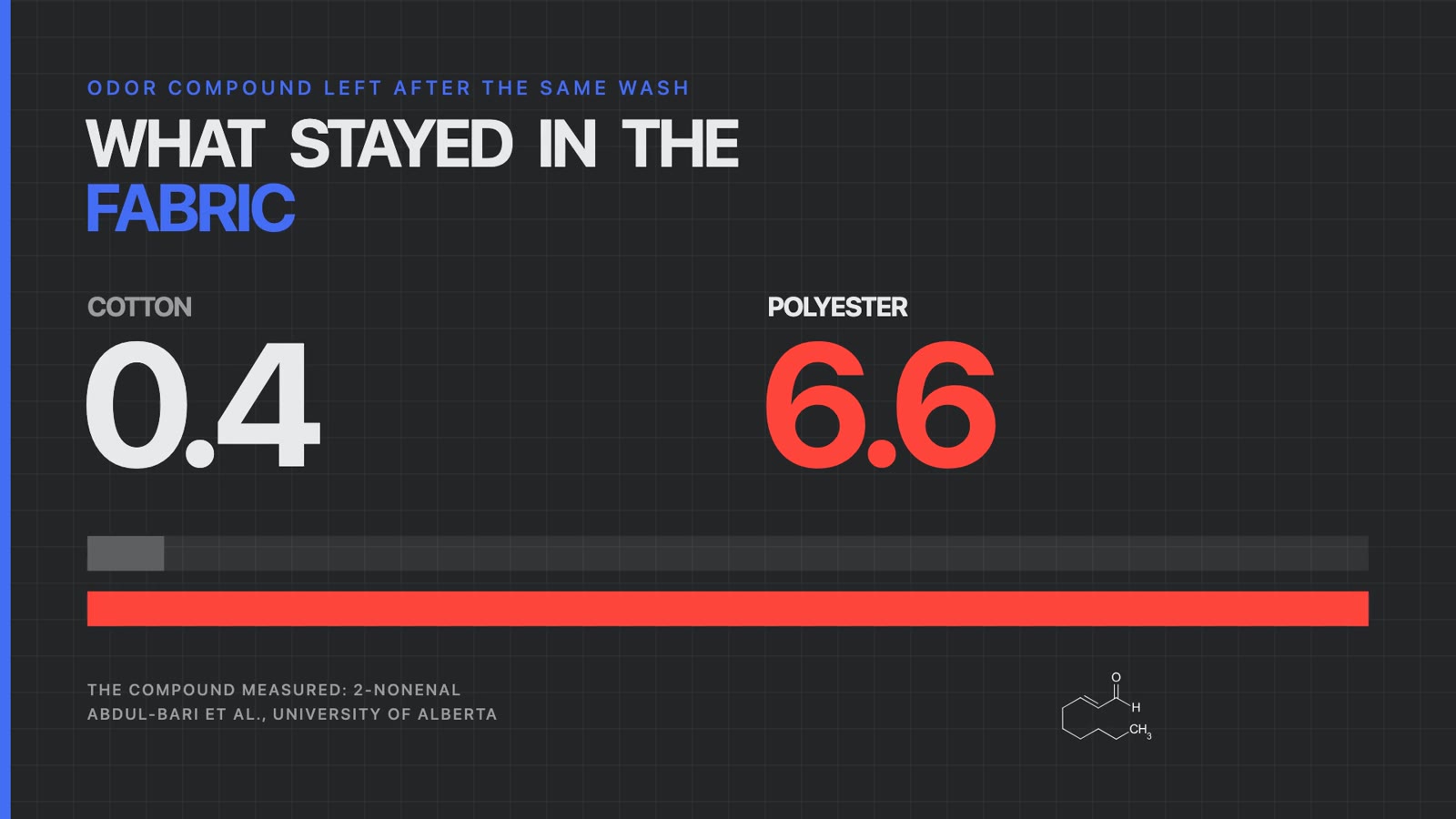
In a 2020 study at the University of Alberta, researchers soiled cotton and polyester with body oils, washed both through a set number of cycles, and measured what was still in the fabric afterwards.
Cotton came back at 0.4. Polyester came back at 6.6. That's roughly 16 times more left behind in the polyester, from the same wash.
The numbers: 0.4 left in the cotton, 6.6 left in the polyester, after the same wash.
Making performance gear that has to stay fresh?
The fabric, the blend and any anti-odor finish all need to be settled before the first sample, so the factory isn't left guessing what you want.
4. And It Builds Up
So can't you just wash it longer and harder? Unfortunately not. You can't wash polyester 16 times harder than cotton to get the same result, and washing more didn't help the way you'd expect.
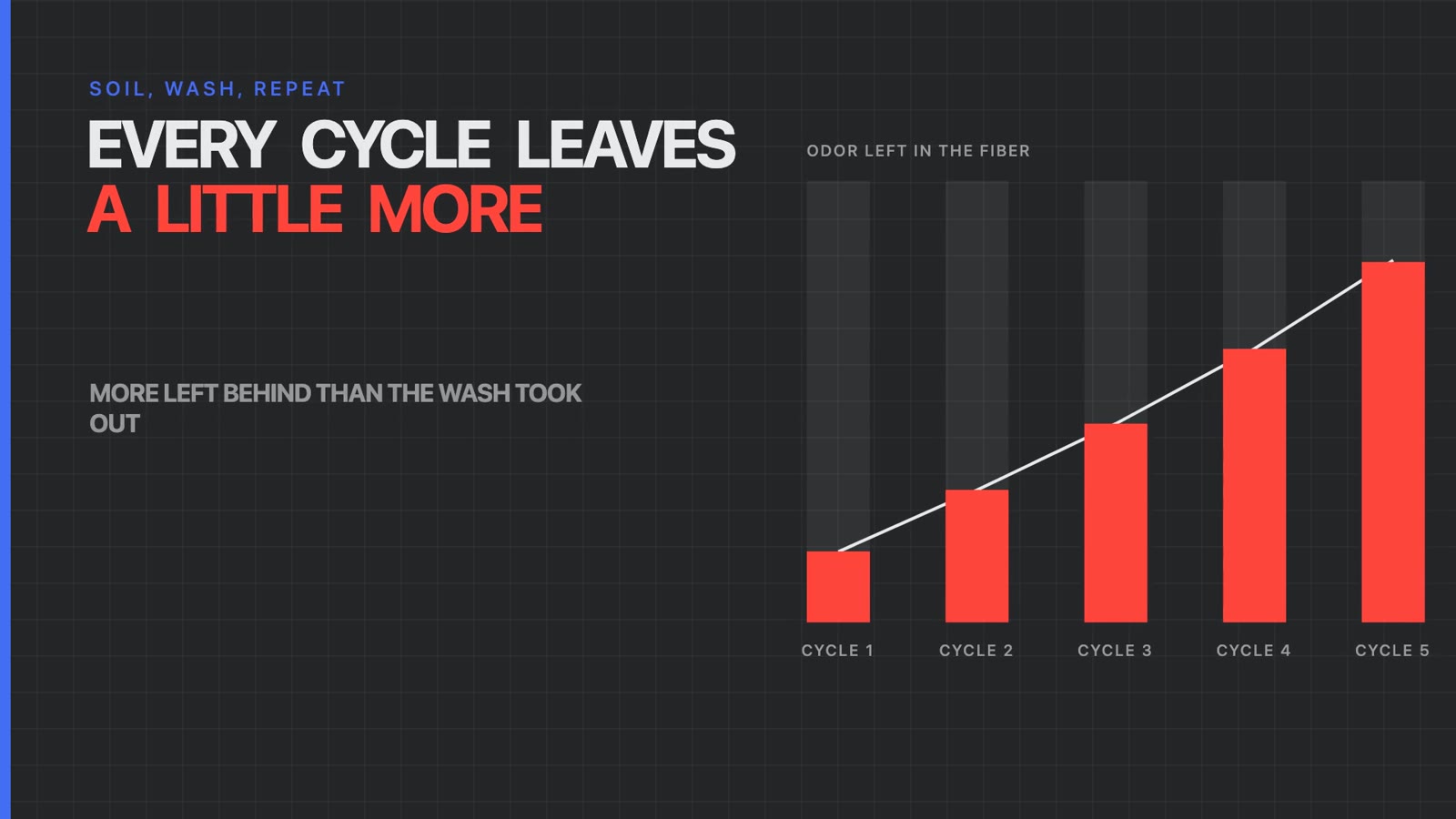
The Alberta researchers tracked the odor compounds from one wash cycle to five, and every cycle left a little more behind than it took out. That's why a favorite top gets worse over months instead of staying the same.
The reason is the fiber itself. Polyester is plastic-based and hydrophobic, so it doesn't like mixing with water. The body oils that feed the bacteria prefer the fiber over the water that's trying to lift them out, so washing keeps leaving oil bonded to the fiber.
5. What Actually Helps
- Wash it before it dries. The longer body oil sits on the fibers, the more it seeps in, and the harder it is for water and suds to lift it out.
- Wash it inside out. Your sweat comes from the inside of the shirt, so that's where most of the oil sits. Turning it inside out gets the wash to the core of the problem faster.
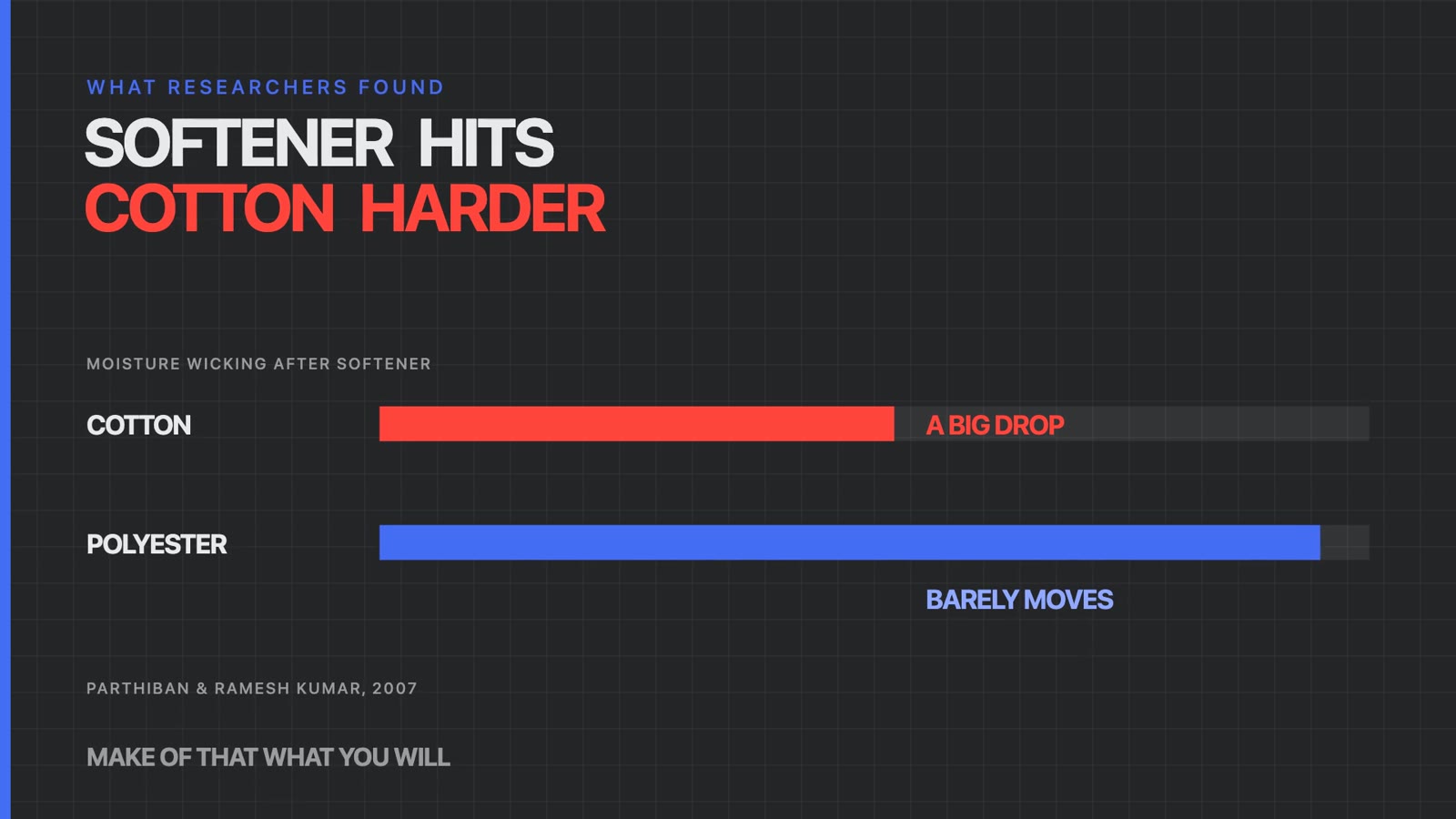
- Rethink the fabric softener rule. The usual advice is to keep softener away from performance fabrics because it hurts moisture wicking. What researchers found is that the effect is much bigger on cotton than on polyester.
The Verdict
If you're buying polyester, it's a trade-off. You gain performance, moisture wicking and durability, and you give up some of that fresh smell over time.
If you're the brand making the product, Shadi's advice is to be honest with your customer, especially when odor matters to them, and to look at an anti-odor finish. The options he covers in the episode:
- Hydrogen peroxide washes
- Zinc, gold or silver ion treatments
- Bamboo charcoal, the more health-conscious option, though it's a bigger stretch on cost for a young startup brand
For most startup brands, Shadi recommends a cotton, polyester and spandex blend, or a silver ion treatment, which is pretty much the entry level for anti-odor. If the product can be made from cotton, a silicone wash is another route, like a lot of the cotton spandex performance pieces on the market.

If you're still choosing between fabrics, these might help: Is Polyester Actually Bad for You? A Designer Answers and Modal vs Cotton vs Tencel: The Best Natural Legging.
🎬 Watch the full episode. Shadi walks through both studies, the wash cycle buildup and the finishes he'd spec for a startup brand. Watch on YouTube

Full Episode Script
This is the script of the episode as Shadi delivered it, lightly edited for reading.
Intro
So your gym top comes out of the wash smelling pretty good. You put it on for 20 minutes, and all of a sudden that smell you've been trying to avoid, the one you've been trying to wash away, has come back. What's the problem? Were you not able to wash the smell away?
Well, it might just be what you're wearing, because some fibers are prone to holding on to bad odors, and no amount of wash cycles and no amount of detergent can actually take that away.
Take it from me. My name is Shadi Adada, I'm the co-founder and the creative director of FittDesign. Over the last 10 years we've helped hundreds, if not thousands, of brands take an idea and develop a real, market-ready sportswear product. So I've learned the core distinguishing factors between different fibers, and the pros and cons of each. And when it comes to smell, polyester is undoubtedly the biggest offender.
Why is that? Well, that's exactly what we're going to be discussing in today's episode. We'll be looking at why polyester has an odor issue, what you can do about it today, and what alternatives you can look at. So if you've ever wondered how to make your next sportswear collection anti-odor, this episode is going to give you some of those core insights.
1. The bacteria picks a side
So, number one. We have to understand that odor-causing bacteria isn't one-size-fits-all, in the sense that it does pick and choose which fibers it's going to grow on more readily.
In a 2014 study by Callewaert and colleagues, published in Applied and Environmental Microbiology, people trained in cotton shirts and in polyester shirts, and then they cultured what bacteria was growing on the inside of each one. What they found was that the micrococci found in almost every synthetic shirt came down to the polyester fiber that was there. The micrococci, which break down sweat into what causes the odor, were found almost exclusively on the polyester fabric versus the cotton fabric.
So what we have to understand is that it's not sweat that causes that bad smell. It's the bacteria. It's the micrococci that break down the compounds and the chemicals in sweat that cause the smells we ultimately notice. And that bacteria doesn't really live in cotton, but it lives much more readily in polyester, which is really where you have that odor issue. It's not because of the oils or the sweat being there. It's because of the bacteria that ultimately breaks down the compounds that cause those smells.
2. A panel could smell the difference
Number two. All of this is backed up by a real-world panel that was brought in to study the effect of the micrococci in terms of creating these odor-causing compounds. On a like-for-like basis, they took two fabrics, one cotton and one polyester, and looked at the effect of sweat over time. The odor was measured as significantly stronger in the polyester versus the cotton, and it wasn't even close.
So this isn't just a microbiological hypothesis. It's been tested in the real world, and it's the polyester that holds on to the odor-causing bacteria. Through the same use and the same wear and tear, the polyester fabric had a significantly more unpleasant odor than its cotton counterpart.
3. The wash doesn't fix it
Number three is that, unfortunately, washing the fabrics doesn't fix this issue. In a 2020 study at the University of Alberta, they took two similar fabrics, soiled them with body oils, washed both through a set number of cycles, and measured at the end what remained on the fabric after the wash.
What they found was that cotton retained 0.4 after the wash cycle, versus 6.6 in the polyester. Meaning polyester retained up to 16 times more than its cotton counterpart.
4. And it builds up
Number four. This is also an issue that builds over time. You might be thinking to yourself, Shadi, if the problem is that the oils build up on the surface of the polyester, can't we just wash it more intensely and through longer wash cycles to remove them?
Well, unfortunately, you can't wash 16 times harder than you do with cotton to remove the same amount of oil. Washing more was found to have no real positive effect on removing the excess oils. And this is why. When they measured the odorants that accumulated from the soil over wash cycles one to five, they found that every cycle actually ended up leaving a little bit more than it took out. So the effect of washing wasn't just inconsistent, it actually got worse over time.
The idea is simple. A polyester fiber is plastic-based, and plastic is hydrophobic, meaning it doesn't like to mix with water. The oils on the fibers, the ones that combine with the micrococci to cause the bad smell, are being asked to prefer water over the plastic in the fiber. Those oils are always going to latch onto the fiber way more than onto the water. So the more you wash, the more water you're putting through the fabric, but you end up with more of the oils bonded to the fibers, causing the bad smells down the line.
5. What actually helps
So, number five is what actually helps the situation and what doesn't. One of the big things that reduces odor buildup on polyester over time: when you sweat into a polyester fabric, get it into the wash before it completely dries. The longer the body oil sits on the fibers, the more time it has to seep into them, which makes it very difficult for the water and the suds to remove those oils during the wash.
The second thing is to wash the fabric inside out, simply because of where your sweat is coming from. It's typically from the inside of the shirt, so that's where most of the oils and sweat end up. Washing inside out is a faster way to get to the core of the issue.
And then this is one a lot of people get wrong. They tell you to keep fabric softener away from your performance fabrics, because the softener can reduce the moisture wicking of the fabric. But what researchers actually found is that this has a bigger effect on cotton-based fibers than on polyester-based fibers. So make of that information what you will.
The verdict
So what's the verdict here? Well, if you're going to be buying polyester, understand that like with anything, there are trade-offs. You're gaining performance, moisture wicking and durability, and you're losing out on anti-odor and the ability to stay fresh for a longer period of time.
If you're a brand creating these products, it's important that you're honest with your customer. If this is something that's very important to them, you can consider introducing anti-odor treatments like hydrogen peroxide washes, which help the fibers eliminate the micrococci that bond with the oils and cause the bad smells. Or zinc ion, gold ion or silver ion, or even bamboo charcoal if you want something a bit more health-conscious. They all do the same thing: they stop the micrococci from bonding with the oils that come from sweat and from the dirt you're moving around in every day.
So these are options, and there are trade-offs in terms of cost, performance and accessibility. As a startup brand, going for a bamboo charcoal finish on a fabric is definitely going to be more of a stretch. So what I'd definitely recommend is to consider mixing cotton and polyester with spandex, or adding a silver ion treatment, which is pretty much the entry level when it comes to anti-odor. And be honest with your customers. If you can make the product out of cotton, maybe add a silicone wash, similar to some of the cotton spandex performance items you see on the market. Or again, just be honest with your customer and let them know the trade-offs.
Work with us 1-on-1
If you guys are looking to build your next performance line and you really want to create a stink-free, everyday product, and you want to know how to get there, you can check out the link in the description to bring your idea to life. We'll show you a personalized production roadmap that'll help you go from an idea to a physical sample in under 30 days, and within five minutes you'll have a real human get back to you with a tailored roadmap.
Guys, I say this from the very bottom of my heart, thank you so much for tuning in to this episode of FittDesign TV. Until next week's episode, stay awesome.
About FittDesign
FittDesign is a sportswear design agency. We take brands from an idea to a market-ready product, with the fabric, construction and finishes written into a tech pack the factory can follow.
Ready to build a performance line that stays fresh?
Tell us what you're making and we'll show you a personalized production roadmap. You'll hear back from a real person within five minutes.
Get a quote → Takes 2 minutes. No obligation.


