

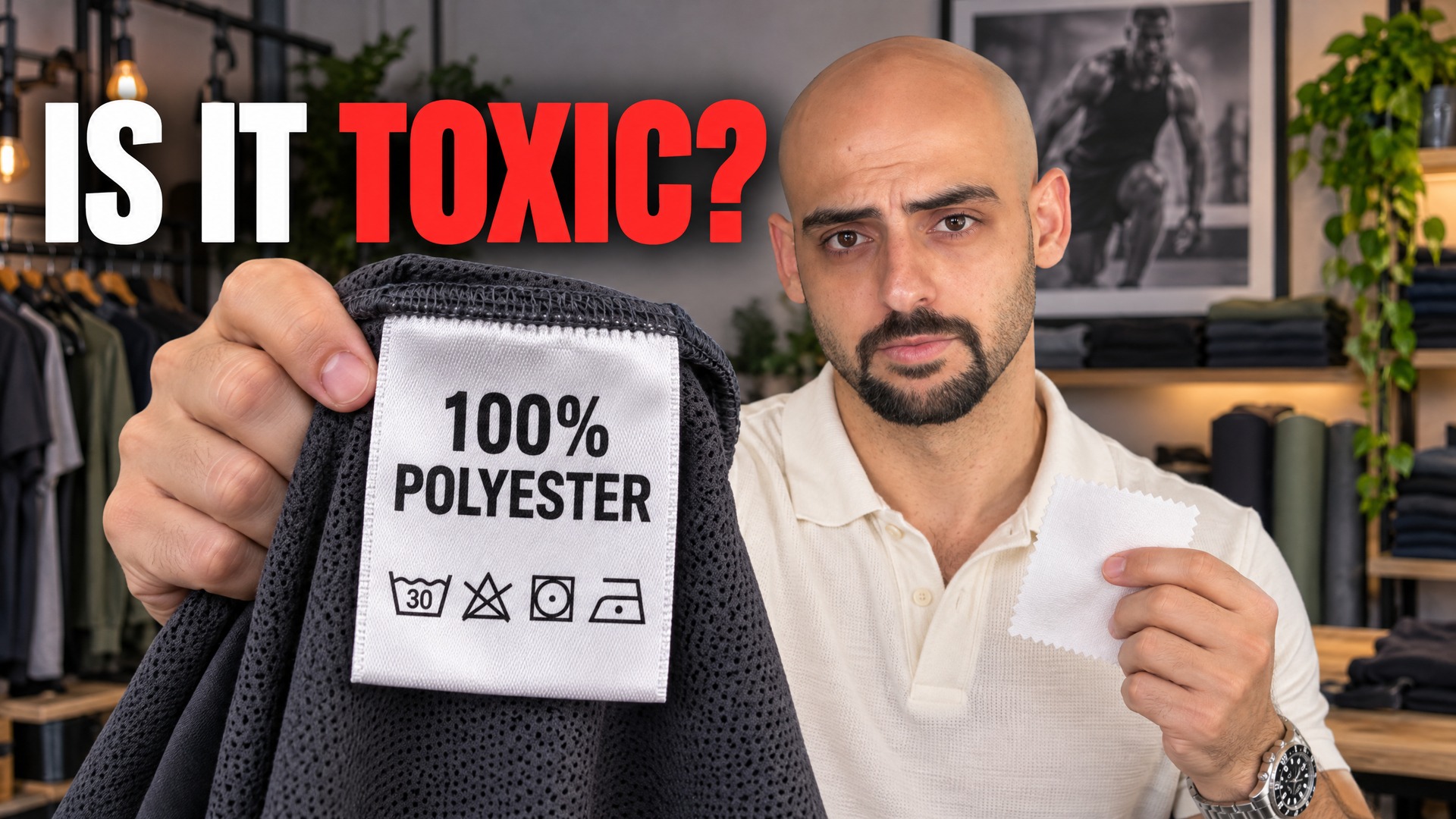
Open TikTok, Instagram or Snapchat and you'll find someone telling you polyester is poison. Throw out your leggings, burn your gym tops, switch everything to natural fibers. For anyone buying activewear, and even more for anyone building an activewear brand, that's a confusing place to be.
Shadi Adada, co-founder and creative director of FittDesign, has spent the last 10 years as a sportswear and activewear designer and has worked with literally thousands of brands. He's watched polyester go from the hero of activewear to the villain. His take: the reality is somewhere in between.
The short answer: polyester isn't the poison social media makes it out to be, but its smell and microplastic problems are real. For stretch, moisture wicking and durability it's still close to impossible to replace, so the smart move is to choose the right grade of polyester and spec it properly in your tech pack.
Prefer to watch? The full episode is embedded at the bottom of this post, along with the complete script.

1. You Can't Completely Avoid Polyester
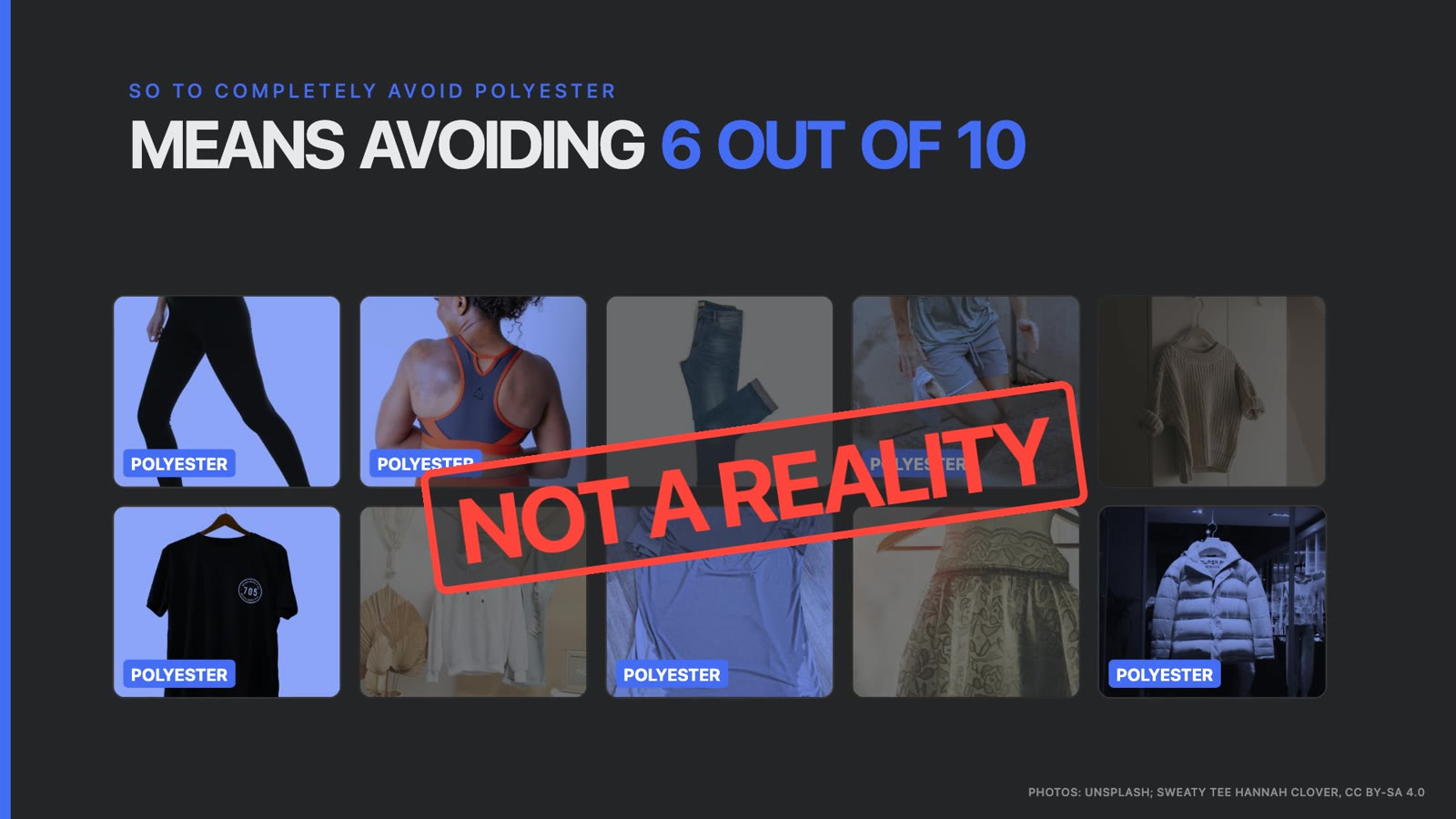
Before deciding whether polyester is bad, it helps to see how much of it there is. In the episode, Shadi points out that around 59% of apparel items that are owned and produced are polyester. The next most common fiber is cotton, at 17%.
So telling yourself to avoid polyester completely means avoiding roughly six out of 10 apparel items ever made. In Shadi's words, it's just not a reality. Polyester is pretty much everywhere, and the better question is why.
2. Moisture Wicking Is Why Gym Clothing Runs on It
Put cost to one side and polyester is still a great moisture wicking fabric. That's the reason it's such a big component of gym clothing.
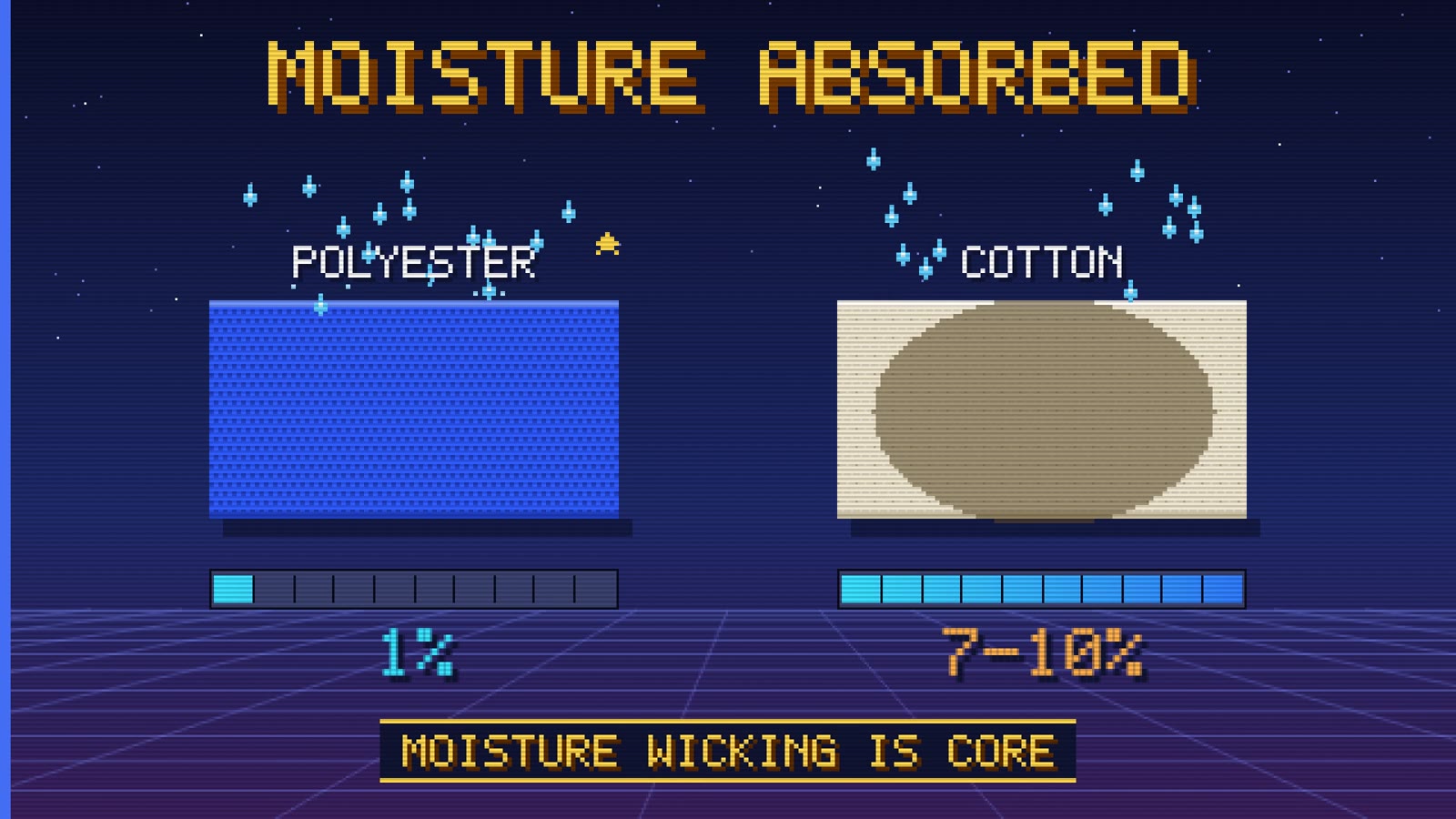
- Polyester takes in around 1% of moisture into the fabric.
- Cotton takes in 7% to 10%.
On a highly functional piece, where moisture wicking is the whole point, that difference shows up fast. You'll feel a lot sweatier and a lot more wet in cotton than in polyester.
3. The Smell Problem Is Real
The online noise isn't the main reason people avoid polyester in everyday activewear. The smell is, especially now that activewear goes beyond the gym into the office and day to day life.
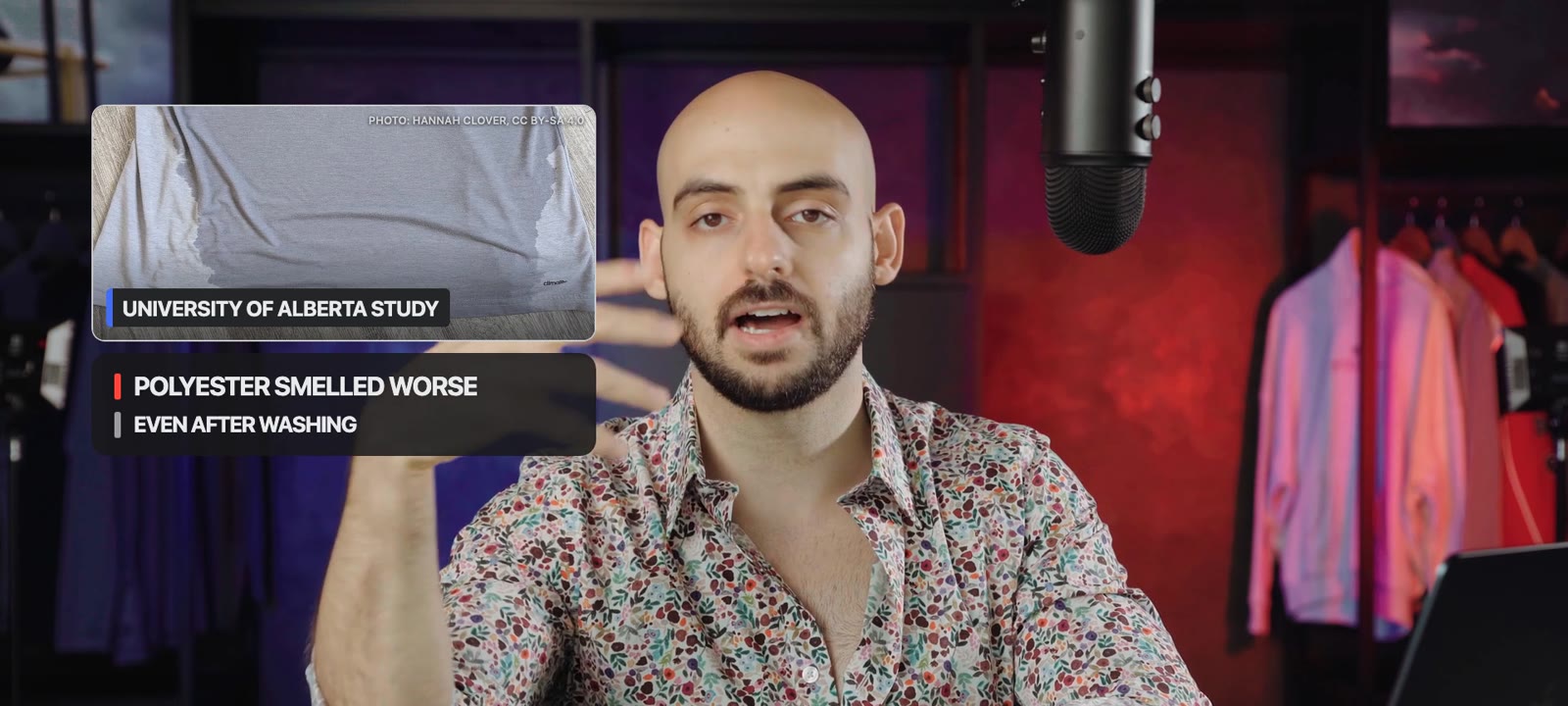
Shadi refers to a University of Alberta study that found polyester often smelled worse than cotton, even after washing. It isn't that polyester carries more bacteria. The fibers hold on to the odor compounds, and even after repeated washes cotton was much better at getting rid of them.
Weighing polyester against natural fibers for your line?
Fiber choice, blend and wash care all need settling before the first sample, because they decide how the garment performs, smells and ages.
4. Microplastics: The Elephant in the Room
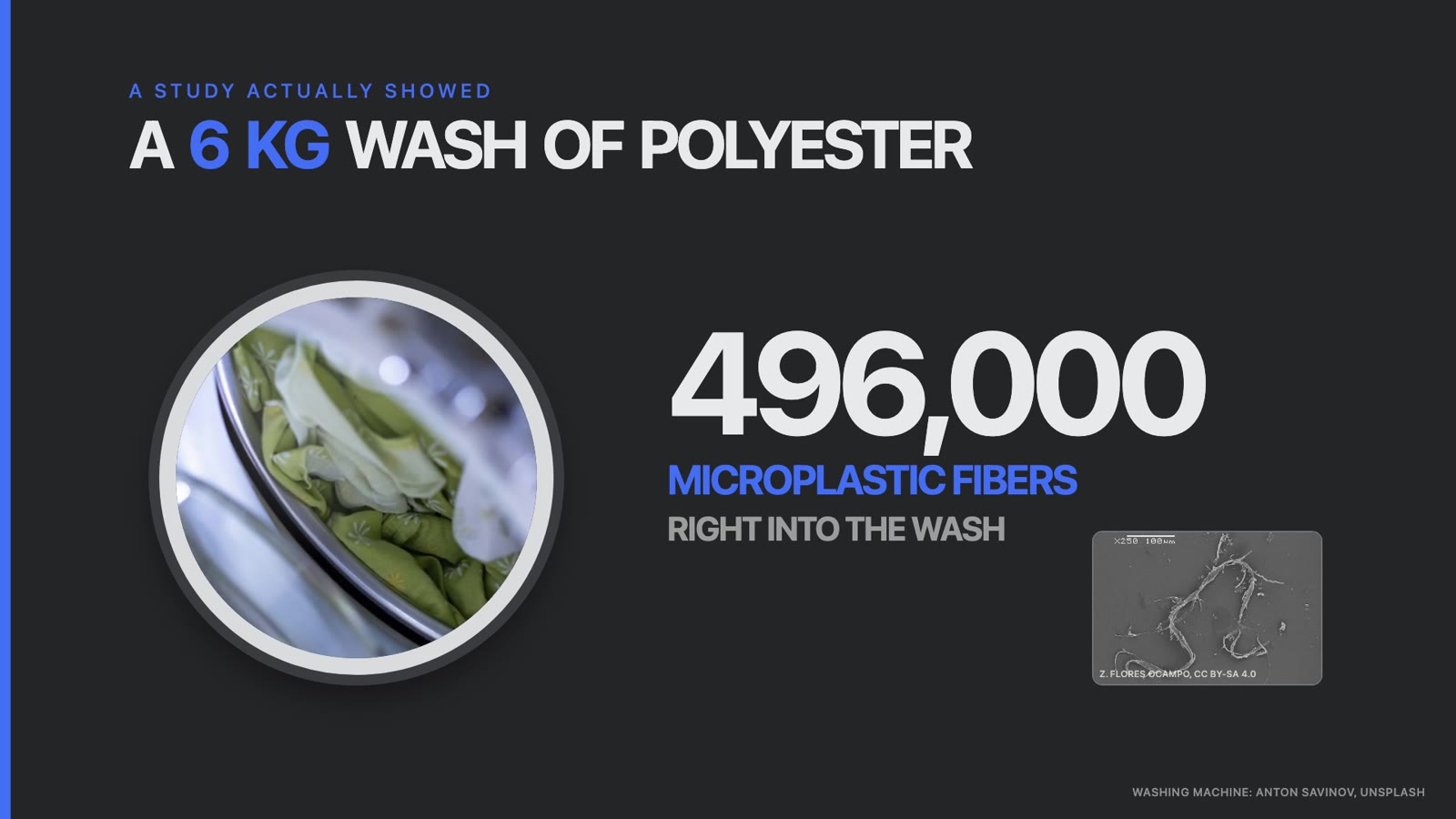
This is where polyester's biggest issue sits. Polyester is plastic spun into a fiber. In the study Shadi cites, a 6 kg wash of polyester clothing released almost 496,000 microplastic fibers right into the wash. When you wash it, that plastic ends up in the water supply, and when you sweat, it's sitting on the surface of your skin.
There's no perfect fix, but there are ways to reduce it:
- Wash on cold water instead of hot.
- Run fewer washing cycles. That's hard with activewear, but if a piece hasn't been put through its paces, skip the wash.
Rule of thumb: every 6 kg batch of polyester you wash can release close to 500,000 fibers, so fewer, colder washes make a real difference.
5. What's Exaggerated and What's Not
Saying polyester is killing you paints the whole fiber with one brush. There are grades of polyester, just like there are different types of nylon and cotton (combed, double combed, pima, long staple). Not all polyester is created equal, and not all of it sheds as many fibers. It comes down to quality.
On a like for like basis, cotton will always have some advantages. Shadi's point is that it comes down to what you value:
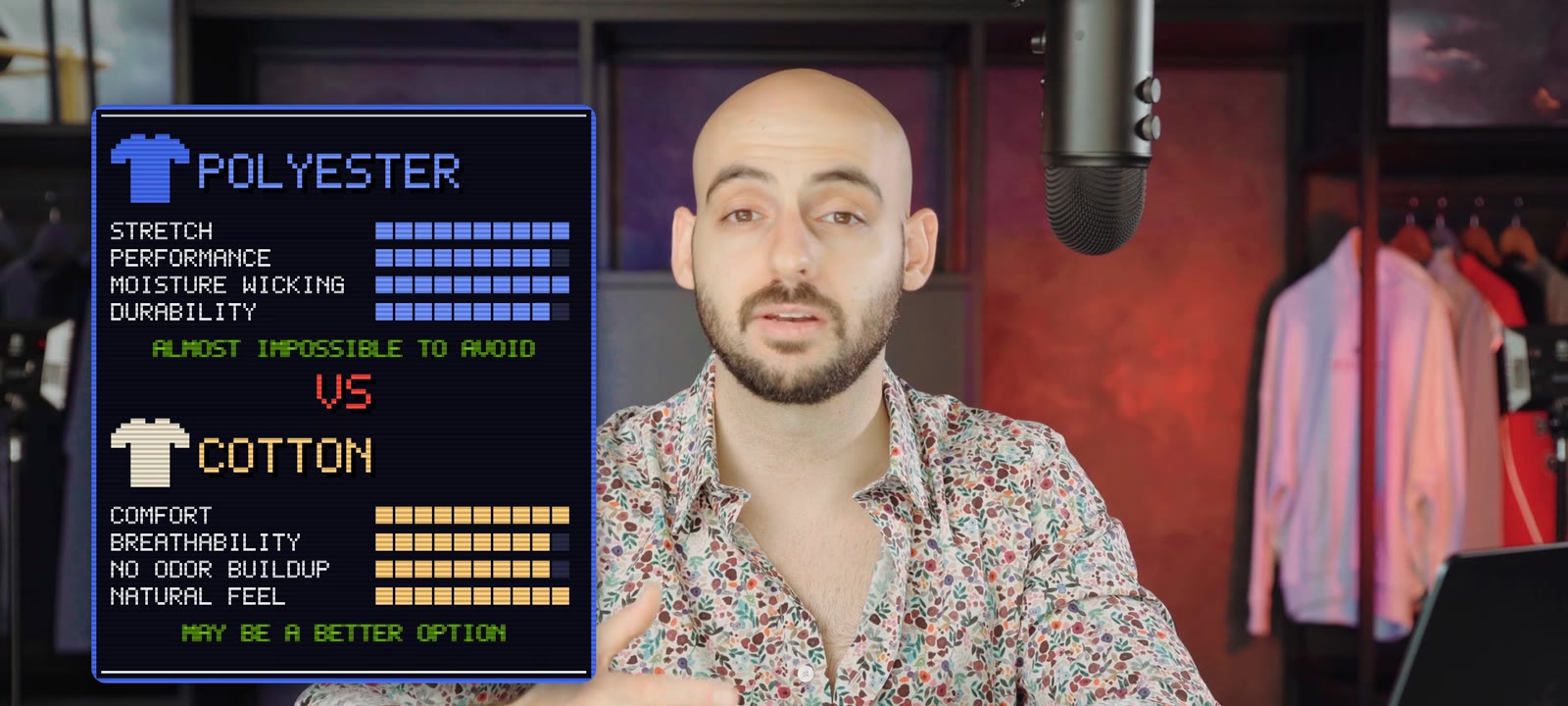
- Pick polyester if you need stretch, performance, moisture wicking and durability. For that set of needs it's almost impossible to avoid.
- Pick cotton if you value comfort, breathability, less long-term odor buildup and a natural feel.
The Verdict
You can't hamstring a product just to avoid polyester. Until someone creates a natural alternative that gives you the same moisture wicking, the same stretch and the same durability, polyester will stay king for performance activewear. What you can control is the grade of polyester you choose, where you use it, and how your customers are told to care for it.

Want to go deeper on fabrics? Read Modal vs Cotton vs Tencel: The Best Natural Legging? and Top 5 Fabric Picks for Performance T-shirts.
🎬 Watch the full episode. Shadi walks through all five points, with the study numbers on screen: https://www.youtube.com/watch?v=EnnCGmskWDQ
Full Episode Script
This is the script of the episode as Shadi delivered it, lightly edited for reading.
Intro
When it comes to activewear, apparently polyester is an insult now. Anywhere you go, whether you go on TikTok, Instagram or Snapchat, people are talking about polyester and the curse that is forever chemicals.
So as a sportswear and activewear designer over the last 10 years: is this the reality? Is sportswear forever cursed with polyester? Can we go ahead and burn all of our polyester clothing, and are we doomed to eternity?
This is the question I plan on answering in today's episode, as someone who has worked with literally thousands of brands. We've seen polyester go from being the hero, the champion of the activewear space, to now the villain. Is there a truth in this downfall? Well, the reality is somewhere, as always, in between.
In today's episode we'll be looking at the reality of polyester. What are the rumors that are actually true? What are the things that you should account for, whether you're a consumer looking to buy your next legging or your next activewear piece, or, more importantly, whether you're a brand thinking about this trade-off between functionality and performance on one side, and sustainability and a natural feel on the other?
So without further ado, on today's episode we're going to be looking at: is polyester actually bad for you? Years ago I actually made my most viewed episode on this channel, which compared cotton and polyester, and I think five or six years on, this conversation is even more important, especially if you're looking to build your own brand.
1. You can't completely avoid polyester
Number one, we have to understand how difficult it actually is to completely avoid polyester. If you look at the majority of clothing that's made on the market, around 59% of all apparel items that are owned and produced are polyester. The next most common fiber is cotton, which is at 17%.
So to tell yourself to completely avoid polyester means avoiding pretty much six out of 10 apparel items ever made. It's just not a reality. Understanding that polyester is pretty much everywhere is key. Now the next question is: why is polyester everywhere?
2. Moisture wicking
Number two, we have to understand that polyester is a big component of gym clothing because of its ability to wick away moisture. Putting aside its cost difference, putting aside its functionality, it really is a great moisture wicking fabric.
If we compare cotton to polyester in terms of moisture wicking, polyester will take in around 1% of the total amount of moisture and absorb it into the fabric, versus cotton at 7% to 10%. So you can imagine, with a highly functional piece where moisture wicking is core, you're going to get a lot sweatier and you're going to feel a lot more wet in cotton clothing than in polyester clothing.
3. The smell
Number three comes down to the smell. Polyester shouldn't just be avoided because of the things that we see online. A lot of the reasons we see polyester being avoided, especially in day to day activewear, and especially as activewear expands beyond the gym into the office and into day to day life, come down to the smell.
When we compare cotton and polyester, it's no surprise that it's polyester that retains bad and foul odors. A University of Alberta study actually showed that polyester often smelled worse than cotton, even after washing it many times. The idea isn't that there's more bacteria in polyester. It just comes down to how the fibers hold on to the odor-smelling compounds, even after washes. Again, studies found that even after repeated washes, cotton was much better at having those compounds removed than polyester.
4. Microplastics
Number four comes down to the elephant in the room, which is the microplastics issue. A study showed that a 6 kg wash of polyester clothing ended up releasing almost 496,000 microplastic fibers right into the wash.
This is where the major issue of polyester comes in. It's unstable because of the plastics. You're basically wearing plastic when it comes to polyester, and it's just spun into a fiber. When you're washing it, that plastic is seeping into the water supply, and if you're sweating, those plastics are basically on the surface of your skin.
So realistically, what you have to understand is that there are ways to get around this, but there's no perfect solution. If you have polyester clothing, definitely consider washing on cold water as opposed to hot water, and using fewer washing cycles. That can be quite difficult when it comes to an activewear piece, but if you're not putting that piece through its paces, reducing the number of washes is definitely going to help. Because again, every single time you're washing a 6 kg batch, you're releasing almost 500,000 fibers.
5. What's exaggerated and what's not
Number five, we have to understand what's exaggerated and what's not when someone says that polyester is killing you. That's using one brush to paint the entire painting, and it couldn't be further from the truth.
Like with everything in life, there are grades of polyester. There are different types of nylon. There are different types of cotton, whether it's combed, double combed, pima cotton or a long staple yarn. Not all polyester is created equal, and not all polyester is as likely to discharge as many fibers as other types of polyester. It comes down to the quality.
Sure, on a like for like basis, comparing polyester to cotton, there's always going to be an advantage to cotton. But with everything, there are pros and cons. It comes down to what you value. If you value stretch, performance, moisture wicking and durability, polyester is almost impossible to avoid. If you value comfort, breathability, less long-term stink or odor buildup and a natural feel, then cotton may be a better option.
But it's going to come down to the product at the end of the day. You can't hamstring a product simply because you want to avoid polyester. Until someone is able to create a natural alternative to polyester that gives you the same moisture wicking, the same stretch and the same durability, polyester is always going to be king for the specific set of things we want it to do.
Work with us 1-on-1
Well guys, that is a wrap on this episode. If you've been looking to get into the activewear space and you've been debating between polyester and natural fiber alternatives, you still haven't made up your mind, and you're looking for that one-stop shop to help you determine what makes the most sense for you, or perhaps you're exploring alternate fibers that give you that perfect balance, check the link in the description to apply to work with us. Within five minutes, a real human will get back to you with a personalized production roadmap on how we can take your idea, get it properly designed and developed, and put a real sample in your hands in around 30 days or less, and what that would take in terms of timing and budget.
Guys, I say this from the very bottom of my heart, thank you so much for tuning in to this episode of FittDesign TV. Until next week's episode, stay awesome.
About FittDesign
FittDesign is a full-service activewear and sportswear design studio. We take brands from idea to factory-ready tech packs and real samples, and we help founders make fiber and fabric decisions that fit the product, the customer and the budget.
Ready to build your activewear line?
Tell us about your idea and a real person will come back to you with a personalized production roadmap. We can put a real sample in your hands in around 30 days.
Get a quote → Takes 2 minutes. No obligation.


