

You've just dropped your first gym tee. The orders are going out, the sales are coming in, and then a few days later a customer sends you an angry review. Their brand new performance t-shirt has a cracked logo, it's starting to peel, and they want their money back. So was it the shirt, or was it the print?
Shadi Adada, co-founder and creative director of FittDesign, has spent the last 10 years helping thousands of brands go from an idea to a physical product in under 30 days. In this episode of FittDesign TV he compares DTF and screen printing on the things that actually decide whether a logo survives: how each print works, what it costs at your quantity, how it holds up in the wash and on stretch fabrics, what polyester does to it, and how it looks and feels.
The short answer: there's no clear winner, it depends on your product, your quantity and when you need it. Smaller runs with lots of colors usually suit DTF, larger runs with fewer colors usually suit screen printing, and either way the print method belongs in your tech pack before the first sample.
Prefer to watch? The full episode is embedded at the bottom of this post, along with the complete script.
1. How Each Print Actually Works
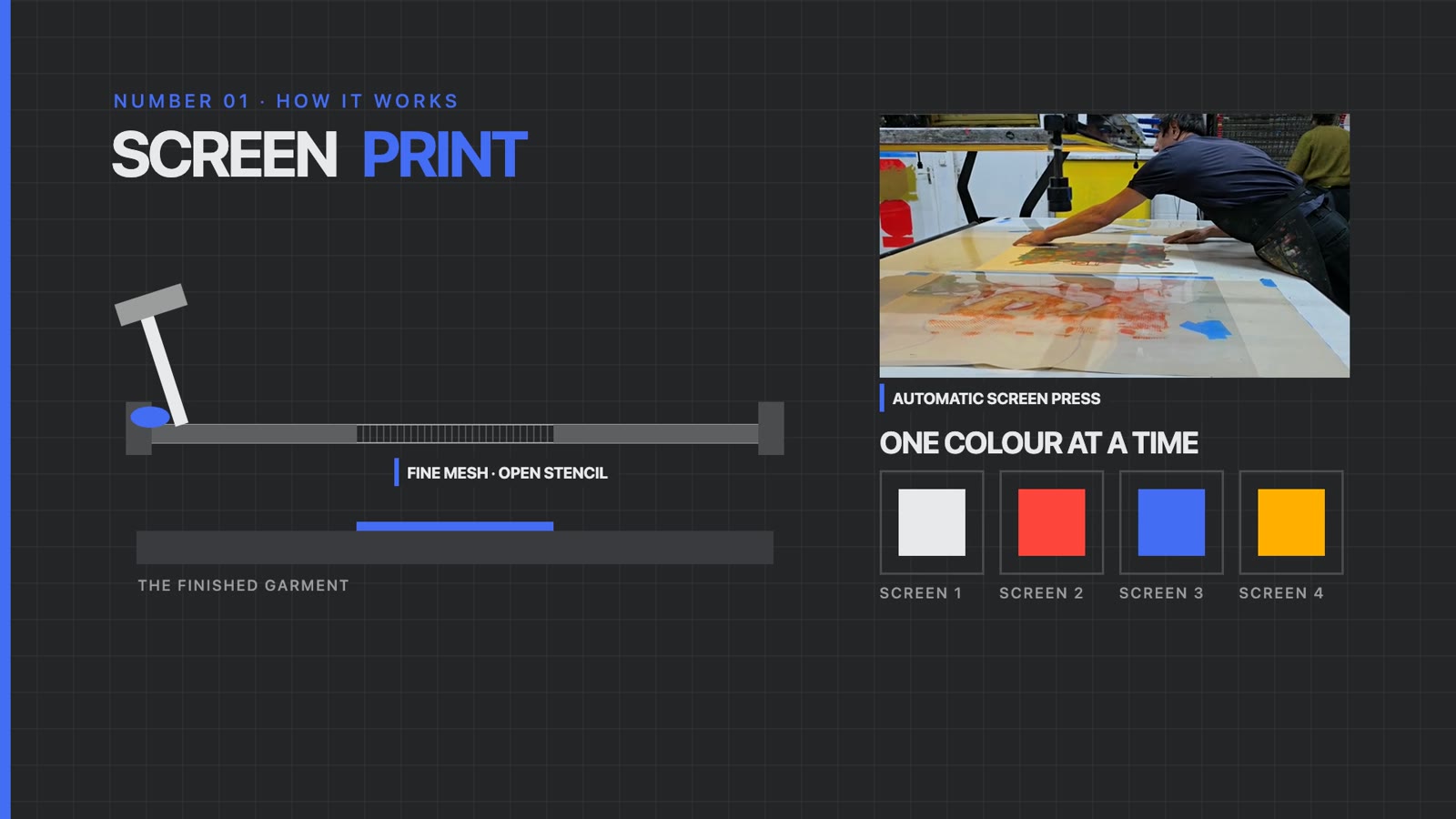
A screen print is ink pushed through a fine mesh and squeegeed onto the finished garment. It's done one color at a time, and every extra color needs its own screen and its own setup.
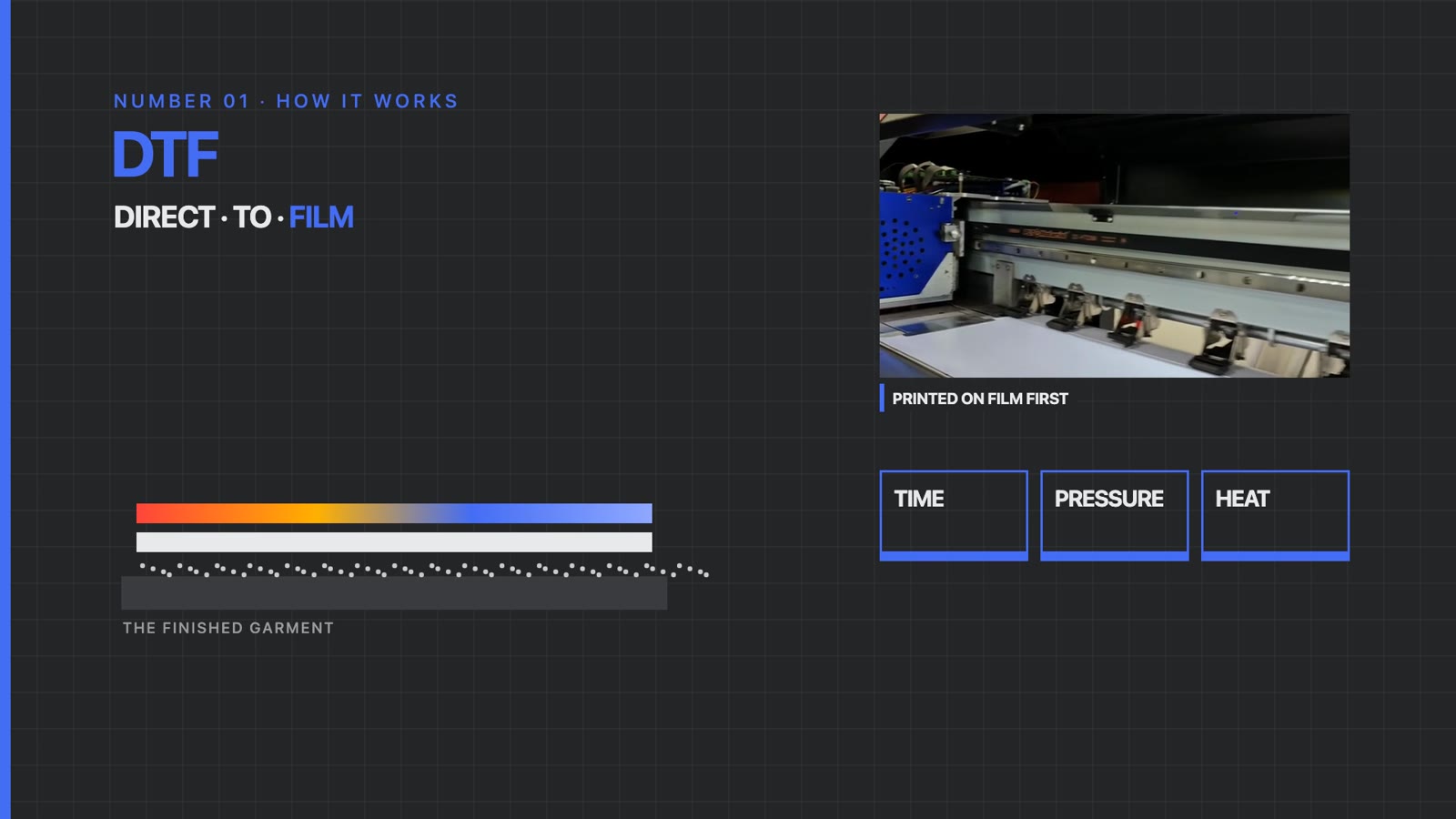
DTF is short for direct to film. The design is printed onto a clear film, a white layer goes down behind it, it's coated in an adhesive powder, and then it's heat pressed onto the finished garment using a mix of time, pressure and heat. Shadi describes it as being almost like a heat transfer label patch.
2. Cost and Quantity
Because a screen print takes a little bit of setup, a lot of screen printers, especially in the US, ask for a minimum to cover the cost of that setup. A one color logo is cheaper and easier to set up than a four color logo.
In Shadi's experience, a one color screen print usually starts at around a 12 piece minimum.
Up to a four color screen print, you're usually looking at around 24 to 48 pieces.
DTF has no screens at all, only the setup of the film, so it's more cost and time effective on smaller quantities.
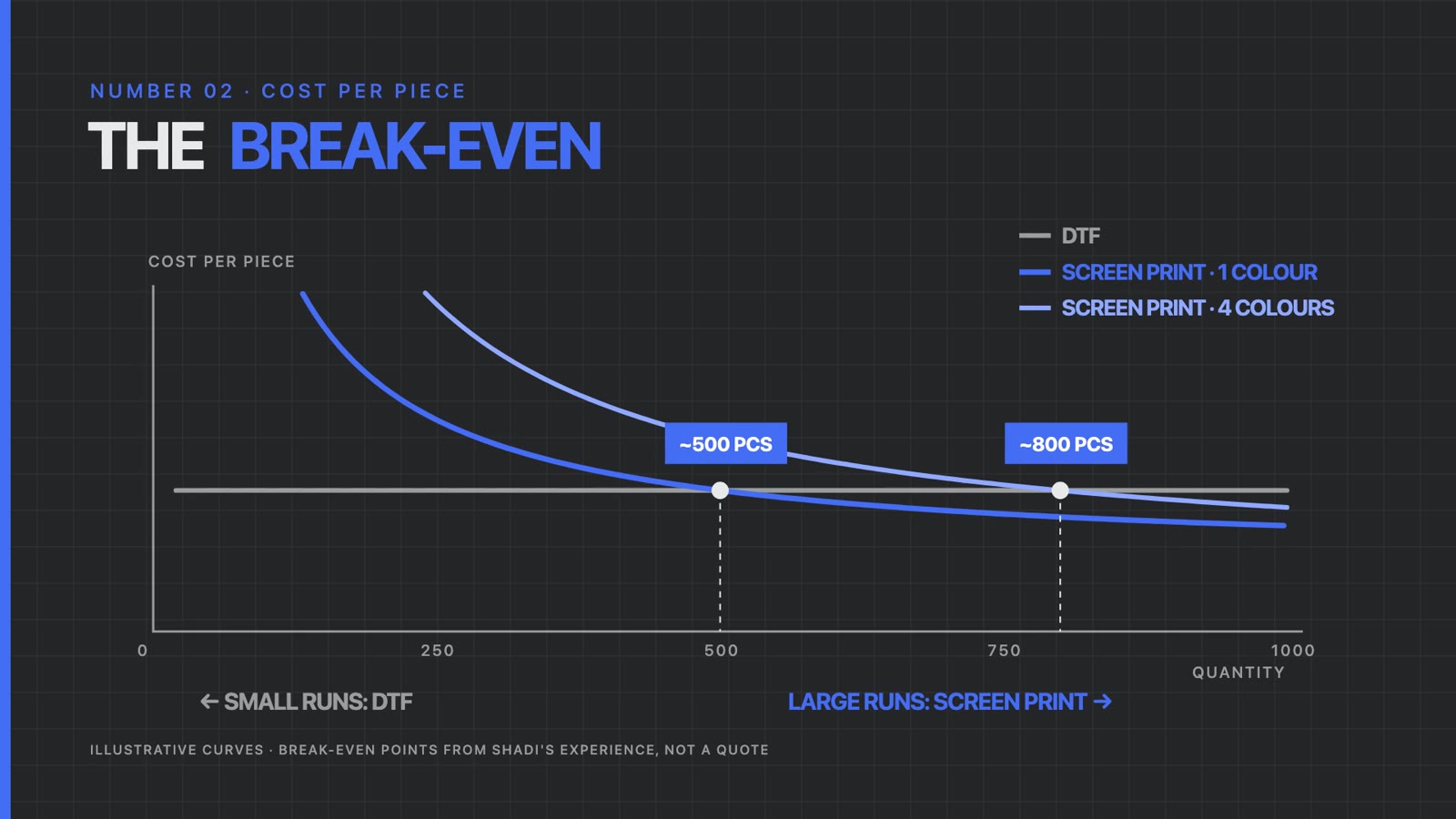
The setup cost is also why there's a break-even point. A screen print's unit cost is typically cheaper, so once you spread the setup over enough pieces it starts to make more sense than DTF.
Rule of thumb: in Shadi's experience the break-even sits around 500 pieces for a single color print and goes up to around 800 pieces for a four color screen print, compared with a regular DTF print. Treat those as rough guides, not quotes.
Not sure which print fits your first run?
The quantity, the colors and the fabric all need to be settled on paper before the first sample, so the factory isn't deciding the print method for you.
3. Which One Cracks First?
There's no easy answer, but there are some useful numbers. A really well cured screen print should last as long as the garment itself. A DTF print on a standard heat, pressure and press cycle usually gets you around 50 plus washes, and up to 100 plus washes with a really good quality DTF.
What you tend to notice with DTF is that it doesn't crack, it starts to peel at the edges. That usually points to poor adhesion or a poor press method, where the pressure, time and heat weren't right and the print ended up weakly bonded.
Before you get into it, Shadi suggests asking your printer two things:
What pressure are you using?
What type of heat press are you using, and is the time and pressure set up to make sure we get a good bond?
4. The Stretch Test
Screen printing has two main types of ink. Plastisol has a paint-like, raised, textured feel. Water-based ink is very flat and low profile, with an almost vintage look that tends to fade in over time. DTF has one standard feel, which depends on the film itself.
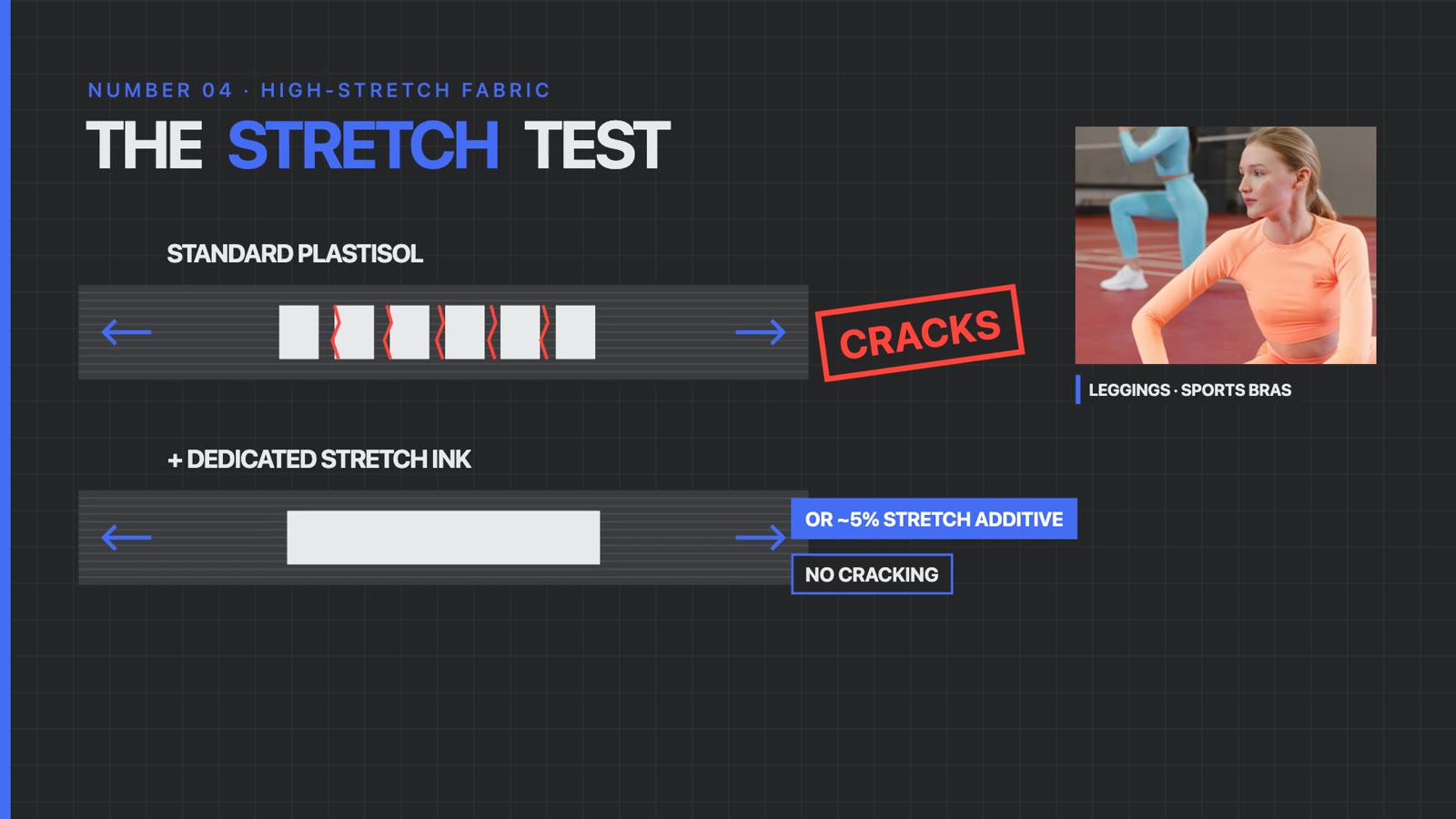
On high stretch fabrics like leggings and sports bras, where there's a lot of spandex, a standard plastisol screen print is going to crack much more readily. A lot of manufacturers recommend either a dedicated stretch ink, or adding around five percent of a silicone or stretch additive so the plastisol can stretch with the surface of the fabric.
DTF is heat pressed and has some rigidity to it, so it can also peel if it's stretched beyond its limits. On a like for like basis, Shadi would pick a screen print with a dedicated stretch ink for anything that needs high stretch.
5. Dye Migration on Polyester
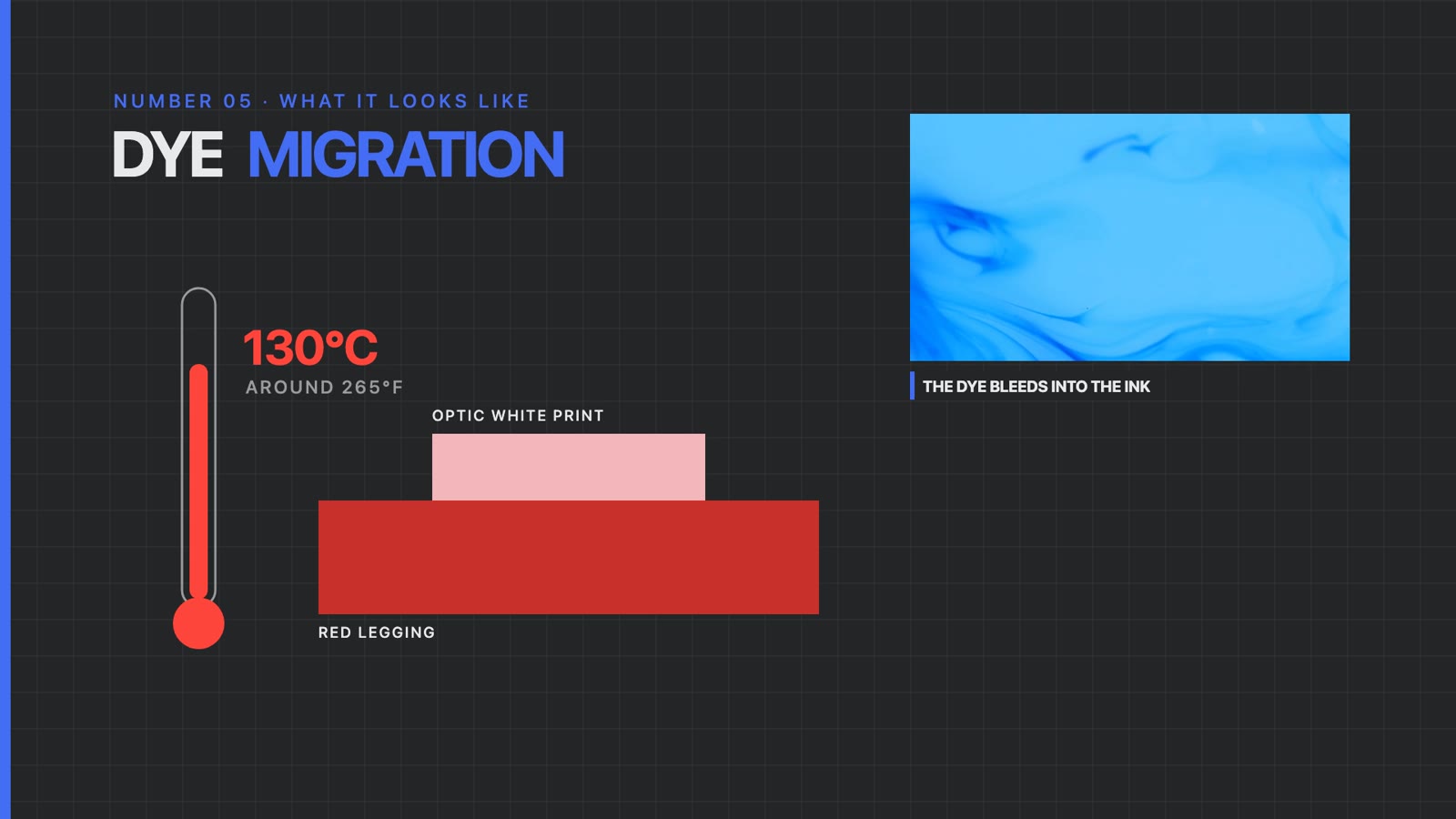
This one is specific to sportswear. Most moisture wicking sportswear uses polyester, and polyester yarns are dyed. When heat is applied, around 130 degrees Celsius or 265 degrees Fahrenheit, the dye in the fabric can bleed into the print. That's called dye migration.
Shadi's example is a red legging with an optic white print. Apply the heat and the red can migrate into the white, turning it almost pink.
The fix is a low cure ink, which in his words cures around 270 to 300 degrees Fahrenheit, so the ink cures sooner and the crossover that causes migration doesn't happen. If you're thinking about DTF on polyester, ask your printer:
Are you using a low cure ink?
Are you using a bleed blocker? That's an extra layer underneath the DTF that stops the dye in the fabric bleeding into the print.
6. The Look and the Feel
Plastisol: the raised, textured feel most people associate with screen prints, and bold, vibrant colors.
Water-based: the lowest profile and the softest, works on cotton, with a slightly faded, vintage look.
DTF: the full spectrum of colors, including gradients and metallic colors, pretty much anything you could want.
Shadi's guide: consider DTF for performance apparel with smaller logos that have a lot of intricacy and detail, and screen printing for larger graphics with fewer colors, where the colors are easy to separate into layers.
The Verdict
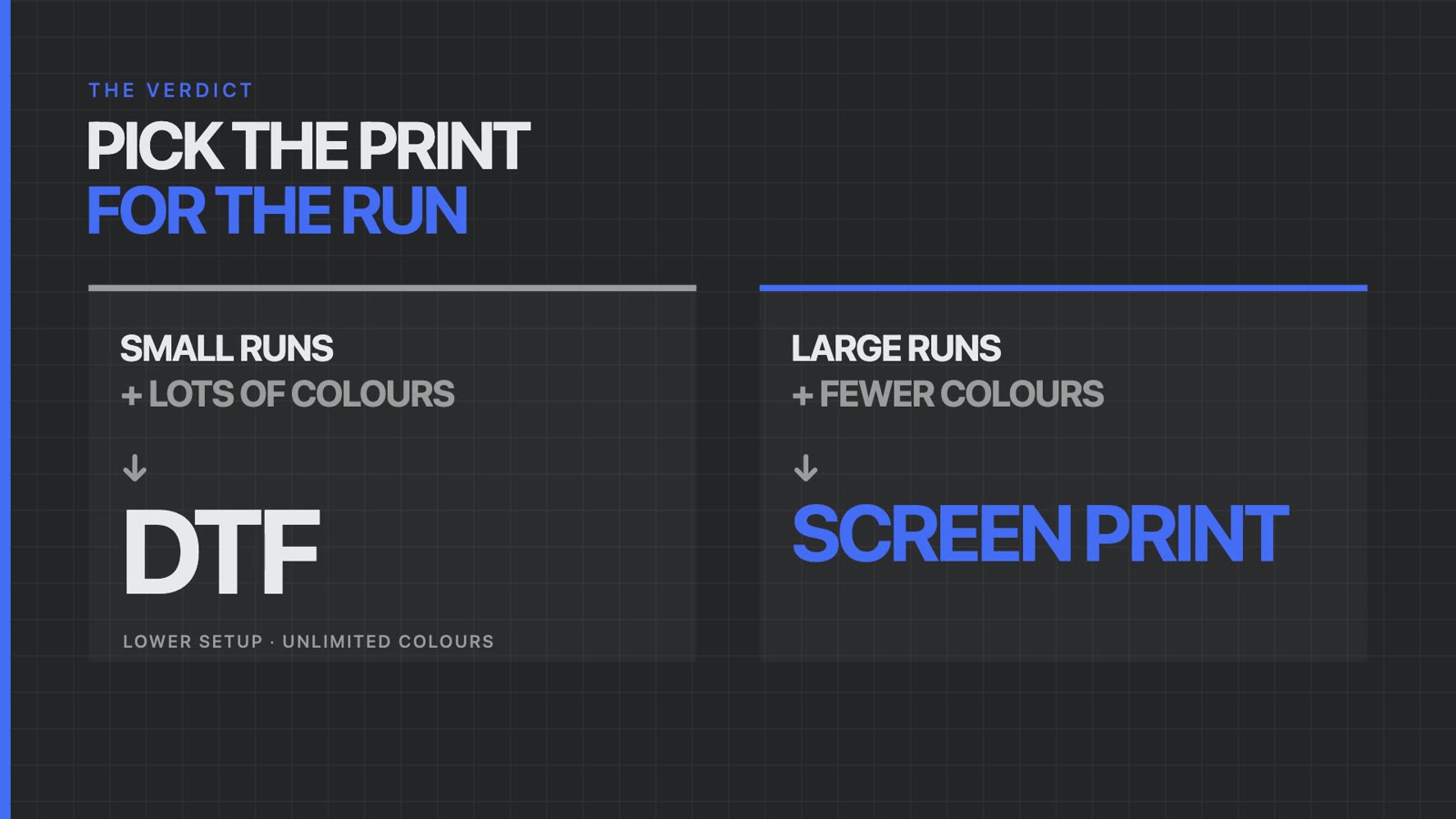
Pick DTF if you're doing smaller runs with lots of colors and want the lower setup and the freedom of pretty much unlimited colors.
Pick screen printing if you're doing larger runs where the logos have fewer colors.
Whichever you lean toward, Shadi's recommendation is to print your logos on small pieces of fabric that represent your actual production fabric, so you can test them for migration, stretch, and longevity and durability before you commit.
If you're still choosing the fabric itself, Shadi's breakdown of whether polyester is actually bad for you covers the material most of these prints end up on.
🎬 Watch the full episode. Shadi walks through every comparison above with the animations on screen: https://www.youtube.com/watch?v=vQs4LjvBvCI

Full Episode Script
This is the script of the episode as Shadi delivered it, lightly edited for reading.
Intro
So let's just say that you dropped your first gym t-shirt. You're absolutely ecstatic and you're getting some sales. But a couple of days in, your customer sends you this. They send you an angry review and they tell you that they want their money back. Apparently their brand new performance t-shirt has a cracked logo and it's starting to peel.
Well, what was the issue? Was it the quality of the shirt, or was it the quality of the print?
The first thing that you might ask yourself, or a manufacturer might ask you, when deciding on what type of print to pick is DTF or screen print. You might go based off of the price, but the reality might be that the cheaper one may not be the better option every single time.
So this is exactly what we're going to be looking at in today's episode. Which of the two, DTF or screen print, is going to be the right option for you? Is there a clear cut winner? Well, that's what we're going to be looking at.
My name is Shadi Adada. I'm the co-founder and the creative director of FittDesign. Over the last 10 years I've literally helped thousands of brands go from an idea to a physical product in under 30 days. So I've learned what it takes to create quality sportswear that lasts the test of time. And I'll tell you first and foremost that picking the print doesn't come down to price. It comes down to what you're looking to get out of it.
1. How each print actually works
So number one, let's understand how each of the two prints actually works.
With a screen print, it's the result of ink that's pushed through a fine mesh, and that ink is then squeegeed onto the finished garment. It's done one color at a time, and each subsequent color needs an additional setup.
With DTF, it's short for direct to film, and it's pretty much just a design that's printed on a clear film. It's powder based and it has a white layer, and it's then heat pressed using a mix of time, pressure and heat to allow it to transfer onto the finished garment, almost like a heat transfer label patch.
2. Cost and quantity
Number two is that we now need to consider the cost and the quantity.
With a screen print, given that there's a little bit of setup for it, a lot of screen printers, especially in the US, will require some form of minimum to recuperate the cost of the setup. A one color logo screen print is going to be cheaper and easier to set up than a four color logo screen print. Typically, in my experience, you might be looking at around a 12 piece minimum for a one color screen print, and around a 24 to 48 piece minimum for something up to a four color screen print.
With DTF there are no screens at all. It's simply the setup of the film, so it's much more cost effective and time effective when you're setting up smaller quantities.
In my experience, the break-even for doing screen print versus DTF, in terms of where the cost of the setup makes sense, is around, let's just say, 500 pieces for a single color print. This is where the setup cost of a screen print starts to make more sense, given that the unit cost of a screen print is typically cheaper once you amortize that setup cost. It goes up to 800 pieces once you have a four color screen print, when compared to a regular DTF print.
So on a larger quantity, it makes a bit more sense to actually do a screen print, as it's a more cost effective setup in the long run.
3. Which one cracks first?
Number three. So the question that you guys might be asking is, which one is going to crack first? And there's no easy answer to that.
Typically, a really well cured screen print should really last as long as the garment itself. And with a DTF print on a standard heat, pressure and press cycle, you'll be looking at around 50 plus washes, and all the way to 100 plus washes with a really good quality DTF.
Where you tend to notice it with DTF is that it doesn't crack, but it starts to peel at the edges. And that could be an indication of really poor adhesion or a really poor press method. If you're not applying the correct pressure, time and heat, this is where you end up with a weakly bonded DTF print that doesn't last the test of time.
The easiest thing to do, before you get into it, is ask your printer: what's the pressure that you're using? Are you using a specific type of heat press that's going to maximize the time setup and the pressure setup that's required to make sure that we have a good bond?
4. The stretch test
Number four comes down to the stretch test. Under significant stretching, which one is going to crack first? Is it going to be a screen print or a DTF print?
With a screen print, you have two main types of inks that are used. You have your plastisol ink, which has that sort of paint-like, raised, textured feel to it. And then you have a water-based ink, which has that very flat, low profile, almost vintage vibe that tends to fade in over time. With DTF, you just have one standard touch, and it depends on the film itself.
But in my experience, on high stretch fabrics like leggings and sports bras, where you have a lot of spandex in them, a standard plastisol screen print is going to crack much more readily. So what a lot of manufacturers recommend is that you use either a dedicated stretch ink, or you add around five percent of a silicone, or an ink that allows the plastisol to stretch over the surface of the fabric so it doesn't end up cracking.
With DTF, you're obviously applying it with a heat press, and it does have some structure or rigidity to it, so it can also end up peeling if it's stretched beyond its limits. But on a like for like basis, if you want something that has high stretch, I'd opt for a screen print with some form of dedicated stretch ink applied to it.
5. Dye migration on polyester
Number five. This is a very specific problem to sportswear. Most sportswear that requires some form of moisture wicking uses polyester. And unfortunately, because DTF is applied under heat, and polyester is usually a yarn that has the dye in the yarns, there can be what's known as migration.
As you apply heat, around 130 degrees Celsius or 265 Fahrenheit, the dye in the fabric can actually bleed onto the ink. So if you have a red legging and you have an optic white print, applying the heat can end up causing the red from the legging to migrate onto the white of the print itself, causing the white to go almost pinkish.
The fix for this is to use a low cure ink that pretty much cures around, let's just say, 270 to 300 degrees Fahrenheit, versus the 265 migration setting that's typical of polyester fabrics. This allows the ink to cure sooner, and it prevents the crossover that typically causes dye migration.
So if you're hesitant about using DTF on polyester, you might ask your printer specifically: are you using a low cure ink, or are you using a bleed blocker? A bleed blocker is an additional layer underneath the DTF that helps to stop the dye in the fabric bleeding into the film of the print that you're applying.
6. The look and the feel
So number six, when it comes to the look and the feel. With plastisol ink, it's going to have that little raised, textured feel to it that you typically associate with a lot of screen prints, and you're going to be able to get a lot of bold, vibrant colors. With water-based, it's going to be the most low profile, it's going to be the softest, and it's applicable on cotton. It gives it a slightly faded or vintage look.
With DTF, you get the full spectrum of colors. It's pretty much a full gradient spectrum of colors, so you're able to print different metallic colors, you're able to print gradients, pretty much anything that you could want.
So consider DTF for performance apparel that requires smaller logos with a lot more intricacy and a lot more detail going on, and screen prints for larger graphics that typically require fewer colors, or where you can easily separate the layers of the colors.
The verdict
So what's the verdict? At the end of the day, there's no right or wrong when it comes to picking between DTF and screen printing. It's going to come down to the product that you're creating, the quantities, and when you need the product.
So if you're going for smaller runs with lots of colors, then opt for DTF because of the lower setup and the flexibility that you get in creating logos with pretty much unlimited colors. If you're going for larger runs where the logos have fewer colors, then screen print is going to be the way to go.
And my recommendation, no matter what, is to always try to print your logos on small fabrics that are representative of your production fabrics, to make sure that you're testing them for migration, for stretch, and for longevity and durability.
Work with us 1-on-1
And guys, if you're looking to build your next sportswear line, perhaps you're wondering how to create your next DTF or screen printed hoodie or loungewear piece, then you can check out the link in the description, www.fittdesign.com/full-service-production, to apply to work with us one-on-one. A real human will get back to you with a personalized production roadmap on how we can help you take your idea, get it properly designed, and put a real sample in your hands in 30 days or less.
And guys, I say this from the very bottom of my heart, thank you so much for tuning in to this episode of FittDesign TV. Until next week's episode, stay awesome.
About FittDesign
FittDesign is a full-service sportswear design and production studio. We take brands from an idea to a properly designed product and a real sample in their hands in 30 days or less, with the tech packs, fabrics and print methods settled before anything gets made.
Ready to print your first collection?
Tell us what you're making and how many pieces you're thinking for the first run. A real person will come back to you with a personalized production roadmap.
Get a quote → Takes 2 minutes. No obligation.


