

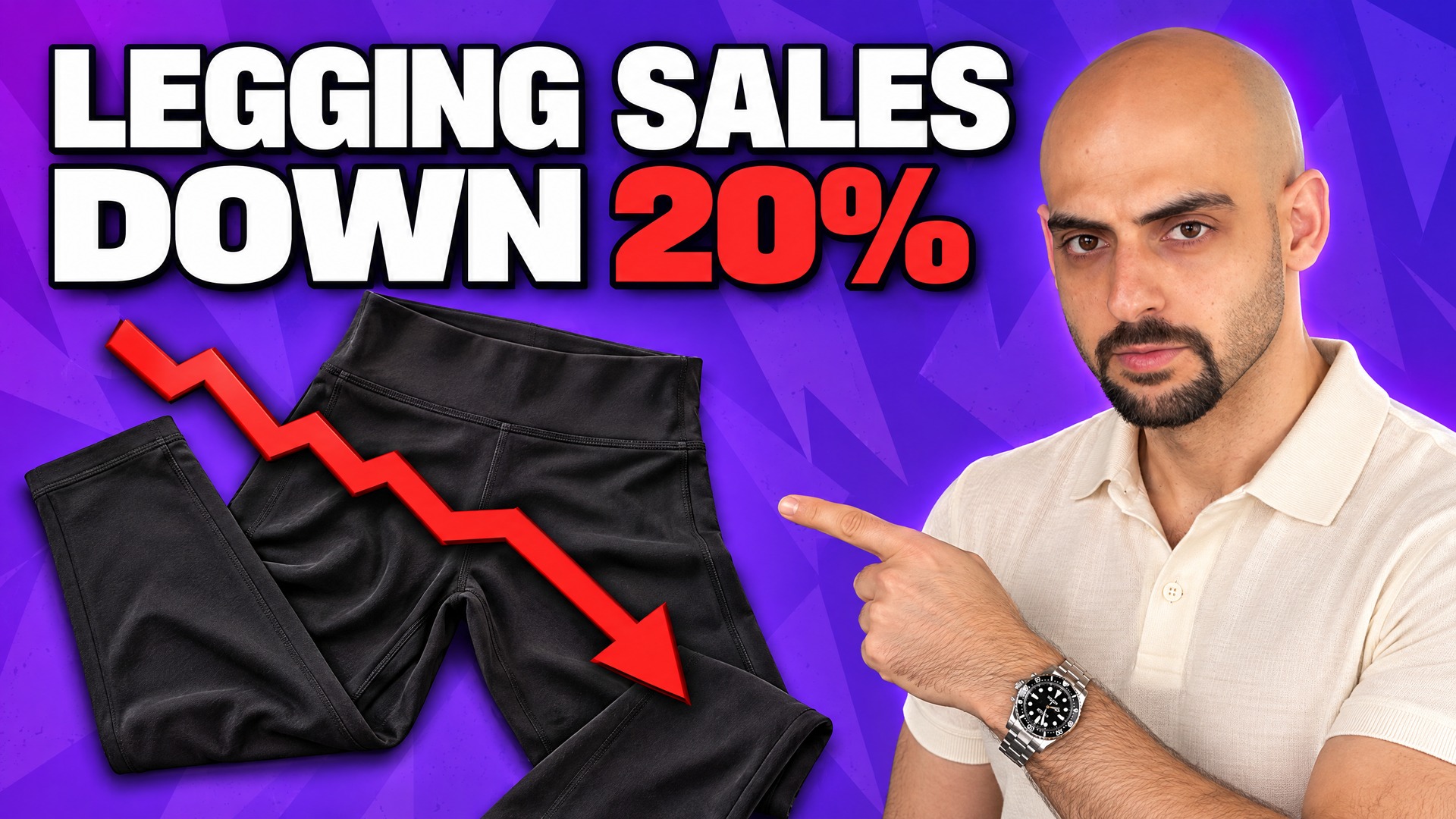
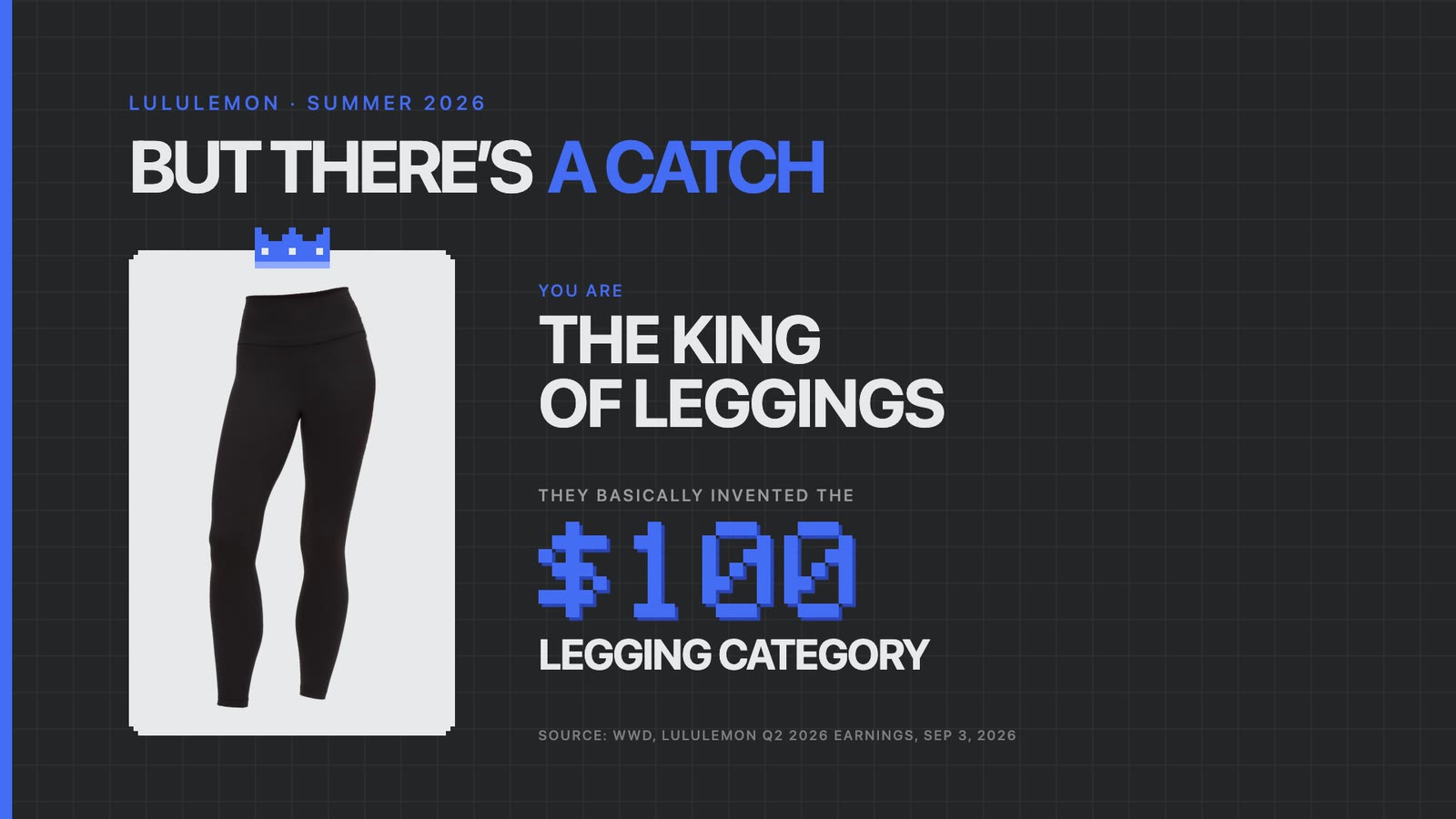
Lululemon basically invented the $100 legging. So when a brand that owns that category sells around 20% fewer leggings in a single summer, every founder building an activewear line should be paying attention. Most of the coverage has been about the share price. This post is about the product.
Shadi Adada is the co-founder and creative director of FittDesign. Over the last 10 years he has worked with thousands of brands in the activewear space to help them design, develop and produce activewear, and he has watched Lululemon set the standard for fabric, fit and function for as long as he can remember. Here is his read on how the fall from grace happened, from the design room.
The short answer: Lululemon still knows how to make great fabric. The trouble started when product problems like sheer leggings, dupes and a forever chemicals investigation piled up, and the fixes ended up on product pages instead of in the tech pack.
Prefer to watch? The full episode is embedded at the bottom of this post, along with the complete script.
1. The Numbers
In the second quarter of 2026, Lululemon's sales were down a full 4%, to $2.4 billion. On paper, 4% doesn't sound like much and $2.4 billion sounds like a huge revenue number.
For a company the size of Lululemon, with all of its overhead, it matters. In Shadi's view the brand runs lean margins overall, even though the gross profit margin on each individual product is substantial. So a 4% dip in the top line can be disastrous for the bottom line.
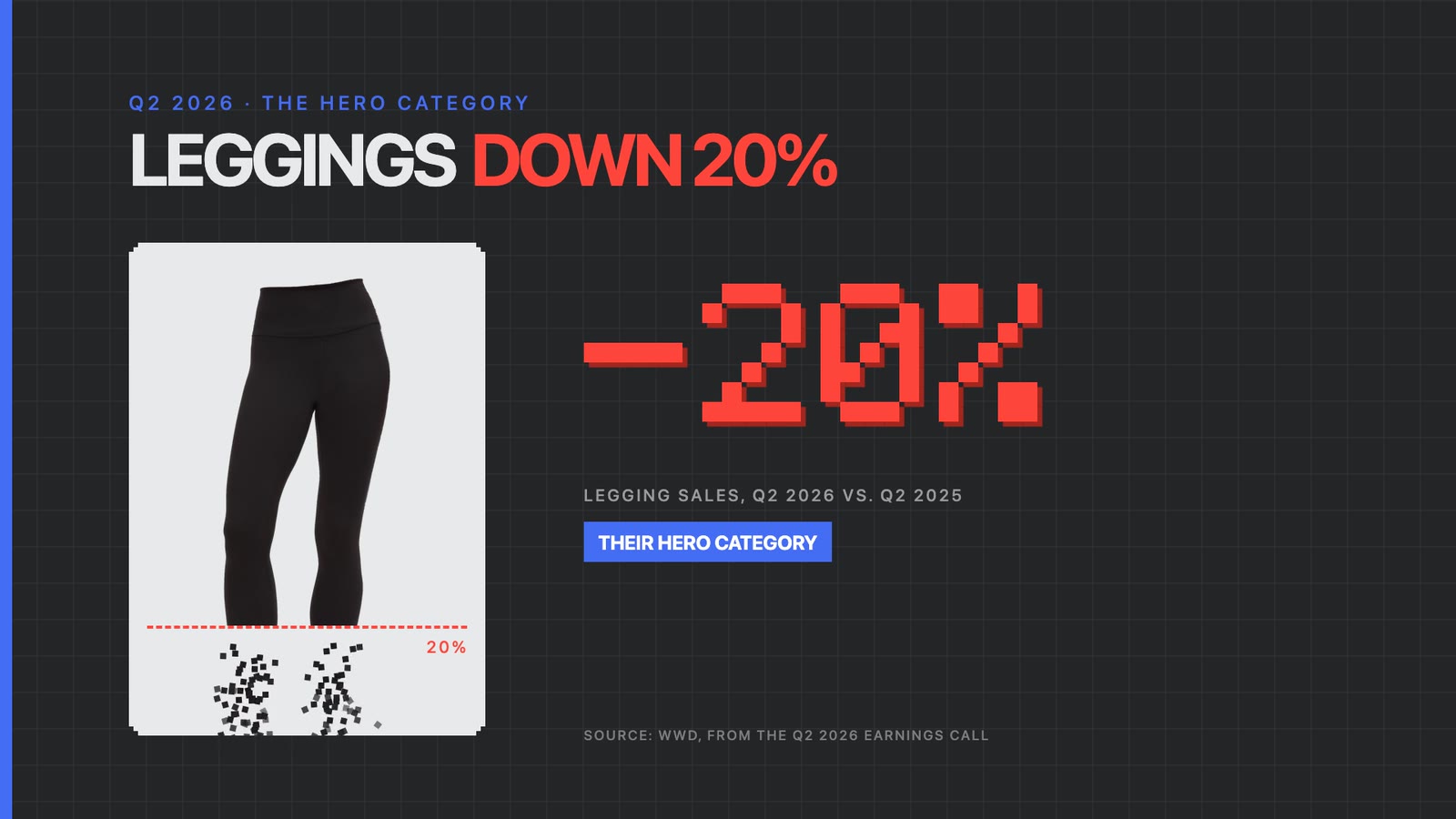
The bigger number is the leggings category. Shadi describes it as their most profitable category by volume of sales, and it went down 20%. On top of that, the previous CEO stepped down and was replaced by a Nike veteran, Heidi O'Neill.
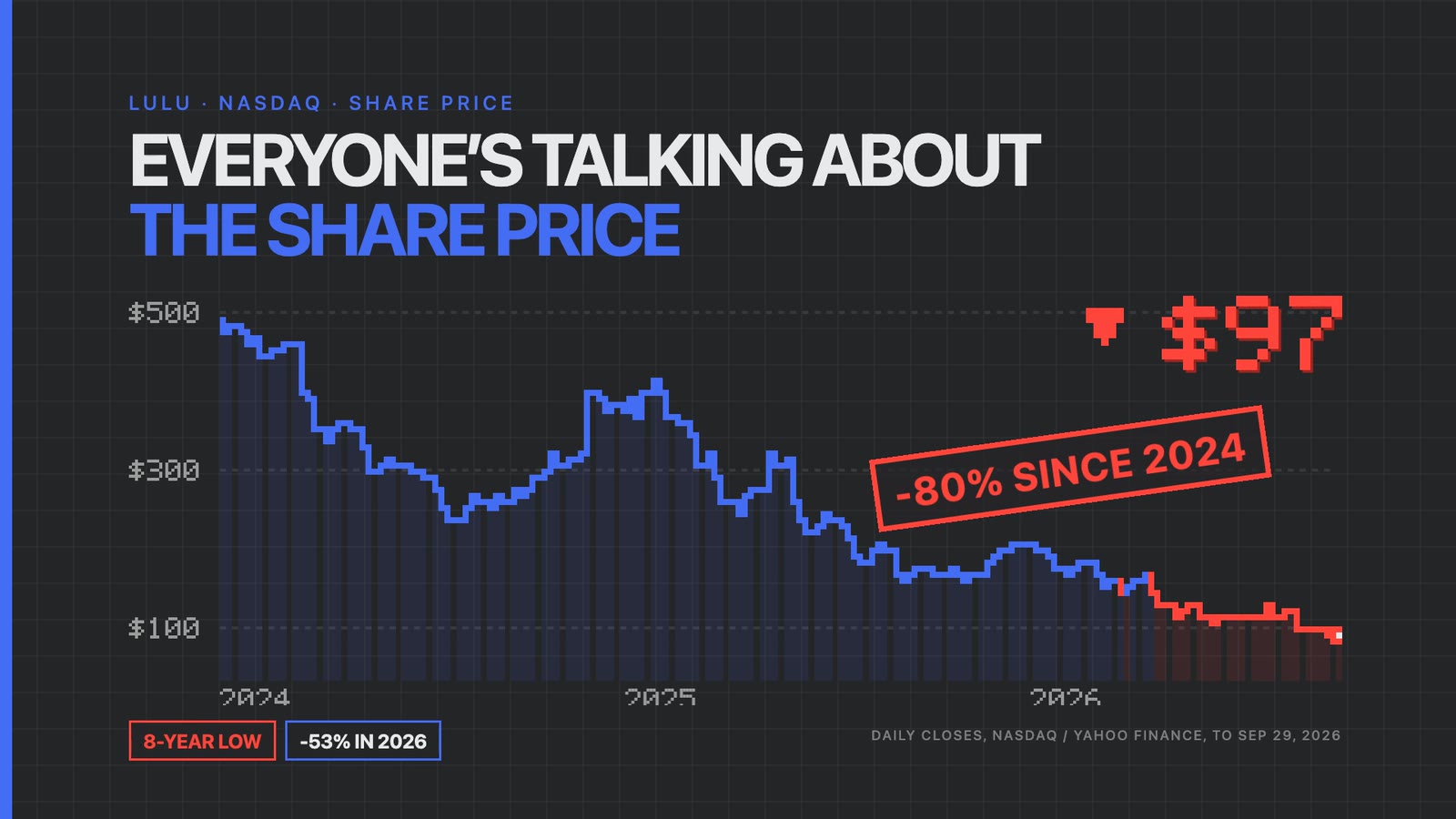
All of this has put Lululemon in a position where it isn't favored by the stock market and shareholders, and more importantly, not by the customers who have supported the brand since it started in the late 90s.
2. The Leggings You Could See Through
So why is this happening? Start with their most popular product, the legging.
In January 2026, Lululemon had to pause online sales of its Get Low legging because of sheer issues. Reviewers reported the fabric was see-through. When the legging came back online on January 23, it came with a caveat on the product page: customers were told to size up.
Shadi's take is that sizing up is a valid response, but it points to two problems:
- Customers don't read product pages. Plenty of people will order the size they always order from Lululemon and run into the same issue.
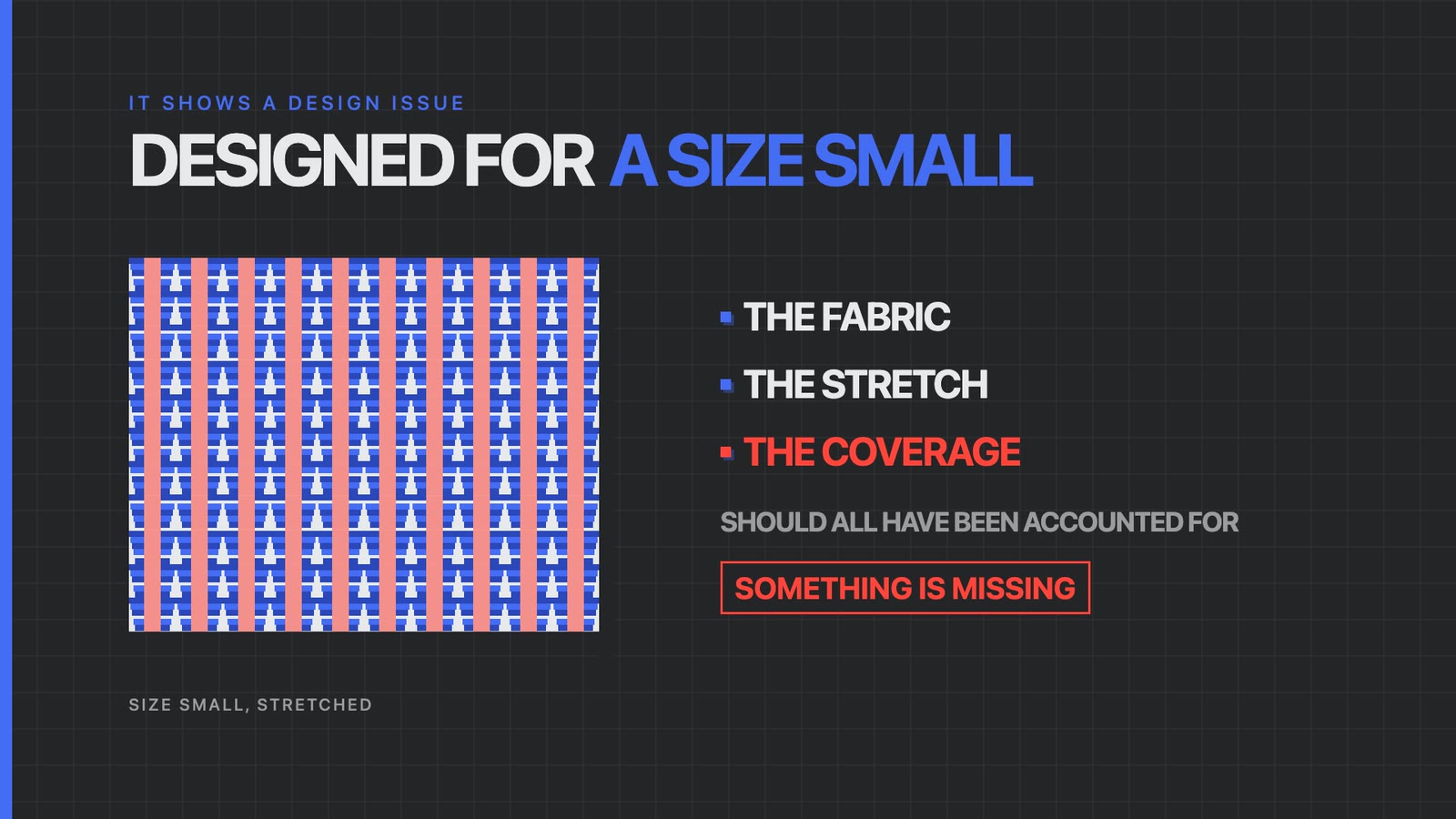
- The fix shows a design gap. If a size small was designed properly, the fabric, the stretch and the coverage should all have been accounted for. A fitted garment shouldn't need you to size up to be opaque.
For more on getting coverage and fit right before launch, see our guides to fabric weight (GSM) and a size guide that reduces activewear returns.
Rule of thumb from Shadi: work the fabric from the beginning so a size small has the coverage and opacity a size small customer needs. If the solution lives on the product page, something is missing from the product.
Are you sure your leggings are opaque in every size you sell?
Fabric weight, stretch and coverage have to be tested across your size range before the first sample, not after the reviews come in.
3. The Dupe Issue
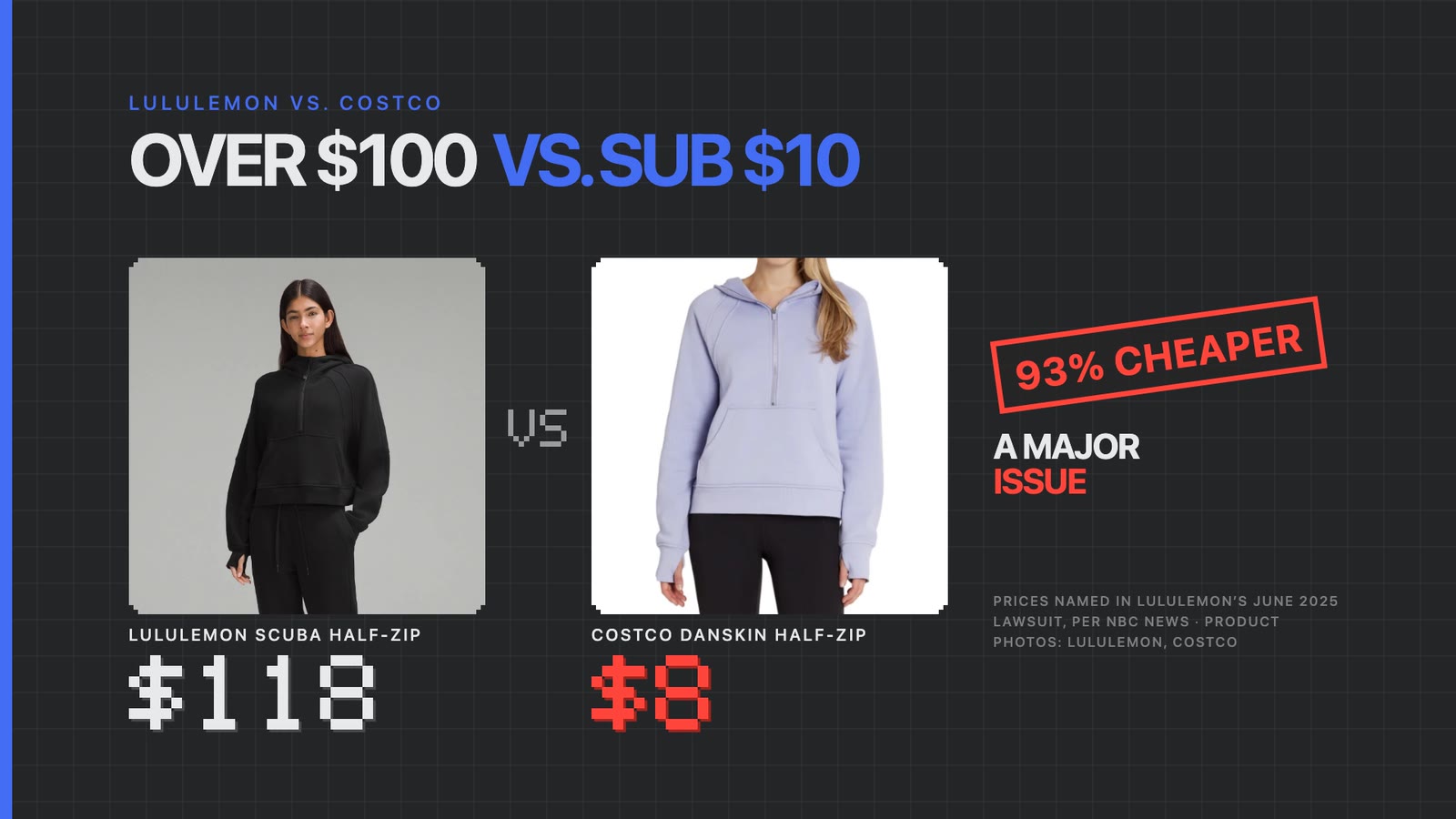
Lululemon dupes are all over Amazon, Costco and Walmart. Lululemon ended up suing Costco over what it considered dupes of its Scuba hoodies and Define jackets. Lululemon sells those products for over $100. The dupes can go for under $10.
Lululemon then went as far as trademarking the term "Lululemon dupe", which Shadi sees as a way to keep competitors from using it on their Amazon listings. Shadi's point: when you have to trademark the term your competitors are using to rip you off, the issue has gotten out of hand, and it's digging into your bottom line.
4. The Forever Chemicals Question
In April 2026, the Texas Attorney General launched an investigation into whether Lululemon's clothing contains harmful forever chemicals. It's an ongoing investigation and there's no conclusive evidence either way.
Even so, it made waves on social media and in the news cycle, and it puts a damper on the brand's reputation regardless of the outcome. People now associate Lululemon with forever chemicals at a time when plastics and polyester in fabrics are seen as the worst thing you could put in a product. Shadi covers where those polyester misconceptions are wrong, and where they're partly true, in a separate FittDesign TV episode, "Is Polyester Actually Bad For You?"
5. How Lululemon Solves This
As a designer, Shadi's view is that Lululemon can do all the marketing in the world, but it won't matter if it can't build back the goodwill of the customers who form the foundation of the brand.
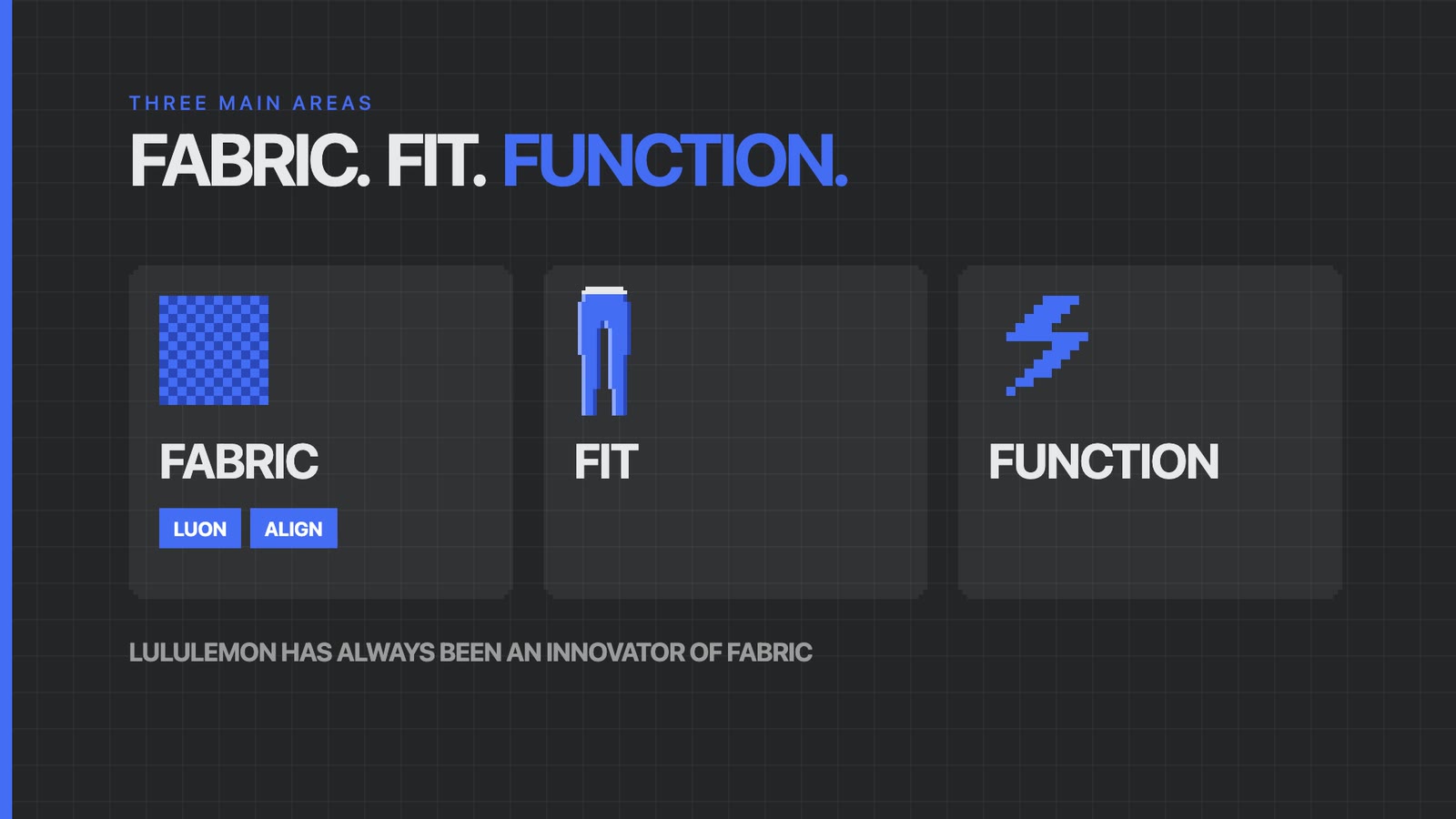
They've done it before. In the early 2010s there was a pilling issue on some of their leggings, and they came back from it. The way back always comes down to the product, and specifically three areas:
- Fabric. Lululemon has always been an innovator here, from Luon to the Align pant. They basically created the butter-smooth, peached fabric finish category, and in men's apparel they've built blends of polyester, nylon and cotton with anti-odor technology that lasts all day.
- Fit. Products that fit correctly in every size, without an update on the product page.
- Function. Products that really meet the needs of their customers.
The Verdict
Lululemon knows what it's doing. The problem is the implementation. Shadi's advice for any activewear brand watching this play out:
- Work with the customer in mind and reverse engineer the product from their needs.
- Build coverage, opacity and fit into the pattern and the fabric from the first sample.
- If something goes wrong, fix the product and own up to the mistake instead of adding a note to the product page.
🎬 Watch the full episode. Shadi walks through the numbers, the Get Low leggings, the dupes, the forever chemicals investigation and how Lululemon can win customers back: https://www.youtube.com/watch?v=FIdQCRClyeo
Full Episode Script
This is the script of the episode as Shadi delivered it, lightly edited for reading.
Intro
So let's say you're Lululemon, and this summer alone you sold around 20% less leggings than you did the year before. But there's a catch. You are the king of leggings. You basically invented the $100 legging category.
Everyone's talking about it, right? Everyone's talking about the share price, how much they've dipped, what's happened. But instead of focusing on the share price, I want to focus on the product, because that's what I know.
My name is Shadi Adada. I'm the co-founder and the creative director of FittDesign, and over the last 10 years I've worked with thousands of brands in the activewear space to help them design, develop and produce activewear. So I've been keeping an eye on Lululemon. It's been the gold standard when it comes to fabric, fit and function for pretty much as long as I can remember. So how did this fall from grace happen? Well, that's exactly what we're going to be looking at in today's episode.
1. The Numbers
Number one, let's look at the numbers. The quarter two 2026 sales have actually shown that they're down by a full 4%. Basically, they've gone down to 2.4 billion. 4% may not seem like a lot, and 2.4 billion may seem like a huge revenue amount, but for a company the size of Lululemon, with all of their overhead, they're running lean margins, even with their actual gross profit margin on each individual product being pretty substantial. So a 4% dip in the top line revenue can be disastrous on their bottom line.
Number two is understanding that the leggings category, which is their most profitable category in terms of volume of sales, has actually gone down 20%. And their previous CEO has stepped down and has now been replaced by a Nike veteran, Heidi O'Neill.
So all of this has put Lululemon into a position in which they are not only not favored by stock and shareholders, but also, more importantly, by customers, by the people who have supported the brand since its inception in the late 90s.
2. The Leggings You Could See Through
So the real question here is, why is this? Let's look at their most popular product, the legging. In January of '26, what happened was that they had to pause online sales for their Get Low legging because of sheer issues. Hundreds and thousands of reviewers showed and purported major issues with sheer on their product.
Lululemon removed the product from their store, but then they actually did end up getting them back in January, on the 23rd, with a little caveat. They mentioned on their product page for customers to size up. And although that's actually a pretty valid response, there's an issue with the product when the solution for the product actually ends up having to be on the product page itself.
Number one, a lot of customers may not actually read that. They may just end up ordering their normal size that they're used to from Lululemon and having the same issue. But also, it shows that there's an issue with the way the product was designed. Because if a size small product was designed, the fabric itself, the stretch, the coverage should all have been accounted for.
This means that there is something missing. There's something that is off with the product, or else it wouldn't require you to size up on what is meant to be a fitted garment, where the fabric should have been worked from the beginning for a size small to have the coverage and the opacity required to actually suit the needs of a size small customer.
3. The Dupe Issue
Number three is the dupe issue. Lululemon actually ended up suing Costco over what they consider to be dupes of their Scuba and their Define jackets. And whereas Lululemon is able to sell these products for over a hundred dollars, their dupes are going for sub ten dollars sometimes. This could be a major issue.
They actually ended up having to go as far as trademarking the term "Lululemon dupe" so that competitors couldn't use the term on their Amazon listings. And you know when you actually have to go as far as trademarking the term that your competitors are using to rip you off, then this is an issue that has gotten out of hand. It's severely digging into your bottom line.
4. The Forever Chemicals Question
Number four comes down to the forever chemicals issue. And although this is an ongoing investigation, in April of '26 the Texas Attorney General actually launched an investigation into whether their clothing actually contains forever chemicals that are harmful.
And whether that investigation comes back as substantially conclusive, it made its waves on social media and on the news cycle, and it just puts a damper on your reputation, regardless of if you're able to come out of it or not. And again, there's no conclusive evidence that's showing one or another, but now people are thinking of Lululemon and they're associating it with forever chemicals.
And we're going through this phase right now where plastics and polyester in your fabrics are seen as sort of the worst thing that you could potentially put into your product. I've done a separate video where I've gone through, is polyester actually that bad for you? An overview of the common misconceptions of polyester, and where some of these misconceptions can actually be true. So if you want to give it a go, check out the link in the description and definitely check out the episode.
5. How Lululemon Solves This
Number five, how do we solve this? Well, personally for me as a designer, Lululemon can do all the marketing in the world, but if they can't build up the goodwill back of the customers that form the foundation of the brand, if they cannot overcome all of these misconceptions, all of these tragic issues that they've had over the years with sheer and products pilling...
And they've done it before. They've been able to overcome it, whether it's in the early 2010s with the product pilling issue on some of their leggings, or now with some of the sheer issues that they're facing. They've done it before, but it always comes down to focusing back on the product.
There's three main areas that they need to focus on. It comes down to the fabric, the fit and the function. Lululemon has always been an innovator of fabric, whether it's with their Luon fabric or whether it's with their Align pant. They have basically created the butter smooth fabric, the peached fabric finish category. In some of their men's apparel, they've created tremendous fabrics that have created a nice blend of polyester, nylon, cotton. They've been able to embed anti-odor technologies to create really substantial fabrics that last all day long.
So they know what they're doing, but it comes down to the implementation. They need to work with the customer in mind, as they've always done. Reverse engineer and work backwards to create products that really meet the needs of their customers, that fit correctly, and that don't need an update on the product page, and be willing to own up to their mistake, to what they did wrong.
Work With Us 1-on-1
So guys, if you're looking to build your own brand, if you've been interested in avoiding some of these mistakes that Lululemon is doing now so you can shortcut the path to building something substantial, you can check out the link in the description to apply to work with us one-on-one. In five minutes, a real human will get back to you with a personalized production roadmap on how we can help you take your idea and turn it into a physical product in under 30 days.
And guys, I say this from the very bottom of my heart, thank you so much for tuning in to this episode of FittDesign TV. Until next week's episode, stay awesome.
About FittDesign
FittDesign is a full-service activewear design and production studio. Over the last 10 years the team has helped thousands of brands design, develop and produce their collections, from the first sketch to factory-ready tech packs and samples.
Ready to build activewear customers don't have to size up for?
Tell us about your idea and a real human will get back to you with a personalized production roadmap. We can help you turn it into a physical product in under 30 days.
Get a quote → Takes 2 minutes. No obligation.


