

French Terry vs Fleece: Which Hoodie Fabric Should You Pick?

Pick up two hoodies from the same rack, one French terry and one fleece, and from the outside you'd struggle to tell them apart. Same jersey face, same hood, same ribbed cuffs. Then you turn them inside out.
One has neat rows of little loops. The other is soft and fuzzy, almost like a blanket. That inside is where most of the decisions about your hoodie actually get made: how warm it feels, how it looks after a winter of washing, how well your print sits on it, and what it costs you to produce.
We've developed thousands of hoodies with brands over the last ten years, and this is one of the first things we settle with them, because the answer ends up written into the tech pack the factory works from. Here's how we think about it.
They start out as the same fabric
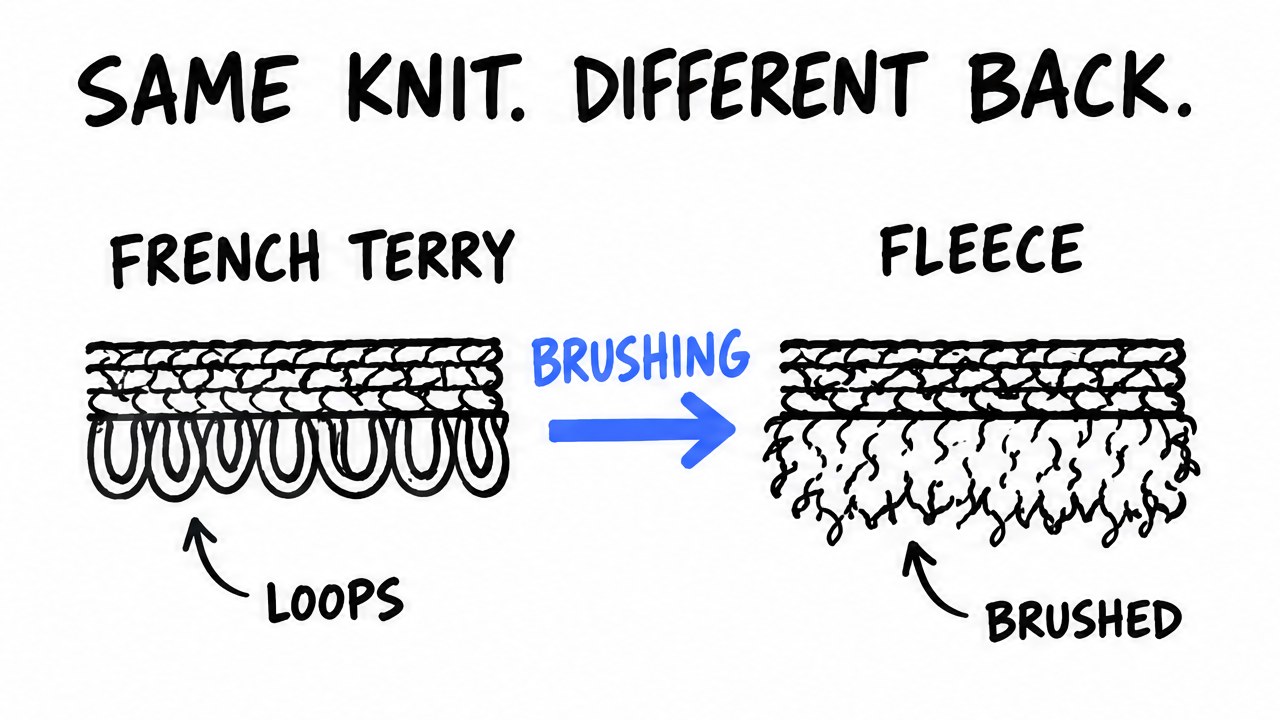
This surprises a lot of people. French terry and fleece usually come off the knitting machine as the same cloth, with the same yarn, the same composition and the same knit structure. The loops on the back are there on both.
What changes is the finishing. Leave those loops alone and you have French terry. Run the back of the fabric through a brushing machine, which pulls the loops open and raises the fibers, and you have fleece. A light brush gives you a micro-brushed fleece, a heavier one gives you that thick, cozy regular fleece, and push it further and you get into sherpa territory.
So when a supplier offers you "the same fabric in terry or fleece," they usually mean it quite literally.
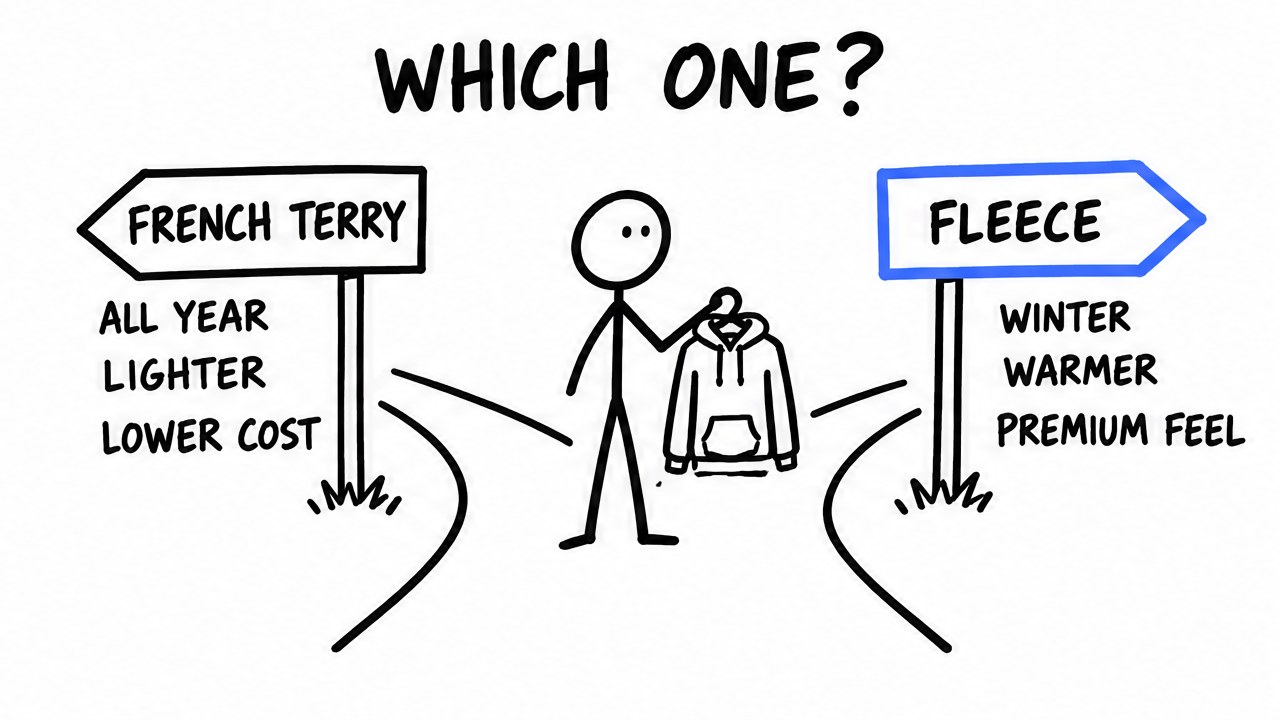
Warmth versus breathability
Brushed fibers trap air, and trapped air holds heat. That's the whole reason fleece feels so warm the moment you put it on.
The same thing works against it when you get moving. That fuzzy layer holds heat in, so fleece breathes less than French terry. The open loops on a terry let air and moisture move through much more easily, which is why it feels better for training, layering, or a hoodie you'll wear from March to October.
If your customer is standing on a sideline in January, fleece is the kinder choice. If they're wearing it to the gym and back, terry usually wins.

Photo by Logan Weaver on Unsplash
Why GSM on its own won't tell you much
Most founders compare fabrics by GSM, grams per square meter, and it's a useful number. With these two fabrics it can mislead you, though.
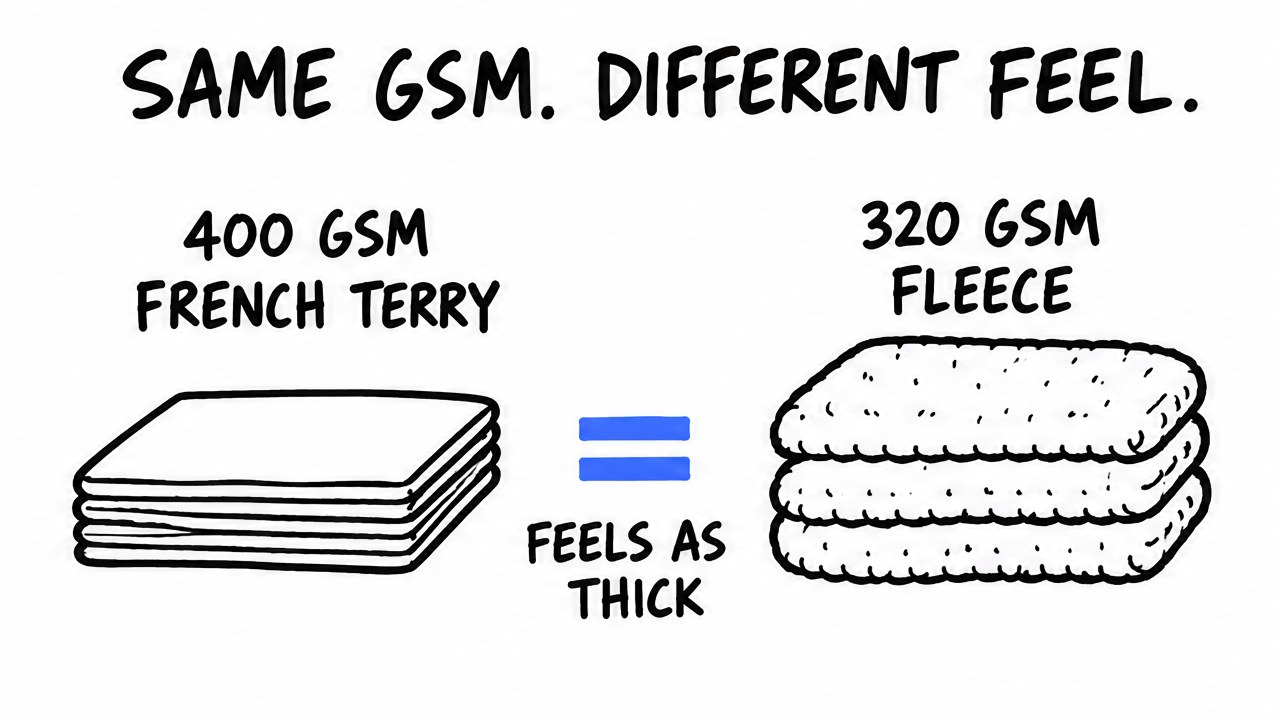
Because brushing adds loft, fleece feels thicker than its weight suggests. In Shadi's experience, a 400 GSM French terry feels roughly as thick in the hand as a 300 to 320 GSM fleece. People tend to read thickness as quality, so fleece gives you that premium feeling at a lower weight.
French terry is denser. To get a hoodie that feels really substantial, you end up pushing it into the 400s or even the 500s, and by then the garment feels heavy. Some people love a heavyweight hoodie. For most sportswear, it isn't the feel you're going for.
The easiest way to settle it is to ask for both swatches at the weights you're considering and hold them side by side. We explain what GSM does and doesn't tell you in our guide to GSM.
What a winter of washing does to each one
Brushing is a mechanical finish, and anything mechanical wears. Put a cheap regular fleece through hot washes for a season and the inside loses its evenness. The raised fibers ball up into pills and you start to see patchy spots where the fleece has thinned out.
Micro-brushed fleece holds up noticeably better. The fibers are finer and shorter, so the inside stays more uniform and the garment keeps its shape longer. French terry has the easiest time of all, because its loops were never raised in the first place, so there's far less on the surface to pill.
If your customer is going to live in this hoodie, the quality of the brushing matters as much as the choice between the two.

Photo by engin akyurt on Unsplash
Choosing a hoodie fabric for your own brand?
The blend, the brush level, the weight and how it behaves after washing all need to be settled before the first sample gets cut.
Printing, embroidery and how it hangs
For decoration, the two behave almost the same. Both usually have a flat jersey face on the outside, so screen prints and embroidery sit on them in much the same way.
The one to watch is double-sided fleece, where the outside is brushed as well. That rougher surface makes basic methods like heat transfer unreliable, so you may need embroidery, or a print process with more pressure that flattens the fibers first. It's worth knowing before you fall in love with a fabric and a print technique that don't get along.
Drape is where fleece pulls ahead. The brushed inside gives the garment more body, so it hangs with a bit of structure even at a moderate weight. French terry needs a lot more GSM before it holds that shape. For a hoodie that looks premium without feeling heavy, fleece usually gets there first.
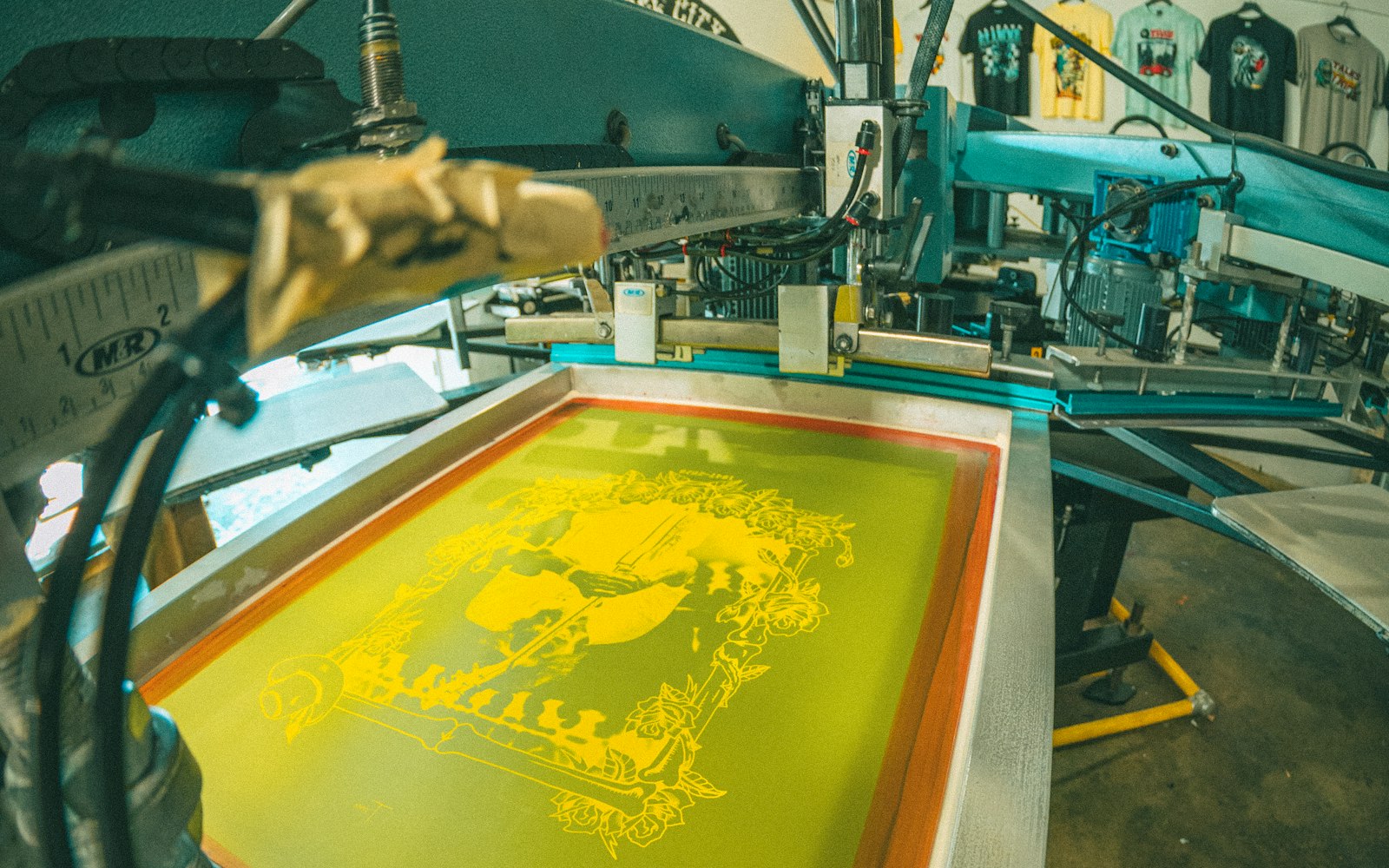
Photo by Anthony Roberts on Unsplash
What each one costs to make
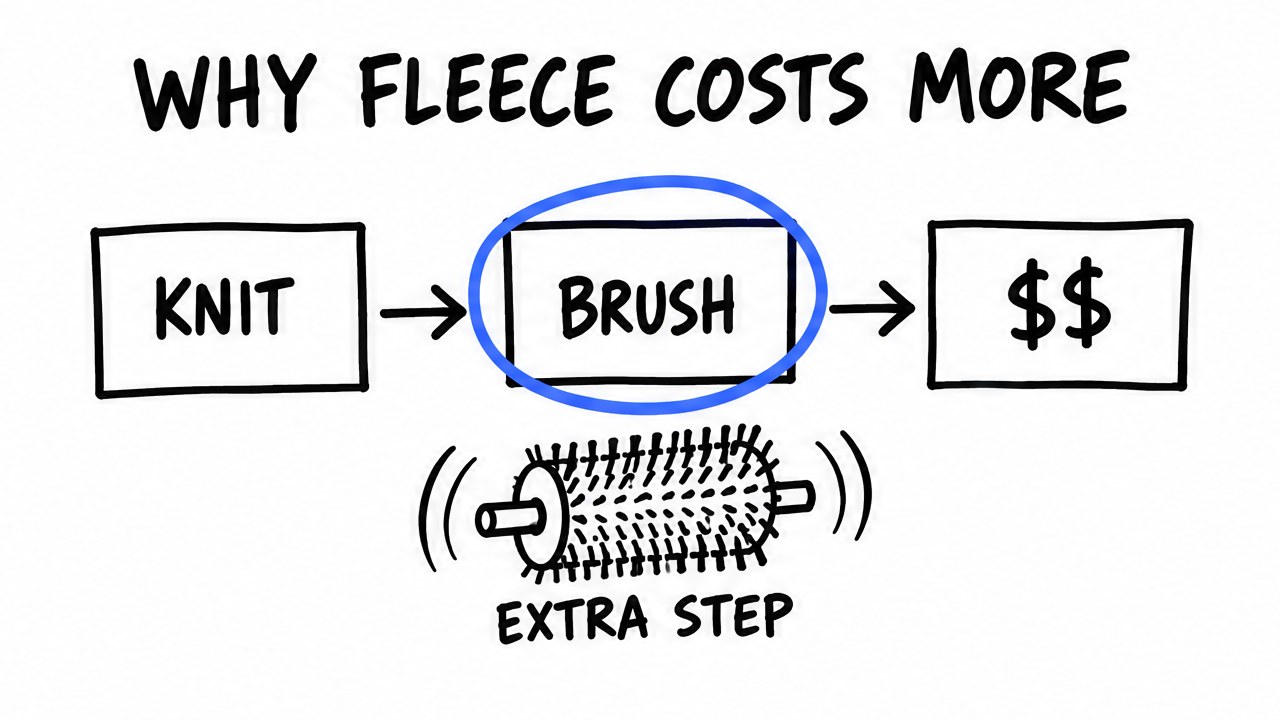
Pound for pound, French terry is cheaper. Fleece goes through the same knitting and then an extra brushing step, and that step shows up in the fabric price.
That only holds when you compare like for like, say a 100% cotton terry against a 100% cotton fleece at a similar weight. Compare a cotton polyester fleece with a 100% cotton terry and the numbers can land somewhere completely different, so make sure the quotes in front of you are for the same composition.
So which one should you choose?
Neither is better across the board. It comes down to what the hoodie has to do.
French terry makes sense for a lighter, all-year piece, for cropped or half-sleeve styles, for anything leaning toward spring and fall, and for a collection where the price point needs to stay down.
Fleece makes sense when the hoodie needs to feel substantial, drape well and keep someone warm through the colder months.
For a startup launching a single hoodie, Shadi leans toward fleece nearly every time. A customer might buy one hoodie from you a year, so it needs to look great, hang beautifully and keep them warm.
If you want a place to start, this is the spec he'd reach for: a cotton polyester blend around 80/20 with a brushed fleece inside, micro-brushed if the budget allows, somewhere near 360 GSM, finished with rib cuffs. You can see how different silhouettes change the decision in our guide to hoodie types.
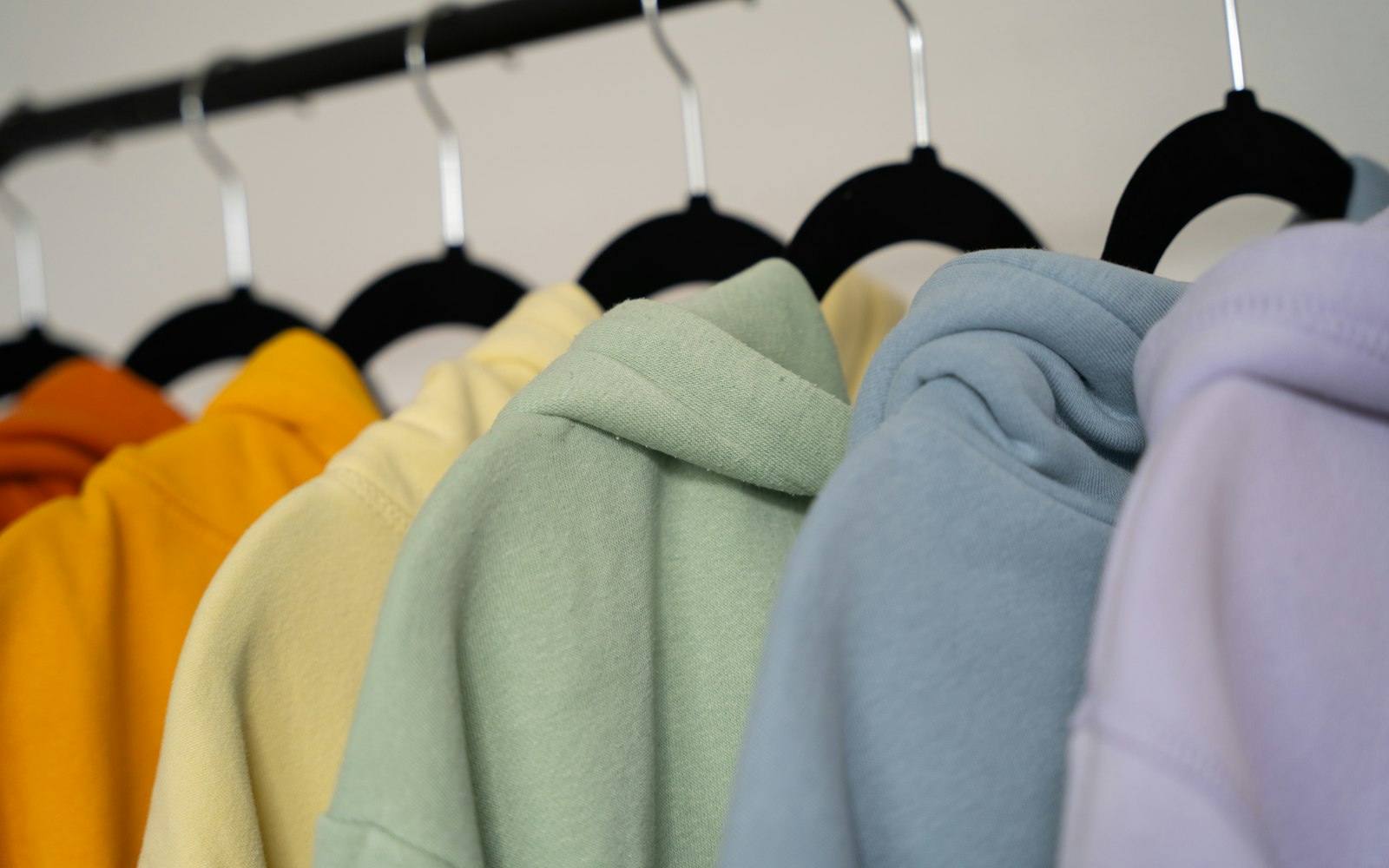
Photo by Kajetan Sumila on Unsplash
Watch Shadi compare them
Shadi went through all of this on FittDesign TV with the swatches in hand. If you'd rather watch than read, the episode is right here.
About FittDesign
FittDesign is a full-service design and production company for sportswear and activewear brands. We take you from the first sketch to a factory-ready tech pack, sampling and production, so the product that arrives is the one you pictured.
Ready to sample your hoodie?
Fabric, weight, brush level and how it holds up in the wash decide whether a hoodie works. We spec all of it and sample it with the factory, with a physical hoodie in your hands in around 30 days.
Get a quote → Takes 2 minutes. No obligation.


