

How To Choose Between Seasonal And Evergreen Products For Your Brand
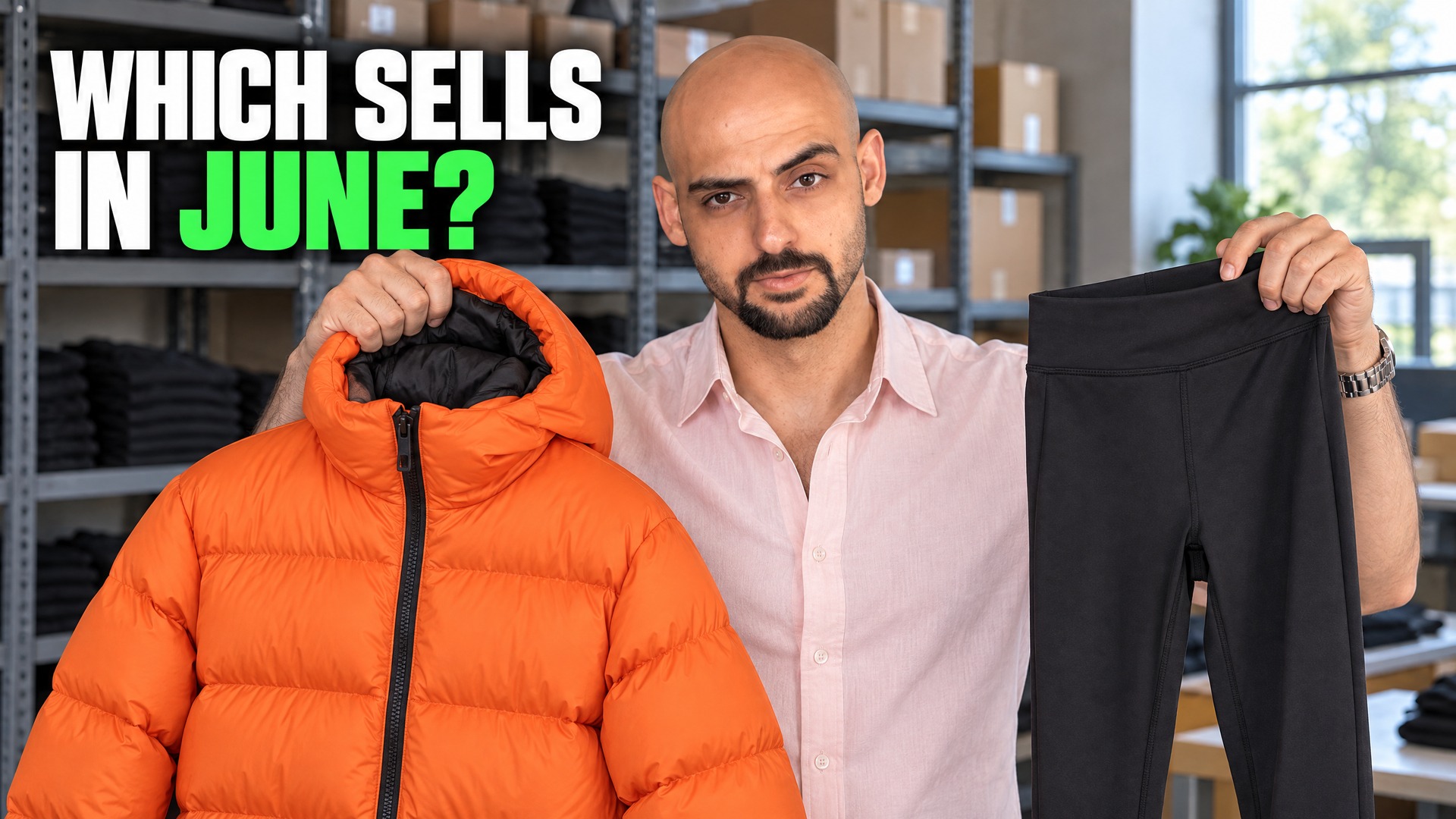
You have a brand, you have a factory conversation starting, and you have to decide what actually goes into the first order. Do you build a seasonal collection that matches winter, spring and summer, or a core range of evergreen pieces that work all year?
Both can work. Plenty of brands have been built on each. But they are two different businesses, they tie up money in different ways, and as a new brand you only get one first order to spend.
Over the last ten years we have taken thousands of brands from an idea to a full collection, and the pattern is consistent enough to plan around. Here is how we think about it, and what we put in a tech pack first.
A product earns its place by how often it gets worn
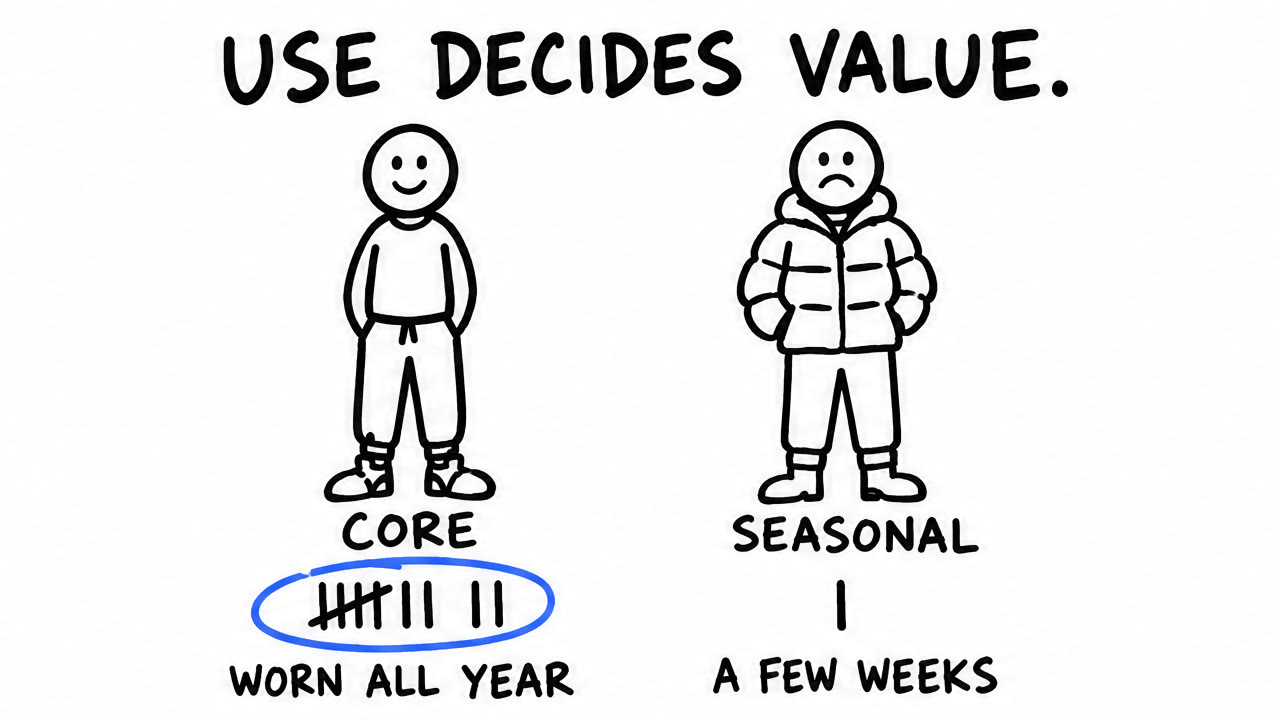
Before anything else, ask how often your customer picks the product up. That single number decides most of what follows.
Sportswear is functional. People wear it day in and day out as they train, commute and travel. A piece that fits into that rhythm gets used constantly, and constant use is what builds the habit of buying from you again.
A piece that only works for six weeks a year cannot do that, no matter how good it is.
Photo by Zulfugar Karimov on Unsplash
The maths on a seasonal piece
A pair of black joggers is useful to a customer in the middle of December and in the middle of April. A heavy puffer with goose feather insulation is useful for a narrow stretch of the year, and it can cost four to five times as much to produce and to sell.
So you are paying more per unit for a product that has fewer chances to be worn. That is the trade, stated plainly.
None of this means seasonal outerwear is a bad business. Some of the biggest outdoor brands in the world make a great deal of money on high margin seasonal items. They have built the whole brand around that, with the marketing calendar, the cash reserves and the customer base to match. That is a different starting position from yours.
Seasonal gives you exactly one window
This is the part founders underestimate. A seasonal drop is not only a product decision, it is a calendar decision, and the calendar is unforgiving.
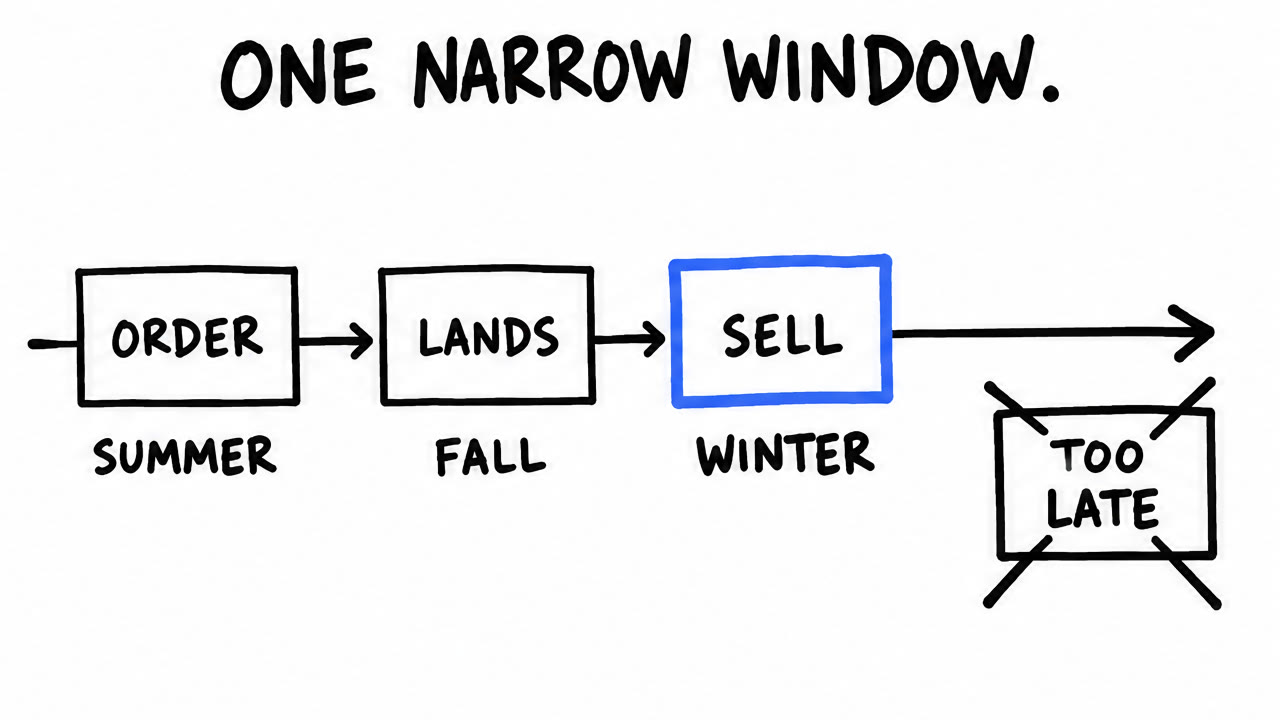
If you want a parka on sale for winter, you are placing that order in summer so it arrives in early fall, which gives you time to shoot the assets, build the page and start selling into the cold. Every step has to land, and they all depend on each other.
Miss by six weeks and the product arrives at the end of the season it was built for.
Photo by Road Ahead on Unsplash
Stock that lands late is stock you carry
Picture five hundred units of a jacket you put thousands into, arriving in February. Nobody has a use for it. You either discount it hard, which teaches your customers to wait for a discount, or you hold it for nine months and pay to store it while your money sits inside it.
A core piece does not have that problem. Whether it lands in spring or in summer, your customer has the same use for it, so a delivery slipping by a few weeks is an inconvenience rather than a write-off.
Working out what should go in your first order?
The pieces, the fabrics, the weights and the delivery dates all have to be settled before anything gets cut, and they all affect each other.
You hear from a seasonal customer months later
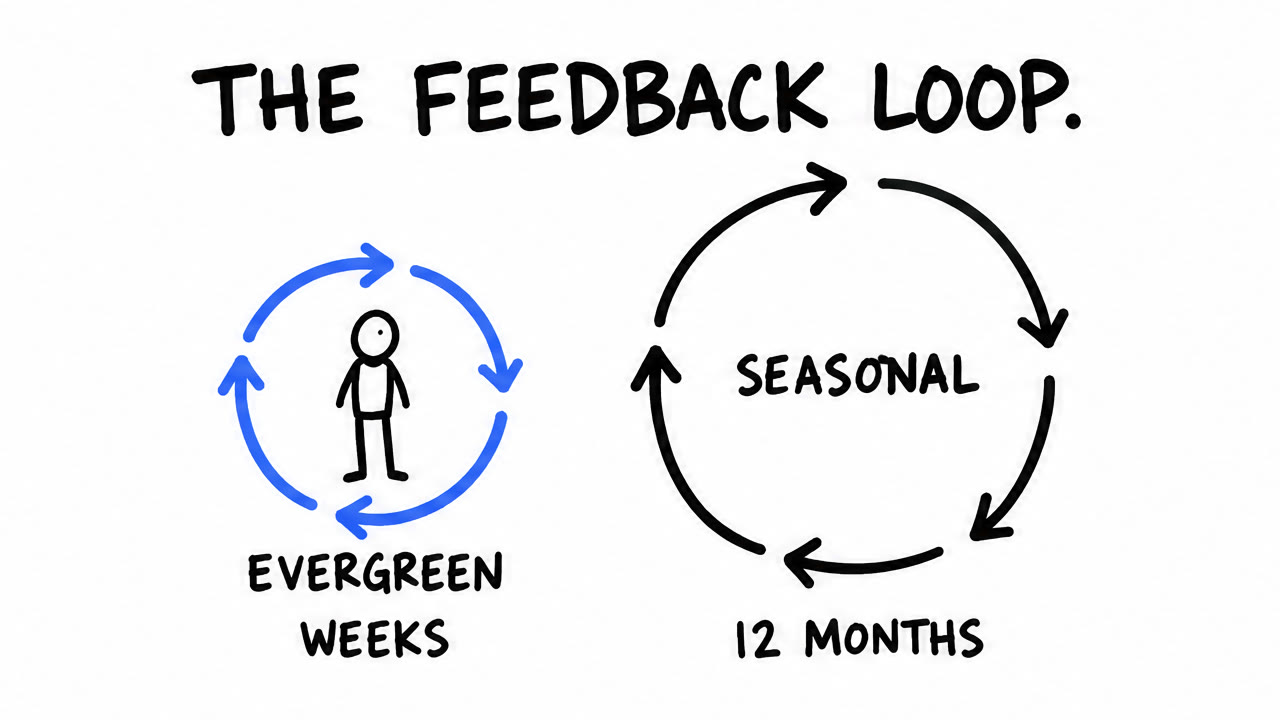
The feedback loop on a seasonal item is long. Someone buys a parka in November, does not really put it through anything until the end of winter, and leaves a review after that, if at all. By then you are already past the point where you could have changed the next production run.
So you wait a full year to relaunch it, carrying whatever you got wrong the first time.
Evergreen keeps the feedback coming
With a core product you are in contact with your customer all year. They are wearing it constantly, so you get a steady read on sizing, fabric, functionality, how it looks and how it holds up.
That feeds straight into the next run. You fix the waistband, you adjust the grade, you change the fabric weight, and the improved version is in your customers' hands in weeks rather than next season. Over two or three runs that compounds into a product that is genuinely hard to beat. If you want the detail on how fabric weight plays into that, our piece on GSM covers it.

Photo by freestocks on Unsplash
Where a seasonal drop genuinely wins
Seasonal is not the weaker option. It does something a core range cannot.
A seasonal piece gives a customer a reason to come back, and it creates a real spike in demand, because in the middle of the season the need is urgent. When it is genuinely cold, people will pay what the parka asks to be warm. The product is solving a problem that exists right now.
It also breaks the monotony. Your core customers have seen your staples. A limited piece, available for a few months, in select colours from your palette, with details they cannot get from you the rest of the year, is new again.

Photo by Kelly Sikkema on Unsplash
Core first, seasonal second
For most new brands the answer is a sequence rather than a choice.
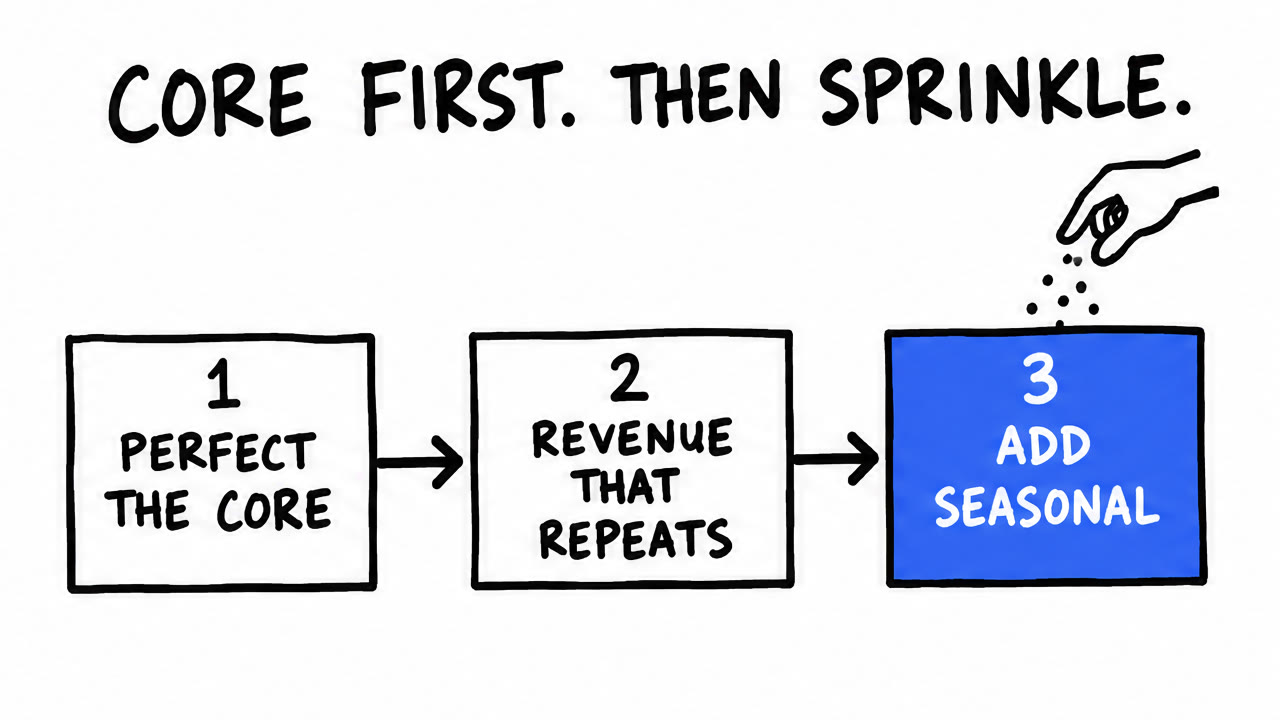
Launch with core products and get them right. One or two pieces, properly specced, properly sampled, until they are genuinely good. Then build revenue that repeats, so you are not living between a launch spike and the quiet stretch after it. Once that is steady, start sprinkling seasonal items into your drops.
By that point you know how to acquire a customer, how to get them to buy, and how to get them to come back. A seasonal drop then lands on top of something solid instead of being the thing you are betting on.
What changes as your customers mature
There is a point where the sequence flips over on its own. Your existing customers already own your staples. They are loyal, they like the brand, and they are not going to keep buying the same leggings forever.
Seasonal is how you keep serving them. It gives your regulars something new without taking anything away from the core range that keeps converting people who have never bought from you. One keeps the base, the other keeps it interesting.
Photo by Priscilla Du Preez on Unsplash
Watch Shadi break this down
The full episode walks through all five points with the numbers, and ends with the exact order we recommend for a brand placing its first order.
About FittDesign
FittDesign is a full-service design and production company for sportswear and activewear brands. We take you from the first sketch to a factory-ready tech pack, sampling and production, so the product that arrives is the one you pictured.
Ready to spec your first collection?
Which pieces, which fabrics, which weights and which delivery dates decide whether a first drop works. We spec all of it and sample it with the factory, with product in your hands in around 30 days.
Get a quote → Takes 2 minutes. No obligation.


